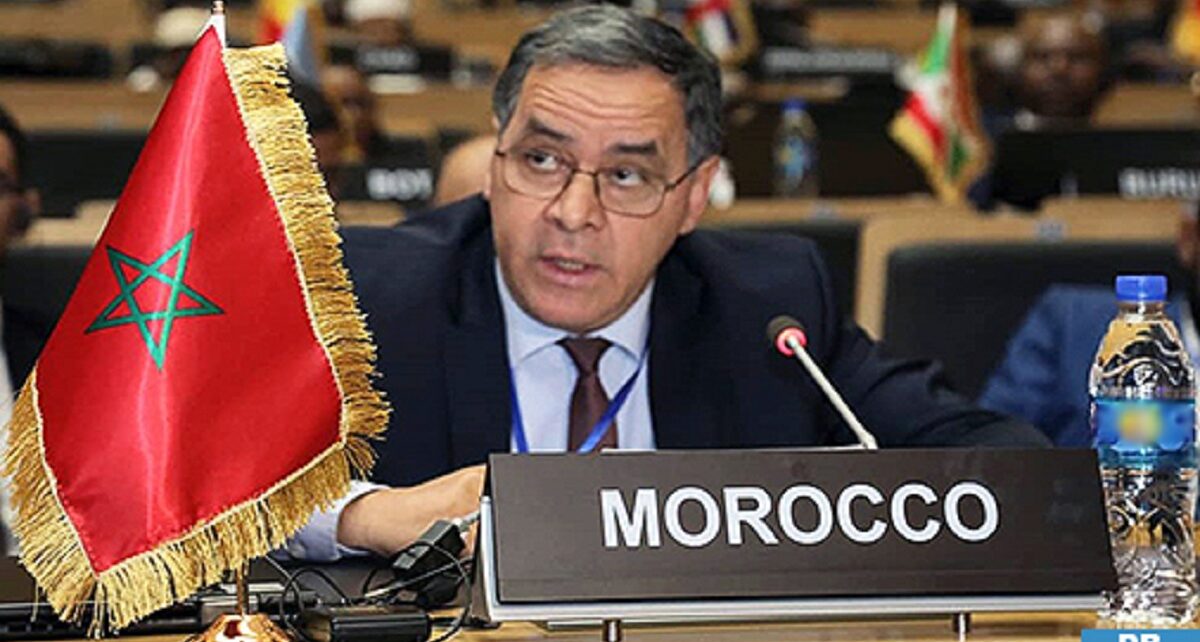
Before the Peace and Security Council, ambassador Mohamed Arrouchi recalled Morocco’s mediation efforts, from the Bouznika meetings to recent talks between Tripoli and eastern Libya representatives.
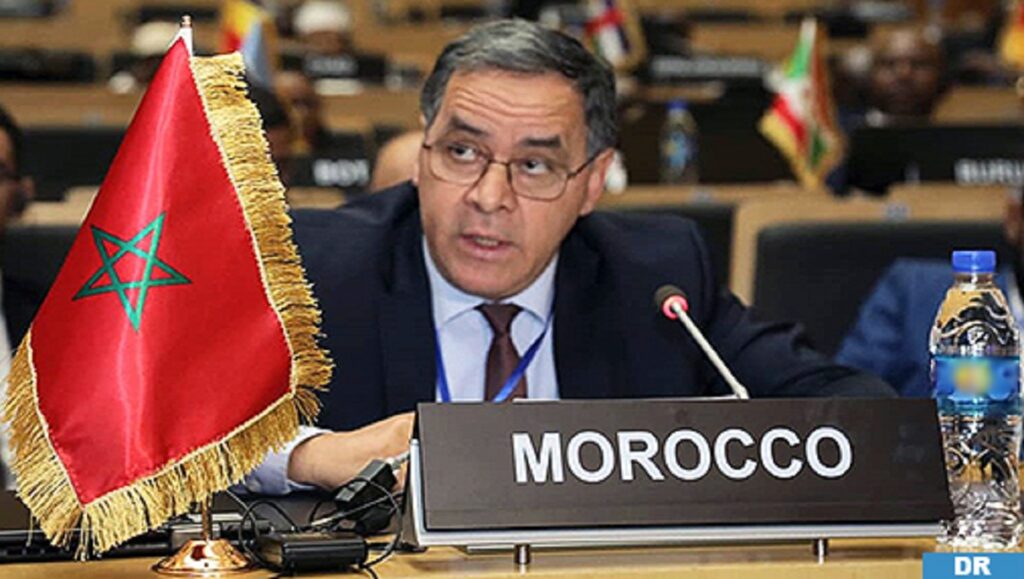
On Tuesday 9 June 2026, Morocco reaffirmed its commitment to a political solution for the Libyan crisis during a session of the African Union Peace and Security Council (PSC).
Speaking at a meeting dedicated to Libya, ambassador Mohamed Arrouchi — Morocco’s permanent representative to the AU and UN Economic Commission for Africa — reiterated the kingdom’s support for national reconciliation and dialogue initiatives among Libyan factions.
Arrouchi stressed that the Skhirat Agreement, signed on 17 December 2015 under UN auspices, remains a key framework for achieving a lasting resolution. He also underscored the need to preserve Libya’s unity, sovereignty and territorial integrity.
He further expressed Morocco’s appreciation for the AU’s efforts to promote peace, security and stability across the continent, particularly those aimed at a political solution for Libya.
The ambassador also recalled meetings in Tripoli and Zenten that culminated in a 7 January 2026 agreement in the Libyan capital between representatives of the Government of National Unity and the eastern-based administration.
He highlighted Morocco’s role in accompanying Libya’s political process through bridging efforts between the various Libyan parties.
These steps, he said, are in line with international law, the Skhirat Agreement outcomes and the Bouznika understandings. Morocco reiterated the need to continue working toward a political settlement, steering clear of military options.