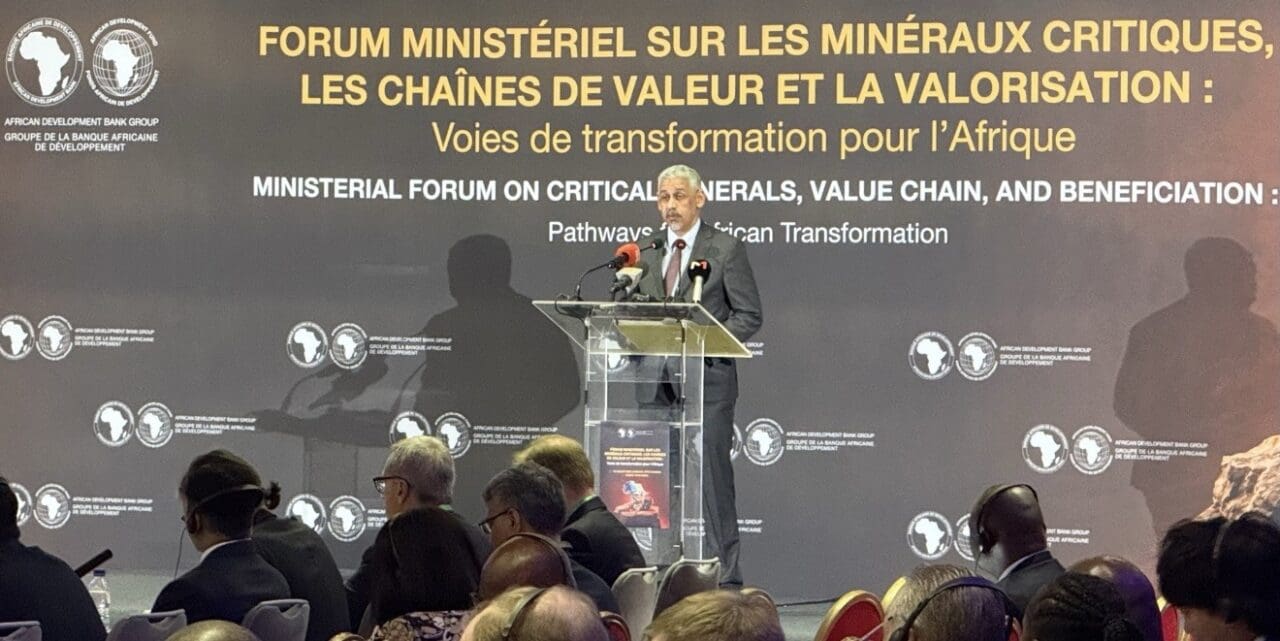
The future of Africa’s economic transformation took center stage in Abidjan this week, as ministers from mineral-rich nations gathered with global partners to redefine how the continent leverages its geological wealth. With a staggering estimated value of $29.5 trillion in critical minerals, the focus was on shifting from raw export to value-added industrialization that fuels sustainable development.
Representatives from over 30 African countries convened alongside development partners, financial institutions, and industry leaders to chart a new course for resource governance. The high-level dialogue centered on three pillars: local beneficiation, regional value chains, and inclusive financing models that ensure broader prosperity.
Abidjan hosts historic mineral governance summit
The three-day ministerial conference brought together leaders from the African Union Commission, AfCFTA Secretariat, UN Economic Commission for Africa, regional development banks, and international investors. Their shared mission: to ensure Africa captures maximum value from its mineral endowment rather than repeating the colonial-era pattern of exporting raw materials.
Key discussions included strategies to strengthen intra-African trade in critical minerals and establish processing facilities across the continent. The meeting also explored innovative financing mechanisms to mobilize the $100 billion needed annually to develop Africa’s mining infrastructure by 2030.
A paradigm shift in resource management
In his keynote address, the African Development Bank President emphasized the need for “a fundamental restructuring of how our continent manages its natural resources.” He highlighted that while Africa hosts 30% of the world’s critical mineral reserves, current value addition remains minimal.
The Bank’s proposal includes establishing a Pan-African Critical Minerals Fund to pool resources and coordinate large-scale infrastructure projects. This would complement existing national initiatives like Côte d’Ivoire’s 38 trillion CFA franc mineral-energy program, which aims to position the country as an upper-middle-income economy by 2030.
Côte d’Ivoire’s strategic mineral push
Minister Mamadou Sangafowa-Coulibaly underscored the need for continental solidarity in developing mineral value chains. “Our individual ambitions require collective action. The minerals beneath three-quarters of Côte d’Ivoire’s territory represent not just economic potential, but a pathway to shared prosperity,” he stated.
The government’s long-term strategy (2026-2040) targets 88% private sector financing for mineral development, with lithium, manganese, and gold identified as priority sectors. The plan includes creating special economic zones dedicated to mineral processing and battery component manufacturing.
The global demand imperative
Current estimates suggest Africa’s untapped mineral wealth alone could generate $8.6 trillion in additional economic value. With global demand for transition minerals expected to surge—lithium needs rising 842%, platinum 1,000%, and copper 88% by 2040—the timing for Africa to act couldn’t be more critical.
The electric vehicle supply chain alone is projected to grow from $7 trillion in 2030 to $59 trillion by 2050, presenting an unprecedented opportunity for African nations to transition from resource providers to industrial powerhouses.
A new era of African industrialization
Conference participants agreed that breaking free from the extractive model requires three simultaneous actions: building processing capacity, developing skilled labor forces, and creating enabling policy environments that attract responsible investment.
The summit concluded with a commitment to establish a permanent African Critical Minerals Alliance that will meet annually to track progress on value addition and policy implementation across member states.