Romuald Wadagni’s election victory sets the stage for Benin’s next chapter
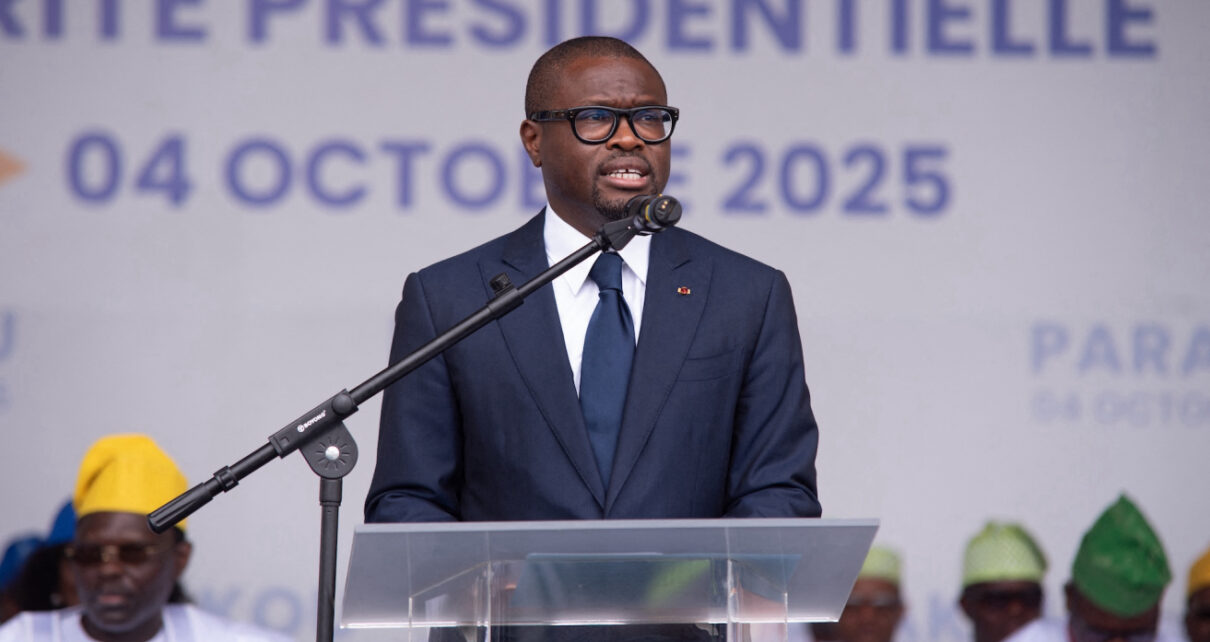
With 94.27% of the vote in the 11 April presidential election, Romuald Wadagni has secured a decisive mandate, far surpassing his opponent Paul Hounkpè. The former Finance Minister and architect of Benin’s recent economic growth now assumes leadership at a pivotal moment for the country. Hounkpè, representing a modest opposition force, acknowledged defeat and urged national unity, while the Constitutional Court certified a 63.57% turnout—significantly higher than the 50.17% recorded in 2021.
A historic moment for Benin’s democracy
This election marks Benin’s fifth democratic transition since the 1990 National Conference, a milestone in West Africa’s political landscape. Of particular note is the outgoing administration’s adherence to constitutional term limits, a rare practice in the region, where prolonged presidencies often fuel instability. Yet, despite the peaceful conduct of the vote, isolated irregularities—including allegations of ballot stuffing—were reported. While the Electoral Commission and Constitutional Court dismissed these as non-disruptive to the election’s integrity, 34,596 votes were invalidated nationwide for procedural violations.
The opposition, represented by Paul Hounkpè’s Forces Cauris pour un Bénin émergent, has struggled to gain traction in recent years. The party’s performance in the 2021 presidential election (11.37%) and January 2026 legislative elections (4.78%) reflects its limited influence, further constrained by stringent electoral reforms introduced in 2024.
From economic growth to inclusive development
As Finance Minister under Patrice Talon’s administration, Wadagni played a central role in transforming Benin’s economy. Under his stewardship, GDP growth surged from 1.8% in 2015 to an estimated 8% in 2025. Yet, despite this impressive expansion, over 40% of Beninese citizens remain trapped in poverty. Wadagni’s 2026–2033 agenda prioritizes inclusive growth, with key pillars including equitable social welfare, economic diversification, and national cohesion.
The new administration faces the urgent task of converting economic gains into tangible improvements in living standards. Wadagni’s proposed reforms aim to address structural inequalities while ensuring that growth benefits all regions and demographics.
The political landscape: reforms and constraints
Benin’s political environment has undergone significant transformation over the past decade. Constitutional revisions in 2024 and 2025 introduced stringent candidacy requirements, including a 15% sponsorship threshold from elected officials—a rule that effectively marginalized major opposition parties, such as Les Démocrates, in the 2026 election. With no viable opposition contenders, the political arena remains dominated by pro-government figures, raising concerns about the long-term viability of multiparty democracy.
Opposition parties, weakened by internal divisions and leadership crises, face an uphill battle to regain relevance. The departure of former President Boni Yayi from Les Démocrates in early 2026 exacerbated internal strife, leading to splinter factions. Without reform, opposition participation in future elections could be delayed until 2040.
Wadagni’s presidency will also navigate a constitutional framework that includes provisions for a “Republican Responsibility Pact” and a controversial political truce. While intended to foster dialogue, these mechanisms risk being weaponized to suppress dissent if not implemented transparently. The government’s ability to balance governance with political pluralism will be closely scrutinized.
Security and regional cooperation: a delicate balance
The election follows a turbulent period, including a failed coup attempt in December 2025 that threatened to destabilize the electoral process. Benin’s security challenges extend beyond domestic threats, with the resurgence of terrorism in the north and strained relations with neighboring countries. While cooperation with Nigeria has improved, ties with Burkina Faso and Niger remain fragile.
During his campaign, Wadagni emphasized diplomacy as a cornerstone of his strategy, positioning his election as an opportunity to revitalize regional partnerships. Yet, the path to cooperation depends heavily on the political will of neighboring governments. The absence of coordinated security efforts has left critical zones, including the W-Arly-Pendjari complex, vulnerable to exploitation by terrorist groups.
Without renewed regional collaboration, Benin’s security and economic stability will remain at risk. Wadagni’s presidency must prioritize restoring trust with neighbors to combat shared threats effectively.
Looking ahead: challenges and opportunities
The coming years will test Benin’s democratic resilience and economic resilience. Wadagni inherits a country with robust growth but persistent poverty, a constrained political space, and heightened security risks. His ability to unite a fractured nation, address institutional weaknesses, and restore regional partnerships will determine whether Benin can consolidate its democratic gains or face further setbacks.
The path forward demands bold reforms, inclusive dialogue, and a commitment to transparency. As Benin stands at this crossroads, the world will be watching to see if its new leader can deliver on the promise of a more prosperous, stable, and democratic future.