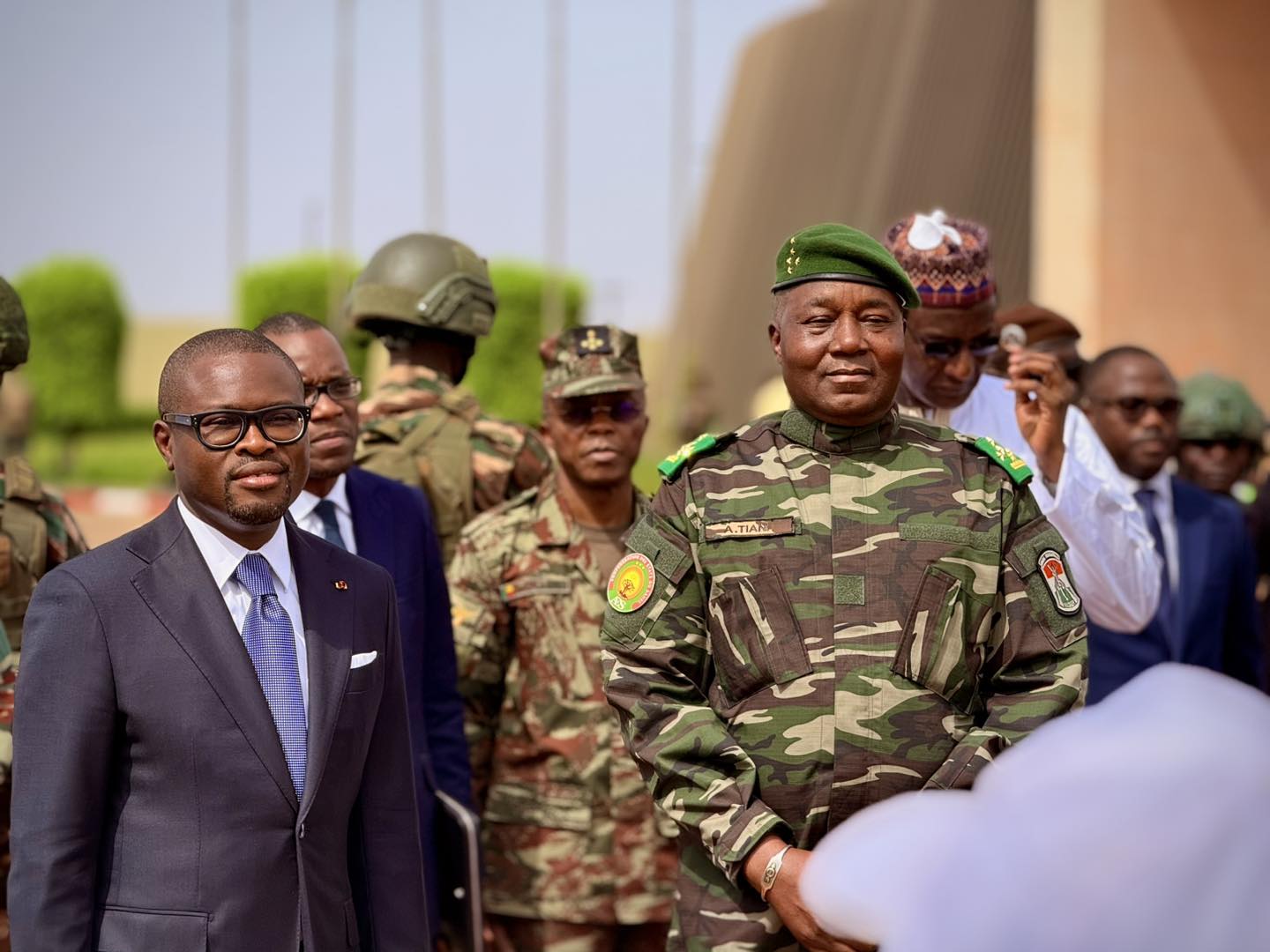
Cotonou is charting a significant new course in its diplomatic strategy. Barely invested as Bénin’s head of state, President Romuald Wadagni has embarked on a pivotal regional tour, commencing with visits to Niamey and Ouagadougou. This initiative aims to alleviate tensions with the Alliance of Sahel States (AES) and reaffirm Bénin’s indispensable role as a key partner within the sub-region.
These official visits have materialized with a speed that few observers anticipated. President Wadagni, recently inaugurated, traveled to Niamey on June 2nd for discussions with his counterpart, General Abdourahamane Tiani, before proceeding to Ouagadougou for talks with Captain Ibrahim Traoré. Additionally, he has scheduled engagements in Lomé, Abidjan, and Accra before the week concludes. These swift diplomatic overtures signify a profound shift following years of strained relations with certain neighboring countries.
Economic pragmatism fostering peace
By selecting Niger and Burkina Faso as the initial destinations for his neighborhood diplomacy, the successor to Patrice Talon has made a powerful statement. Relations between Cotonou and the AES capitals had significantly deteriorated in recent years, characterized by border closures, the blockade of Nigerien crude oil transiting via the Sèmè-Kpodji pipeline, and mutual accusations of security destabilization.
Leveraging his background as a former Minister of Economy and Finance, Romuald Wadagni is approaching this crisis with his characteristic pragmatic acumen. For Bénin, the effective reopening of the Nigerien border and the seamless flow of the transport corridor towards the Sahel are paramount economic imperatives, crucial for sustaining the operations of the Autonomous Port of Cotonou.
It is understood that, as per the official communiqué from the Béninese State Protocol, discussions will predominantly concentrate on «regional security challenges, prospects for economic and commercial cooperation, and mechanisms to strengthen solidarity among the respective populations.»
A three-pronged strategic agenda for Cotonou
This diplomatic offensive is designed to address urgent challenges that are critical to the successful execution of the new head of state’s mandate:
- Transborder Security: Given the persistent jihadist threat impacting northern Bénin along its frontiers with Burkina Faso and Niger, the re-establishment of military cooperation and intelligence sharing is considered vital by strategic commands.
- Commercial De-escalation: Rebuilding trust with Niamey is essential to normalize the export of Nigerien crude and reinvigorate the transit of goods.
- Regional Stability: Following his engagements with the Sahelian nations, the Béninese president will meet with his CEDEAO partners (Togo, Côte d’Ivoire, Ghana) to position himself as a facilitator, striving to avert a definitive fragmentation between West African blocs.
Navigating the complexities of a new diplomatic chapter
While this proactive diplomatic approach has been widely lauded by business communities and regional observers as a revitalizing force for Béninese foreign policy, the path toward compromise remains intricate. Resolving the accumulated disputes of the past two years will undoubtedly necessitate more than symbolic handshakes.
Nevertheless, by taking decisive action within the very first days of his presidency, Romuald Wadagni is clearly imprinting his distinctive mark: a diplomacy unburdened by past constraints, rigorously focused on dialogue and economic realism, which is indispensable for stabilizing a rapidly evolving West African geopolitical landscape.