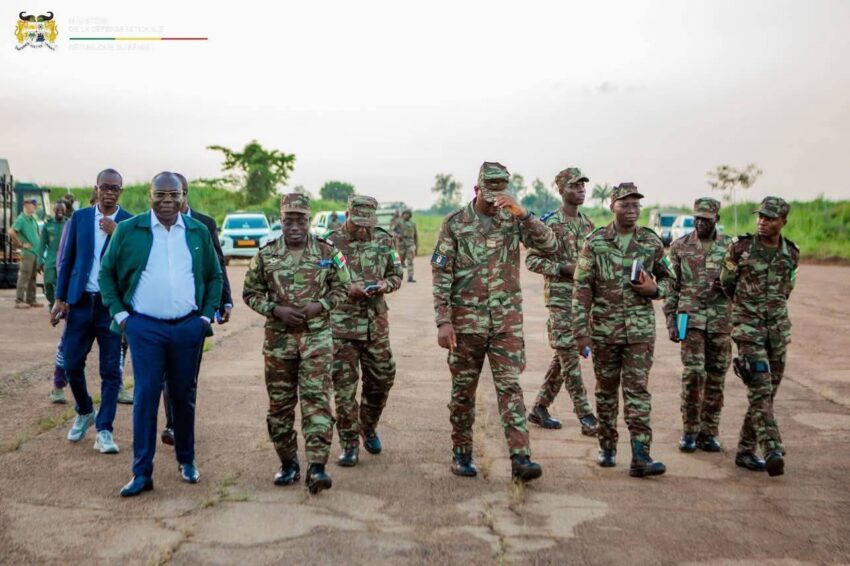
The recent visit by Benin’s delegated minister of national defence, Gildas Habib Bignon Agonkan, to the military aeronautics school at Cana air base has set off a wave of reactions and raised pressing questions about the future of military aviation training in the country. The inspection, which took place on Friday, October 9, 2026, has reignited public discussion on how Benin can build a self-reliant air force and what steps are needed next.
What the Cana visit revealed about current training capacity
Located within the Cana air base, the military aeronautics school (known as EAM-Cana) plays a central role in developing aeronautical skills for Benin’s armed forces. It offers instruction in piloting, aircraft maintenance, air traffic control, and technical support. The school’s classrooms, simulators, workshops, and innovation spaces are designed to prepare military personnel for the growing demands of the air force. It also contributes to training the 100 drone pilots recruited by the general staff.
During his working visit, the minister was received by Lieutenant Colonel Olayéni Thierry Monda, commander of the Cana air base. He attended several presentations covering the missions, equipment, and challenges faced by military structures, including the 1st Mixed Artillery Battalion, the national officers’ school, and the peacekeeping operations training centre.
Reactions and public debate: what observers are saying
The delegation then toured the school’s teaching and technical facilities, including classrooms, flight simulators, and maintenance workshops. A reconnaissance drone demonstration, flown by trainee military personnel, was also organised. The visit concluded with an inspection of the airfield’s runway, which base officials say is ageing and no longer meets current standards and operational needs.
In the wake of the visit, public debate has focused on the state of infrastructure and the government’s commitment to modernising the school. Many observers have welcomed the minister’s emphasis on training pilots and technicians on national soil to strengthen Benin’s autonomy in military aeronautics. Others have pointed to the ageing runway as a stark reminder of the investments still required.
Outlook: ambitions, challenges, and what comes next
At the end of his immersion, Gildas Agonkan praised the work of the command and the dedication of instructors and trainees. He stressed the importance of training pilots and technicians domestically to reinforce Benin’s autonomy in military aeronautics. The minister reaffirmed the government’s willingness to support the school’s development, with the stated ambition of making EAM-Cana a sub-regional reference hub.
Achieving that goal will require significant investment in infrastructure, equipment, and teaching resources, particularly to meet the growing demands of aeronautical training. Through this visit, the authorities are highlighting the role of specialised training in modernising Benin’s armed forces. The development of EAM-Cana is increasingly seen as a key issue for the country’s air sovereignty.
Looking ahead, the debate is likely to shift from symbolic visits to concrete action. Stakeholders will be watching for budget allocations, infrastructure upgrades, and partnerships that could turn Cana into a true centre of excellence. For now, the visit has succeeded in putting military aviation training firmly on the national agenda.