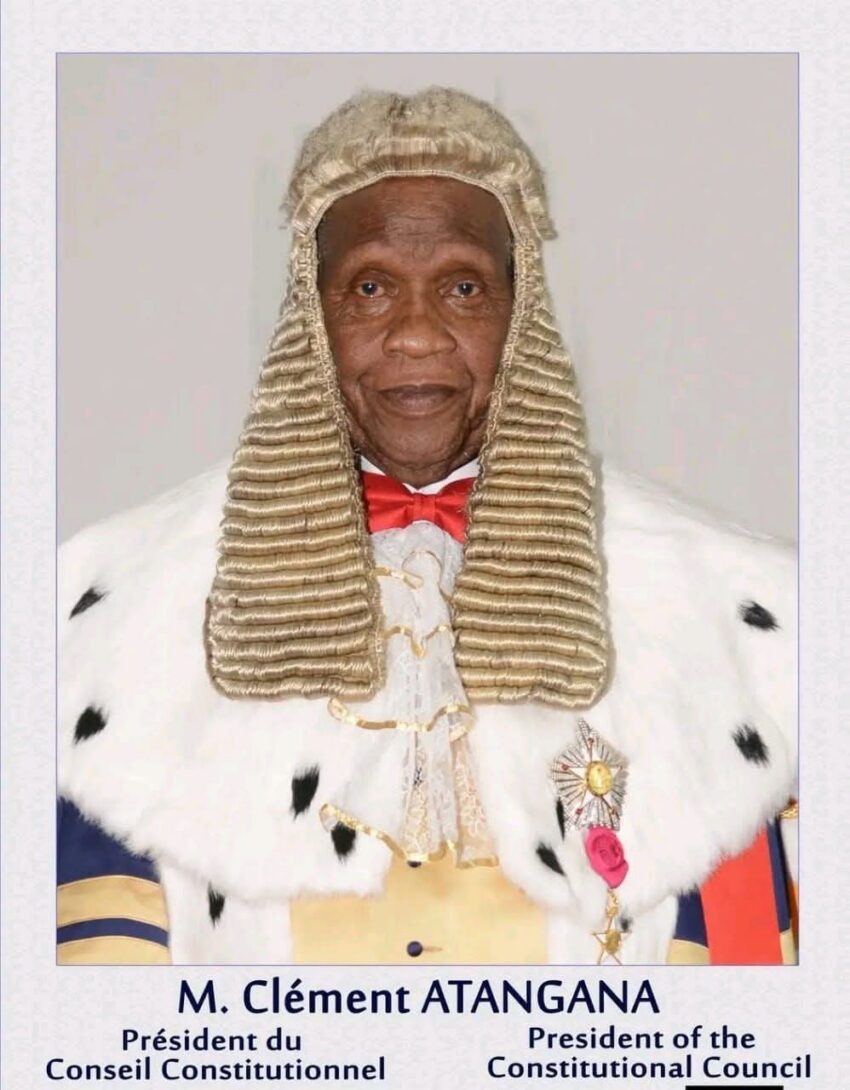
Clément Atangana, the president of Cameroon’s Constitutional Council, died in Paris on the morning of 4 October 2026. He was 85. The senior magistrate had been evacuated to France for more intensive medical treatment, but he did not survive. His passing closes a long career that ended under a cloud of controversy.
An 85-year-old magistrate from Ngomedzap
Born in Ngomedzap, in the Nyong and So’o division, Atangana was a magistrate of the highest rank. He spent decades in the state apparatus before being appointed to lead the Constitutional Council, the body responsible for ruling on electoral disputes and the constitutionality of laws.
The 2018 election and the ‘irrecevable’ label
His tenure became defined by the 2018 presidential election. When opposition candidates filed petitions challenging the results, the Constitutional Council under his leadership rejected every one of them with a single word: irrecevable (inadmissible). The public seized on the term, and Atangana himself was soon nicknamed ‘Irrecevable’. From that point on, the Council was widely viewed as an institution subservient to the ruling party, the RDPC.
A video that fuelled suspicions of bias
Suspicions of partiality were reinforced on the night the presidential results were announced. A video circulated on social media showing Atangana celebrating with his family after Paul Biya, the outgoing president and RDPC candidate, was declared the winner. In the footage, he told his relatives that Biya was ‘your candidate’. The clip deepened the impression that the Council was not a neutral arbiter.
The Nyong and So’o meeting controversy
In 2025, Atangana took part in a meeting of the Nyong and So’o Development Committee. The gathering produced a motion of support for Paul Biya and called on him to run in the next presidential election. A reporter from Cameroon Tribune, the government-owned newspaper, covered the event and reported on the motion, which sparked widespread debate and criticism. Atangana insisted he had attended a meeting of an apolitical association and had not been present when the motion was drafted. Nevertheless, many opponents already saw him as a Biya supporter, a perception reinforced by footage of him celebrating after his appointment.