Will opposition protests return to the democratic republic of Congo?
The recent approval by the Constitutional Court of the law governing the organization of a referendum has reignited fierce debates over the possibility of constitutional amendments in the Democratic Republic of the Congo (DRC). While the government views this as a necessary legal step, opposition leaders are sounding the alarm, warning of escalating political tensions.
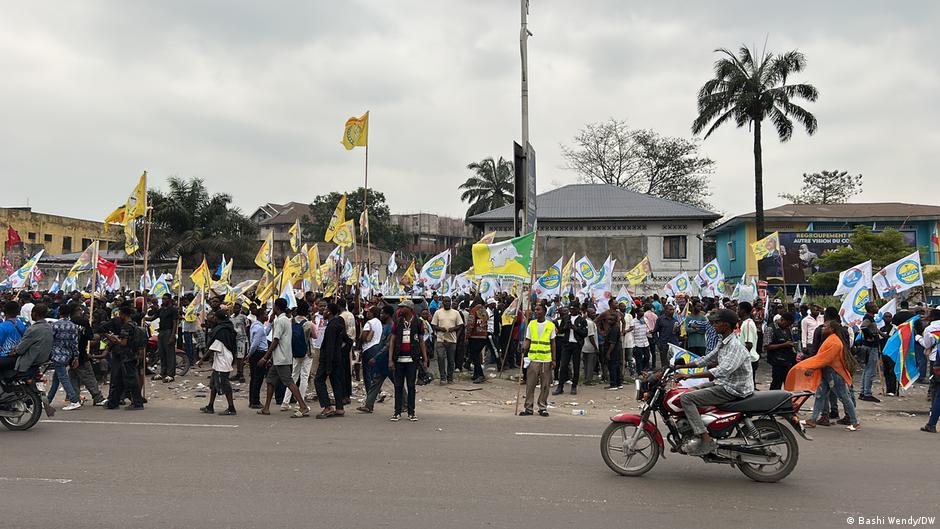
The coalition Article 64, a prominent opposition group, has forcefully rejected the court’s decision, arguing that it paves the way for a constitutional revision aimed at allowing a third presidential term. Prince Epenge, a spokesperson for the coalition, delivered a defiant message to the public.
We will not back down. We are pooling our strength and energy to ensure this law never becomes operational in our country.
The people are angry. They must remain standing, united, and resolute in rejecting the third term and any attempts to divide our nation.
Epenge’s statements highlight the growing frustration among opposition supporters, who view the referendum law as a direct threat to democratic principles and the country’s stability.
Kinshasa residents voice their concerns
As coalition leaders gathered in the capital to strategize their next moves, Kinshasa residents shared their anxieties about the potential for renewed unrest. Many fear that upcoming protests could spiral into violence, disrupt daily life, and lead to tragic consequences.
One resident questioned the opposition’s approach, asking, “Will their demands be pursued peacefully?” They emphasized the need to avoid “loss of life at all costs.”
Another resident expressed deep unease about the country’s political climate, stating, “The situation in the DRC could deteriorate rapidly following this decision.”
A third resident placed blame squarely on the ruling power, accusing authorities of “sending people to destabilize opposition marches.”
The sentiment among many in the capital is that the population, rather than the government, will bear the brunt of any unrest. “It is the people who will suffer the most when protests erupt,” one resident remarked.
Political dialogue at risk of collapse
Political analysts are warning that the swift enactment of the referendum law could derail ongoing efforts to foster dialogue and reconciliation. Timo Roujean, an analyst with the Konrad Adenauer Foundation, cautioned that President Félix Tshisekedi’s rapid approval of the law before August 15 could undermine diplomatic initiatives and embolden factions advocating for armed confrontation.
If the law is signed before mid-August, the push for dialogue will be in vain.
In an increasingly tense environment, where talk of a constitutional coup is already circulating, this court decision risks fueling the narrative that opposition is only possible through violence.
The Constitutional Court’s ruling has not resolved the deepening divide between the presidential camp, which now has a legal framework for its plans, and the opposition, which remains steadfast in its refusal to accept any constitutional reforms. The coming weeks will be critical in determining whether the DRC can avert further political crisis or if tensions will escalate into open conflict.