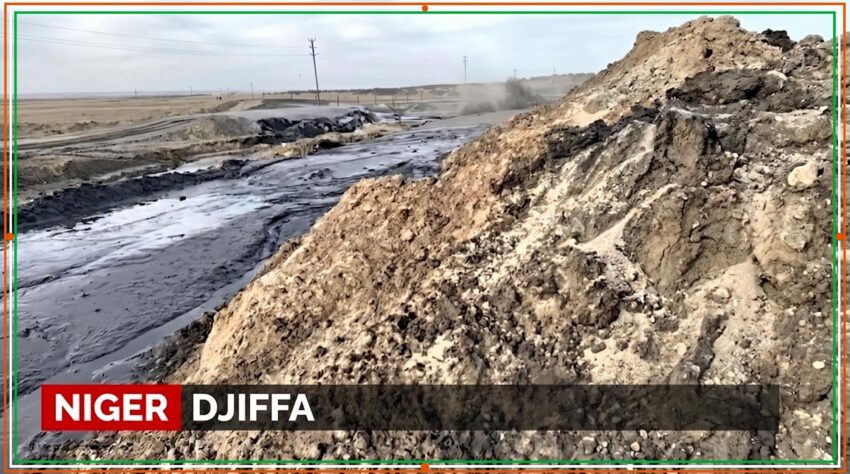
A growing environmental alarm in eastern Niger
A dark slick is reportedly spreading across the land in Diffa, in eastern Niger, where crude oil — a strategic resource for the national economy — has become a source of mounting concern. A reported leak, now said to have been flowing for nearly a week, has triggered a wave of reactions and hard questions about what happens next.
At this stage, the exact scale of the pollution, the volume of oil released, the origin of the leak and any human or environmental damage remain to be established through a field investigation. But one thing is clear: any prolonged hydrocarbon discharge demands a rapid, coordinated and transparent response.
Why every hour counts
In a region where oil activities play a significant role, leaks cannot be dismissed as mere technical incidents. When crude escapes from installations and spreads into the natural environment, every hour matters. The longer the flow continues, the more complex containment and cleanup operations become.
The first imperative is to pinpoint the leak, determine its cause and stop the flow. Specialist teams must then map the affected area, prevent the oil from spreading further and collect samples to assess the nature and extent of the contamination.
Letting such a situation unfold without clear public information would be deeply troubling. Residents have the right to know what is happening in their environment, what risks they may face and what is being done to protect their health and livelihoods.
Reactions from affected communities
Behind the images of an oil slick lie consequences that can reach far beyond the immediate perimeter of the spill. Depending on the terrain and the proximity of water resources, hydrocarbons can contaminate soils, degrade natural habitats and disrupt farming or pastoral activities.
Surface water and drinking water supplies may also be at risk if the oil reaches them. The scale of the damage depends on factors including the volume spilled, the composition of the crude, weather conditions and how quickly responders act.
For riverside communities, persistent pollution can become a source of economic and health uncertainty. Families who depend directly on natural resources are especially vulnerable if their land, water points or livelihoods are affected.
The cost of silence and unanswered questions
Anxiety grows when available information does not clearly reflect what is happening on the ground. If the leak has indeed been ongoing for several days, the relevant authorities and the operators of the installations concerned must communicate about the measures being taken.
Who operates the facilities near the site? Has the leak been located? Have containment operations begun? Have samples been taken? Have nearby residents been informed of precautions to take?
These questions demand precise answers, not speculation. It falls to the competent services to confirm the facts, report initial findings and publish the results of environmental assessments.
Transparency is essential. It helps counter rumours, reassure residents on the basis of verifiable facts and establish responsibility if failures are identified.
What comes next for Niger
The development of oil activities can contribute to public revenue, jobs and investment. But these economic benefits cannot justify minimising environmental risks or leaving communities alone to face the consequences of an industrial accident.
The situation reported in Diffa is a reminder of the importance of prevention: regular maintenance of infrastructure, monitoring of installations, effective early-warning systems and well-prepared response teams. A credible environmental policy is measured not only by announced commitments but also by the ability to prevent accidents and react immediately when they occur.
If responsibilities are established, the procedures set out in regulations must be applied. Cleanup, restoration of affected environments and, where appropriate, compensation for harm suffered by communities should be part of the response.
Three priorities for Diffa
Faced with this alert, three priorities stand out: stop any active leak, protect the population and measure the possible damage. Environmental authorities, oil services and installation operators must act in a coordinated way, with the support of experts able to produce a reliable diagnosis.
Niger needs resource extraction that respects public health and preserves ecosystems. In Diffa, the stakes go beyond managing an isolated incident: they concern collective responsibility towards present and future generations.
An oil spill is not just a dark stain on the ground. It can leave lasting marks on land, water and the living conditions of communities. That is why the alert must be taken seriously, the facts verified without delay and protection measures made public.
In Diffa, the urgent task is not to look away, but to shed full light on this reported leak, halt its effects and ensure that environmental protection is never relegated to second place.