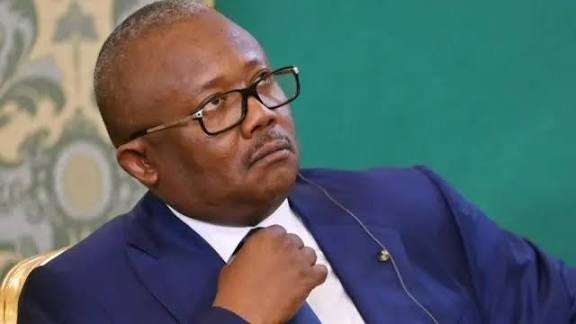
A blunt rejection from Bissau’s military leadership
Bissau has once again become the stage of a high-stakes political confrontation. Umaro Sissoco Embaló, the ousted former president, has broken his long silence from exile to declare that he intends to return home and run in the presidential election planned for later this year. The response from the military high command was swift and uncompromising: a terse statement flatly rejecting his return and accusing him of attempting to destabilise the country.
With political provocations coming from abroad and a military regime refusing to budge, the capital is holding its breath once more.
A risky gamble from a president in exile
Embaló’s public declaration sent shockwaves through West African political circles. Speaking from exile after his abrupt removal, he made clear he wants to come back and stand as a candidate in the presidential poll earmarked for the end of the year.
Rather than accepting the end of his political career, the former strongman of Bissau is positioning himself as the legitimate alternative. He points to the transition charter, which explicitly bars current junta officials from contesting elections. For Embaló, this opens a clear political path. To turn that gamble into reality, a broad coalition known as the “Republican Platform” has been assembled behind the scenes, bringing together around a dozen organisations and political parties to back his candidacy.
For the deposed leader, this is not simply about taking part in an election. It is about an institutional comeback and proving that his popular base remains intact despite last November’s humiliation.
Inside a coup that left unfinished business
To grasp the intensity of this standoff, it is necessary to go back to 26 November 2025. On that day, Guinea-Bissau, a country long familiar with military upheaval, plunged once again into chaos.
Tensions were already running extremely high. Three days earlier, on 23 November, voters had gone to the polls in a decisive presidential election. As counting was nearing its end and both Embaló’s camp and that of his main rival claimed victory, heavy gunfire echoed across the capital.
Within hours, armed members of the Revolutionary Armed Forces of the People surrounded the presidential palace and seized Umaro Sissoco Embaló. The putschists, organised as a “High Military Command for the Restoration of National Security,” promptly suspended the electoral process, claiming they were acting to thwart a plot to manipulate the results.
Yet controversy surfaced almost immediately. International observers, numerous diplomats and key opposition figures were quick to label the takeover an “arrangement” or a “political farce.” Embaló’s critics accused him of staging a self-coup to neutralise an anticipated victory by his opponents and halt the verdict of the ballot box. Flown out the following day to Dakar on a special flight, Embaló left behind a country mired in legal and institutional uncertainty.
The junta’s categorical veto
It is precisely this contentious record that the military junta now cites against the former president’s ambitions to return. In their sharp response to his statements, the military authorities made clear he would not be allowed to set foot on national soil, blaming him squarely for the crisis that led to November’s takeover.
“No actor who has compromised social peace and national stability will be permitted to instrumentalise the transition process for the purposes of electoral agitation,” the military leadership declared.
For the senior officers now running Bissau, allowing Embaló back would mean reintroducing a major risk factor into an already fragile political landscape. The junta intends to keep tight control over the electoral calendar and over who is permitted to compete.
Bissau-Guinean democracy under severe strain
By blocking Umaro Sissoco Embaló’s path, the military leadership risks inflaming an already poisonous political climate. A large segment of the traditional opposition finds itself marginalised, hit by exile or legal proceedings, while Embaló’s supporters denounce what they call an authoritarian drift and arbitrary exclusion.
As Guinea-Bissau struggles to chart a roadmap back to constitutional order, the veto hurled at the former president raises a crucial question about how inclusive the next elections can possibly be. Between a deposed leader determined to force his way back from abroad and a military junta resolved to keep the door firmly shut, the country’s democratic trajectory is more uncertain than ever.