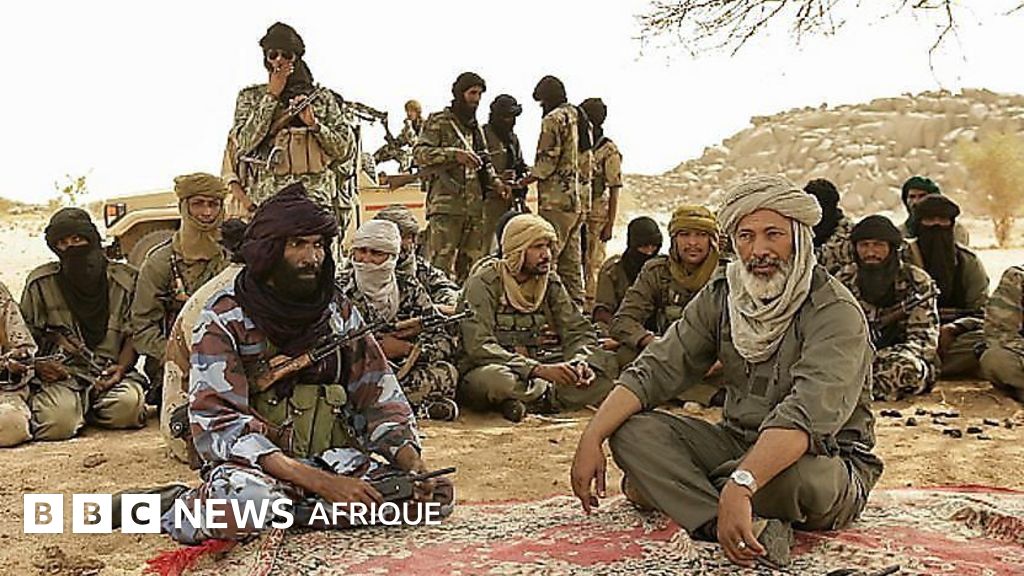
Mali’s northern conflict: understanding the Azawad Liberation Front and its alliances
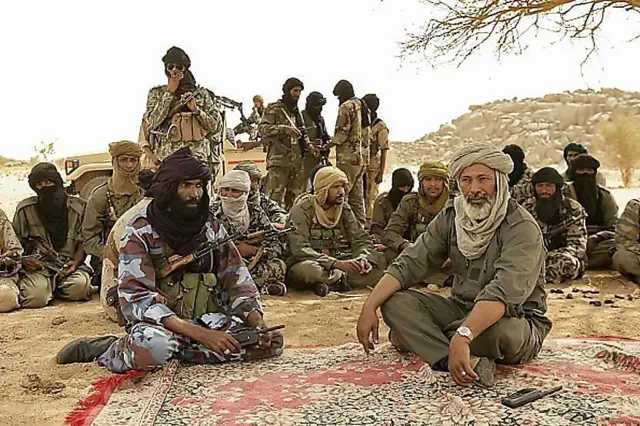
Getty Images
The separatist Azawad Liberation Front (FLA) has forged an alliance with the JNIM (Group for the Support of Islam and Muslims), launching a second military offensive this weekend. Their objective is to reclaim control over regions in northern and central Mali currently held by government forces.
This latest push comes nearly two months after the FLA first joined forces with the Al-Qaeda-linked Jamaat-e-Nosra al-Islam wal-Muslimin (JNIM) to carry out coordinated attacks across northern, central, and southern Mali on April 25.
Those earlier attacks reached Kati, a strategic stronghold for the Malian military power, and significantly destabilized the government led by Assimi Goïta. The Minister of Defense, Sadio Camara, was killed, and the intelligence chief, Modibo Koné, sustained severe injuries.
During the April offensive, the FLA managed to recapture Kidal, a city that had become a highly symbolic fortress for the Malian army and the Russian Africa Corps troops after its capture in 2023, representing their military success in the country’s north.
However, the Malian army announced that it had regained control of Kidal following a counter-offensive launched after the April 25 attacks.
Reports from various social media accounts and specialized Sahel security blogs indicate a renewed mobilization by the FLA, with local residents in northern Mali being recruited for the anticipated offensive.
On June 4, Malian authorities declared a total reward of $12.4 million for any information leading to the arrest or death of the leaders of both JNIM and FLA.
In response to the escalating threat, the Malian army and the Africa Corps have intensified their operations in the northern regions, while also making substantial investments in military equipment to prepare for potential new attacks.
Who comprises the FLA?
The Azawad Liberation Front (FLA) was officially established on November 30, 2024, in Tinzaouatene, a small town in northern Mali bordering Algeria. It emerged from the merger of various Tuareg and Arab separatist armed groups, all united by the common goal of an independent Azawad.
Azawad refers to a specific region encompassing the cities of Gao, Timbuktu, Kidal, and Ménaka. This area was first declared an independent state in 2012 by the National Movement for the Liberation of Azawad (MNLA), one of the foundational groups that later formed the FLA.
The FLA is the successor to the Permanent Strategic Framework for Peace, Security, and Development (CSP-PDA) coalition, which itself was a result of the amalgamation of several separatist factions.
These organizations included the MNLA, the High Council for the Unity of Azawad (HCUA), rebel factions of the Arab Movement of Azawad (MAA), and the pro-government Imghad Tuareg Self-Defense Group and Allies (Gatia).
The origins of Tuareg unity, however, trace back to 1988 in Libya, where the Popular Movement for the Liberation of Azawad (MPLA) was founded by Algerian and Libyan exiles, under the leadership of Iyad Ag Ghali, who now heads JNIM.
Bilal Ag Acherif serves as the president of the FLA. Born in Kidal in 1977, he plays a pivotal role in the political leadership and governance of the movement.
Acherif’s right-hand man, Alghabass Ag Intalla, acts as the FLA’s military chief, responsible for reconciliation efforts and relations with JNIM. Intalla is the son of the late traditional Ifoghas chief, Intallah Ag Attaher, who passed away in 2014.
Mohamed Ramadane is the official spokesperson for the group.
What are the FLA’s objectives?
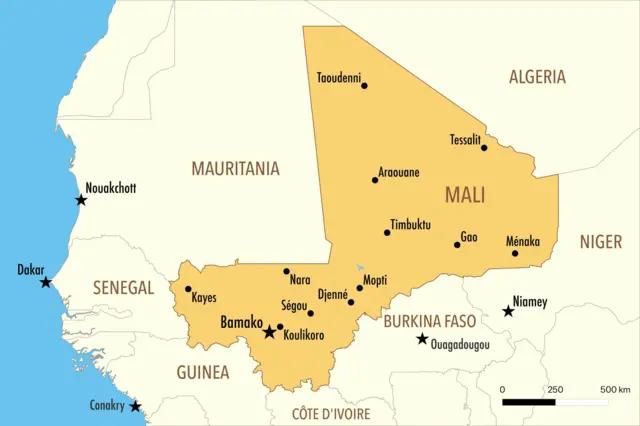
Getty Images
Certain Arab and Tuareg communities have been in opposition to the Malian government since the country gained independence in 1960, leading to armed rebellions in 1962, 1990-1996, and most recently in 2012.
The FLA’s ultimate goal is the establishment of an “Azawad Republic,” envisioned as a homeland for the estimated two million Tuaregs dispersed across West and North Africa, a consequence of colonial fragmentation.
The FLA accuses the Malian government of systemic political, economic, and cultural marginalization of the region.
While northern Mali possesses abundant reserves of salt, uranium, gold, diamonds, and phosphates, it has seen minimal government investment in essential infrastructure such as schools, health centers, water and electricity supply, and roads.
Acherif recently championed the movement’s independence efforts, asserting that Azawad “was annexed to Mali without regard for its history as an independent civilization.”