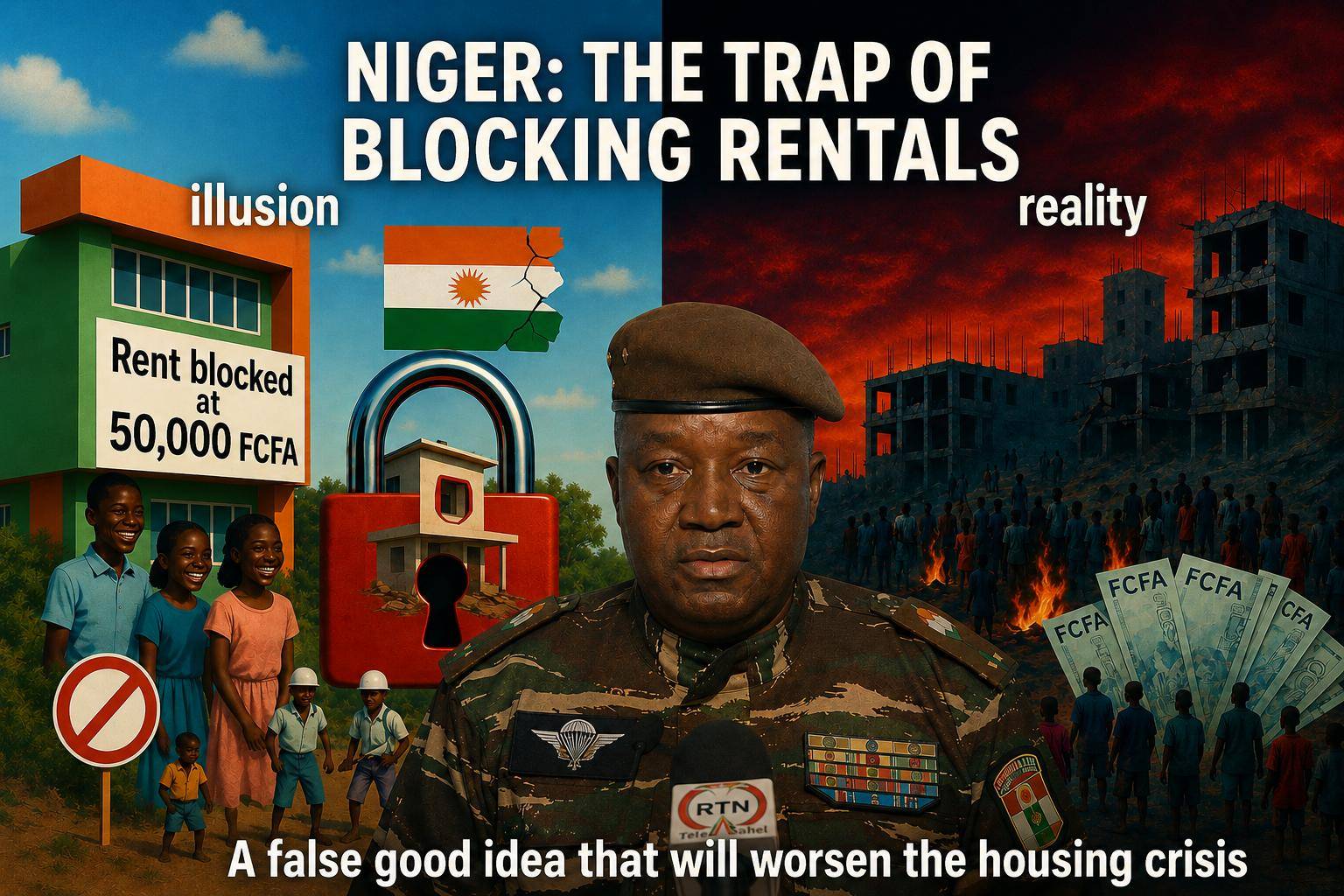
The Nigerien government has recently implemented a decree capping rental prices in Niamey between 15,000 and 80,000 FCFA. While the policy aims to appease low-income citizens, it disregards fundamental economic principles. Rather than easing housing burdens, the measure risks stifling construction and exacerbating the very crisis it seeks to resolve.
This decision, framed as a populist move, has drawn sharp criticism from economists. By mandating nationwide rental price controls, the transitional administration claims to combat speculative practices and curb unjustified price surges. History, however, demonstrates that such top-down price interventions consistently fail to deliver sustainable solutions.
The economic fallout of forced rent controls
At its core, the housing sector operates on the immutable principle of supply and demand. When housing availability lags behind population growth, prices inevitably rise. To alleviate this imbalance, the only effective long-term strategy remains increasing housing supply through accelerated construction.
By imposing artificially low maximum rents (80,000 FCFA for social housing in Niamey), the government has inadvertently created three critical challenges:
- Investment deterrence: Developers and property owners will abandon construction projects when profitability becomes unattainable under the new regulations.
- Neglect of existing properties: Reduced rental income will discourage maintenance, leading to rapid deterioration of existing housing stock.
- Emergence of black markets: With legal avenues failing to meet demand, prospective tenants may resort to under-the-table payments to secure housing.
Government limitations and broader economic implications
The success of rent control would require the state to undertake massive social housing construction to offset private sector withdrawal. However, with public finances constrained by political instability and reduced international aid, such an initiative remains financially unfeasible.
Furthermore, the decree sends negative signals to domestic financial institutions. Reduced construction activity directly impacts lending practices, creating ripple effects throughout the economy—from cement suppliers to local laborers.
A populist miscalculation with dire consequences
This decree represents a shortsighted political maneuver aimed at garnering urban public support during a transitional period. Yet economic theory confirms that price controls cannot resolve structural shortages. By disincentivizing construction, the military regime risks transforming an affordability crisis into a full-blown housing scarcity, making Niamey’s rental market even more inaccessible than before.