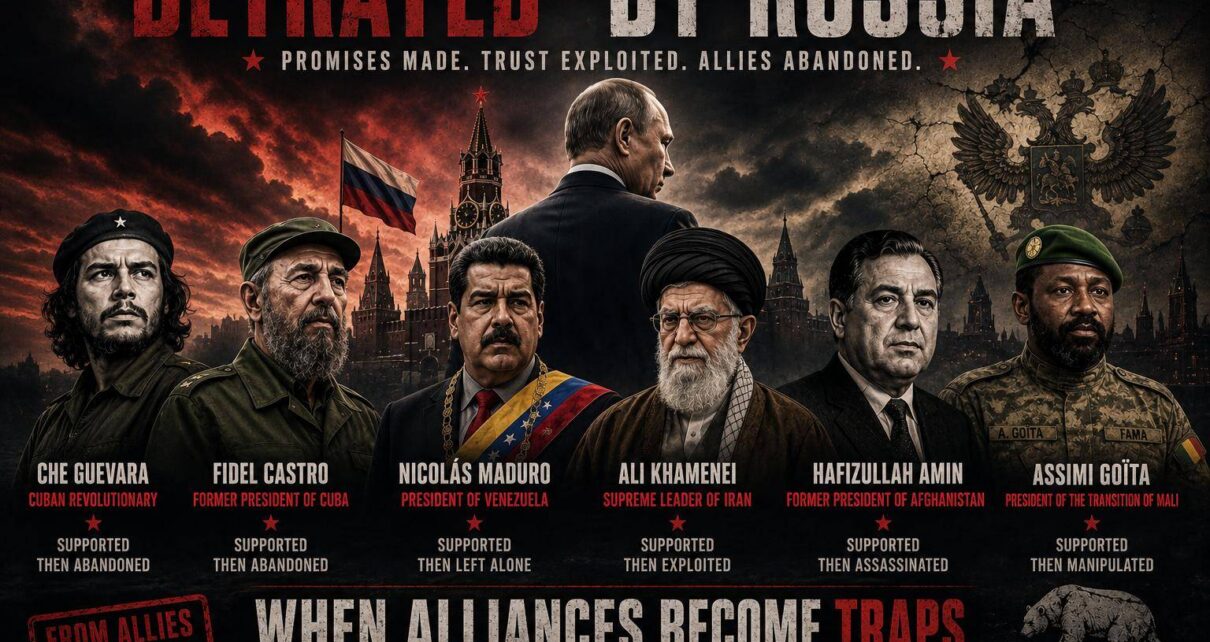
Amid rising turmoil for Russia’s strategic partners worldwide, observers notice a striking diplomatic pattern: the Kremlin’s deliberate silence. Far from the image of an unyielding protector ready to intervene at the slightest distress signal, Moscow has embraced silence as a calculated doctrine whenever its allies face severe turbulence.
Diplomatic detachment as a survival tool
This recurring scenario unfolds with almost mechanical precision. Whether allies face localized military setbacks, internal political crises, or mass uprisings, Russia’s first response is neither fiery rhetoric nor swift rhetorical reinforcement—it’s an eerie, near-surgical void. A strict media blackout replaces the usual diplomatic activism that has long defined Moscow’s global posture.
The ‘wait and see’ doctrine
International relations analysts argue this reflex is no spontaneous show of weakness but a display of cold pragmatism. When an ally falters, the Kremlin defaults to a ‘wait and see’ approach. The goal? To avoid binding Russia’s prestige and credibility to a sinking cause or a failing leader at all costs.
By adopting a stance of passive observation, Moscow secures maximum flexibility. If the ally manages to stabilize the situation independently, official support can resume seamlessly. But if the regime collapses irrevocably, the prior silence allows Russia to avoid sinking with the ship—and even opens doors for discreet backchannel negotiations with emerging power brokers.
Silence speaks volumes
Yet this mutism carries weight—it’s a form of subliminal diplomacy. While Western capitals often flood the airwaves with condemnations or appeals for restraint, Russia conveys disapproval or frustration through conspicuous absence. When an ally crosses a red line, mishandles a crisis, or stumbles into a dead end without Moscow’s explicit approval, the deafening silence from the Russian Foreign Ministry serves as a quiet rebuke. A subtle signal that the ally must bear the consequences of its mistakes alone, without exposing alliance fractures to the world.
Alliances built on transaction, not loyalty
This approach sheds light on the true nature of Russia’s partnerships: transactional relationships where sentiment plays no role. Moscow only intervenes—verbally or materially—if vital interests or direct strategic positions are threatened. If the crisis only jeopardizes a local regime, the Kremlin prefers to conserve political capital and redirect international pressure onto its ally’s shoulders.
The art of strategic invisibility
While official diplomacy retreats into media silence, Moscow’s communication strategy shifts to covert channels. State media and influence networks flood the discourse with distractions or blame shifting to ‘invisible Western hands,’ creating a smokescreen as the Kremlin monitors the political thermometer from a distance.
A lesson in geopolitical realism
Recent diplomatic history suggests that Moscow’s support is often a fair-weather garment—shining brightest in times of peace and victory. When storms gather and political costs rise, Russia retreats behind a wall of silence, reminding allies of a harsh geopolitical truth: in times of crisis, solidarity is a rare luxury.