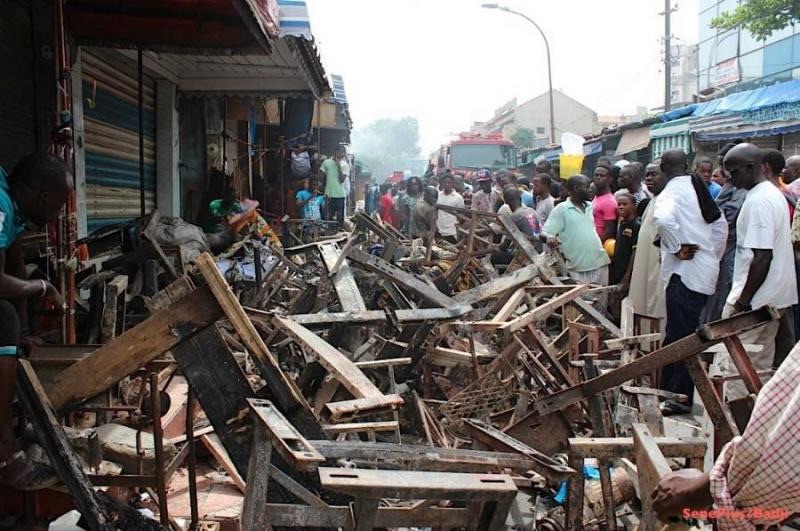
Dakar’s aging market infrastructure has reached a critical point, with Prime Minister Ousmane Sonko exposing deep-seated vulnerabilities in the country’s commercial hubs during a cabinet meeting. The assessment reveals decades of neglect, with most market facilities dating back to the 1970s now posing serious safety hazards to vendors and consumers alike.
Shocking figures presented by Sonko underscore the urgency of the situation: between 2013 and 2024, a staggering 53 markets across Senegal experienced one or more destructive fires, highlighting systemic failures in infrastructure resilience and risk management. Beyond safety concerns, the sector grapples with multifaceted challenges spanning technical deficiencies, inadequate urban planning, organizational inefficiencies, environmental neglect, and critical sanitation gaps.
From diagnosis to action: Senegal’s market revival strategy
The Prime Minister outlined a sweeping modernization agenda under the Market Modernization and Management Program (PROMOGEM), anchored by a 2025–2029 strategic development blueprint. The vision includes transforming all 528 existing markets while constructing 67 new, state-of-the-art facilities to meet modern commercial demands.
Sonko emphasized the launch of a pilot phase to test innovative solutions, while acknowledging operational bottlenecks that could impede progress. Central to the reform is a bold institutional overhaul designed to enhance agility, financial efficiency, and funding diversification. Key measures include:
- Establishing an autonomous administrative and financial entity to oversee market operations
- Allocating 57.5 billion FCFA over four years through the Public Investment Plan (PIP)
- Updating legal frameworks to streamline governance and accountability
Collaborative efforts to rebuild Senegal’s market network
The Prime Minister tasked the Minister of Industry and Commerce—working closely with counterparts in Finance and Budget, as well as Urban Planning, Territorial Communities, and Land Management—to spearhead the deployment of these modern markets nationwide. He stressed the need for strict oversight by local governments and private sector partners to ensure sustainable operations and long-term viability of the revamped network.