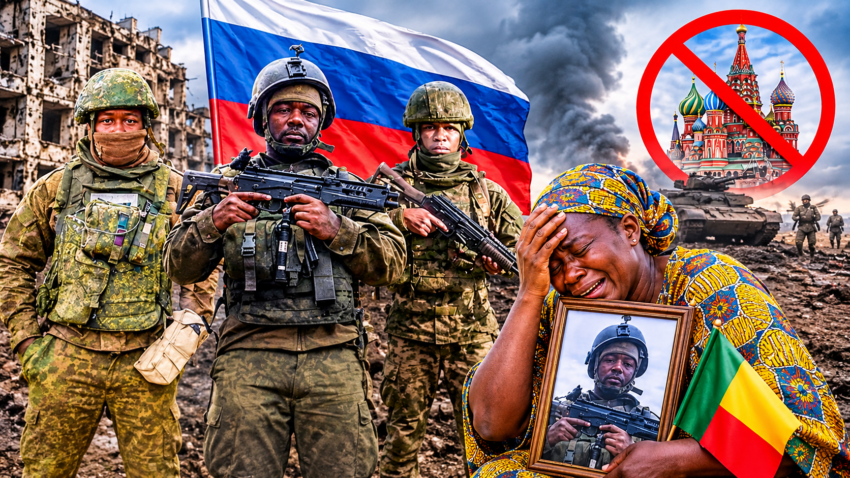
The intersection of academic migration and armed conflict
The recent casualty of a scholar from Benin on the Ukrainian frontlines has illuminated a severe crisis impacting international scholars from the African continent. Pursuing higher education in Russia is frequently viewed as a strategic avenue for socioeconomic advancement and professional development. However, the current geopolitical hostilities have transformed these academic environments into zones of extreme peril, ensnaring unsuspecting individuals in military operations.
Although numerous international scholars complete their degrees without complication, verified reports indicate a troubling pattern of deception. Driven by the allure of financial compensation or false employment guarantees, certain individuals are manipulated into armed service. Stripped of familial support networks and legal advocacy, these scholars confront the brutal realities of warfare, a stark deviation from their educational objectives.
Systemic exploitation and financial precarity
The susceptibility of these scholars to military recruitment is deeply rooted in structural disadvantages. Upon arrival, many grapple with severe economic constraints, inadequate community networks, and a heavy reliance on third-party brokers for accommodation and administrative processing. When faced with limited legitimate prospects, seemingly advantageous proposals can mask hidden martial commitments.
Once integrated into active combat theaters, the lack of linguistic proficiency and comprehension of foreign judicial frameworks severely restricts their ability to seek assistance. Consequently, relatives back home often remain oblivious to the hazardous reality their children are enduring until a catastrophic event occurs.
Institutional obligations and diplomatic safeguards
The ethical burden of protecting international scholars extends to the educational establishments and recruitment facilitators orchestrating their mobility. Academic institutions must guarantee absolute transparency during the enrollment phase, ensuring candidates are fully informed of any latent liabilities. Agreements that ambiguously conflate scholarly pursuits with armed duty require rigorous oversight.
Concurrently, state authorities and diplomatic missions bear the primary responsibility for citizen welfare abroad. Implementing preventative strategies—such as comprehensive pre-departure orientations, timely diplomatic advisories, and robust emergency extraction procedures—is essential to neutralize threats before they materialize into irreversible tragedies.
Strategic imperatives for student protection
The loss of the Beninese scholar transcends individual grief, serving as an urgent catalyst for systemic reform. To fortify the security of international scholars, a coordinated effort among state actors, academic bodies, and global organizations is imperative. Essential interventions include:
- Requiring explicit clauses in all academic and vocational agreements that categorically prohibit military conscription;
- Expanding the capacity of diplomatic missions to provide immediate intervention for vulnerable scholars;
- Launching thorough inquiries into brokerage firms that capitalize on the financial desperation of candidates;
- Developing educational campaigns to help scholars and their dependents identify deceptive contractual terms.
Honoring the human toll through proactive prevention
Beyond the geopolitical data and official communiqués lies the profound sorrow of a family mourning a prematurely ended life. A comprehensive inquiry into the circumstances surrounding this casualty is vital to establish liability and deter future exploitation. Nevertheless, true prevention relies on preemptive education, empowering candidates to critically evaluate ambiguous proposals and enabling families to accurately gauge the hazards of overseas relocation.
The pursuit of scholarly excellence must never culminate in a theater of war. As scholars from the African continent continue to navigate global educational pathways, their physical security must remain an absolute priority. The demise of a single scholar is an unacceptable loss, demanding immediate and decisive intervention.