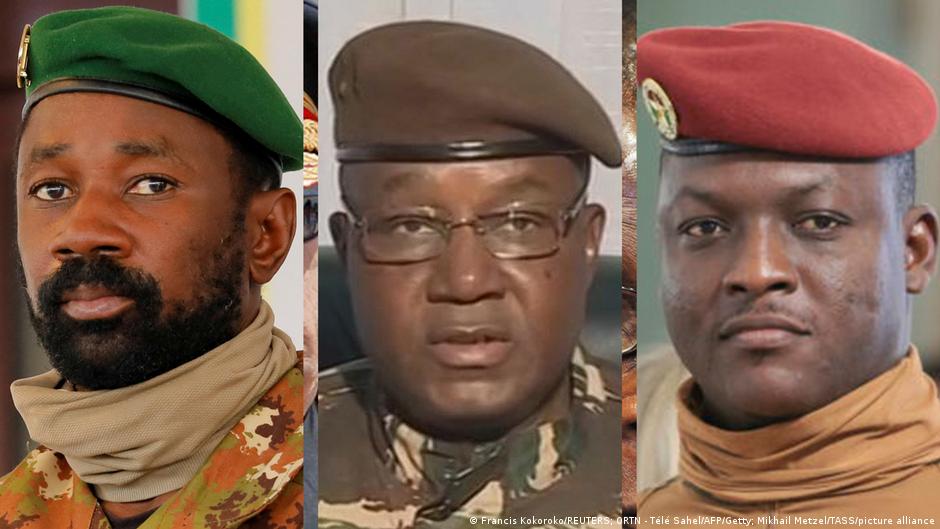
The political landscape of West Africa is shifting rapidly. Burkina Faso, Mali, and Niger are currently under the stewardship of military leaders who assumed control through various coups between 2020 and 2023. These three nations, covering a vast territory of nearly 2.8 million square kilometers, share a common struggle: the relentless battle against terrorism and armed insurgencies that have plagued the region for years.
Security and the fight against extremism are the primary justifications offered by these military governments. The rise of jihadist movements created a state of perpetual instability, which ultimately led to the collapse of previous civilian administrations in Mali, Niger, and Burkina Faso. Initially, many citizens, exhausted by the government’s inability to provide safety, viewed these military interventions as a necessary short-term fix.
However, as these transitional periods extend indefinitely, residents within the AES (Alliance of Sahel States) are beginning to question the military’s commitment to reinstating the rule of law. The very concept of democracy is increasingly being challenged by those in power. In Mali, for instance, recent national dialogues suggested the dissolution of all political parties and associations. Furthermore, they recommended that the transitional leader, Assimi Goïta, be officially recognized as President for a renewable five-year term.
Assimi Goïta has held power since the August 2020 coup. His authority lacks electoral validation, relying instead on a perceived public mandate that is difficult to measure accurately given the current climate of restricted dissent.
Searching for a unique political identity
The situation in Niger and Burkina Faso mirrors that of Mali. In all three AES member states, major political factions have boycotted “national consultations.” This is significant because democracy relies on checks and balances. While there is no universal template for governance, nations often look to their own history and social realities to shape their political systems.
Across the Sahel, there is a growing movement to move away from neocolonial structures and develop a governance model rooted in African values. The recent series of coups could be interpreted as a rejection of the democratic frameworks established during the national conferences of the 1990s, which emphasized the rule of law and regular power transitions.
Legal experts, such as Soma Abdoulaye from the University of Ouagadougou, suggest that the issue in Africa is not a lack of democratic institutions or laws, but rather a lack of democratic spirit among leaders who fail to implement them properly.
The manipulation of public sentiment
The debate over “Western-style democracy” remains intense in Ouagadougou, Bamako, and Niamey. Transition authorities often leverage public opinion to consolidate their hold on power, frequently pushing democratic reforms to the background. In Mali, the democratic journey that began in 1992 with the election of Alpha Oumar Konaré has been severely disrupted by a decade of insecurity and political upheaval.
In Niger, the introduction of multi-party politics in the 90s originally brought hope for freedom of speech and choice. However, the practical failure of democratic institutions often paved the way for military intervention. Since the ousting of President Mohamed Bazoum, the Nigerien public remains divided on the value of the democratic process.
Regional bodies like Cédéao and various international organizations have attempted to enforce a return to constitutional order through sanctions. Yet, many locals view these measures as evidence of Western meddling. For the AES countries, the current struggle is framed as a quest for total sovereignty, leading them to distance themselves from Cédéao.
Military leaders like Ibrahim Traoré of Burkina Faso have openly questioned the efficacy of democracy, suggesting it has not led to development. This stance is countered by critics who point out that dictatorial management systems have historically failed to provide lasting progress.
The plight of political parties and the case of Guinée
The survival of an effective opposition requires political education and the freedom to operate. This is a significant challenge in the current Sahelian context, where opposition groups often find themselves weakened by the ruling regimes.
This trend extends beyond the AES to Guinée, which has been under military rule since September 2021. The junta in Conakry has aggressively reshaped the political scene, banning over 50 political parties for allegedly failing to meet official criteria.
While Guinée has announced plans for a constitutional referendum as a step toward restoring civilian rule, the government faces accusations of stifling free speech and suppressing political opponents, much like the administrations in Mali, Niger, and Burkina Faso.