Yacouba Camara made his international comeback official at the West Africa Rugby Cup in Bamako. The former French international flanker took the field for Mali’s national team, the Eagles.


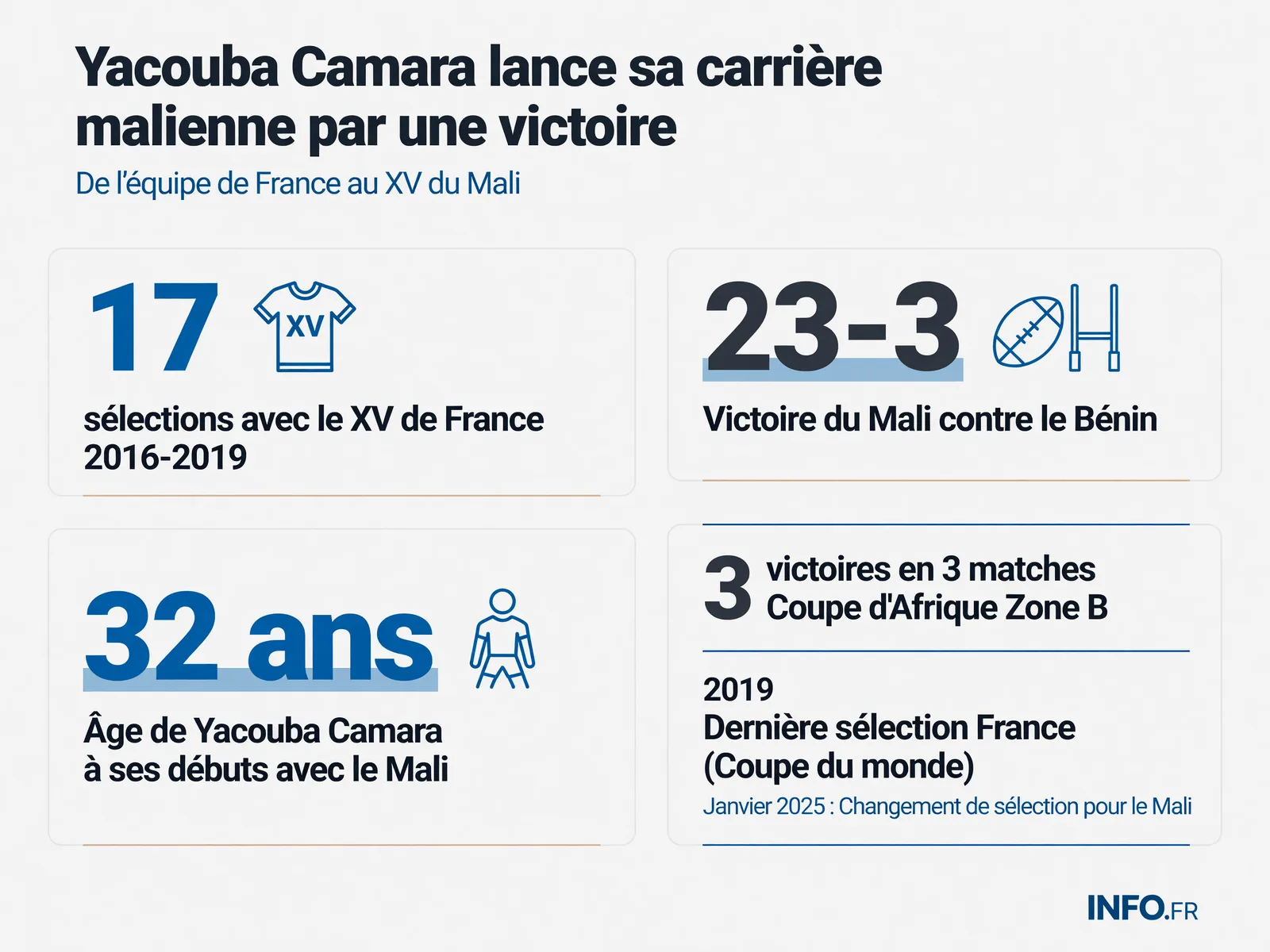
The Mali Eagles secured a convincing 23-3 win over Benin in the regional tournament held in Bamako. This victory follows two earlier triumphs—32-7 against Guinea and a dominant 52-9 against Niger—cementing their unbeaten run in the competition.
Seven-year gap ends with a new chapter
Camara’s return to international rugby marks the end of a seven-year absence from the French national team. His last appearance for France was at the 2019 Rugby World Cup. Now, he has chosen to represent Mali, the land of his parents, in a bid to contribute to the growth of African rugby.
Transforming Mali’s rugby landscape
The experienced flanker brings more than just on-field leadership. With a deep understanding of professional rugby’s demands, he is poised to help the Malian Rugby Federation professionalize the sport in the country.
Why France overlooked a proven talent
The shift to Mali also highlights broader issues in French rugby’s approach to dual-national players. Despite maintaining a high level in the Top 14, Camara was not called up after 2019. Successive coaching staffs favored different profiles, leaving him without a clear path back into the French team. This situation underscores the challenges French rugby faces in managing veteran players who no longer fit long-term plans while still performing at a high level. It’s a scenario that may prompt other dual-national players to consider opportunities elsewhere.
A trend reshaping rugby dynamics
Camara’s journey mirrors that of other French-trained players who have chosen African nations. These cases demonstrate how dual-national players can become vital assets in developing rugby across the continent. With his elite experience, Camara is not only boosting Mali’s chances but also setting a precedent for the next generation of players.
What this switch reveals about modern rugby
The flanker’s decision raises a pivotal question: What can veteran players bring to emerging rugby nations? Instead of retiring in a foreign club, Camara opted for a fresh start with Mali, blending sport with identity. His story also challenges French rugby’s approach to player transitions, showing how exclusion can push talent toward new horizons—an outcome that may inspire other overlooked players to seek opportunities abroad.