2024 census exposes gaps in Morocco’s electoral map ahead of 2026 vote
Morocco’s rapid urban expansion, as confirmed by the 2024 general population and housing census, is reshaping the country’s electoral landscape. The census reveals stark contrasts between booming urban peripheries and shrinking historic city centers, raising critical questions about the fairness of the 2026 legislative elections.

The 2024 general population and housing census (RGPH) has unveiled profound demographic shifts across Morocco. Over the past decade, the country has witnessed the rapid growth of urban peripheries, the decline of historic city centers, and relative stagnation in rural areas. These transformations are now at the heart of a heated debate: does the current electoral map still ensure fair representation for all citizens?
Extreme disparities in voter-to-representative ratios
The electoral system in Morocco operates on two key principles: demographic logic, which adjusts the number of seats to population size, and territorial equity, which guarantees a minimum of two seats per province to prevent marginalization of less populated areas. However, this system has created stark disparities in representation.
In some southern provinces, the ratio of eligible voters per deputy is exceptionally low:
- Tarfaya: 5,368 eligible voters per deputy
- Aousserd: 2,992 eligible voters per deputy
- Assa-Zag: 10,178 eligible voters per deputy
- Es-Semara: 19,712 eligible voters per deputy
- Boujdour: 20,185 eligible voters per deputy
In stark contrast, major urban centers and their surrounding areas show extremely high ratios:
- Tanger-Assilah: 213,980 eligible voters per deputy
- Ménara (Marrakech): 176,256 eligible voters per deputy
- Sidi Bernoussi (Casablanca): 174,501 eligible voters per deputy
- Nouaceur (Casablanca periphery): 155,172 eligible voters per deputy
- Inezgane-Aït Melloul: 151,978 eligible voters per deputy
This means that a vote cast in a province like Aousserd or Tarfaya carries significantly more weight in electing a deputy than one cast in a major city like Tanger or Marrakech.
Urban decline versus suburban growth
The 2024 census confirms Morocco’s accelerating urbanization. Of a total population of 36.8 million, urban residents now number 23.1 million—a rise of nearly 2.7 million in ten years. Meanwhile, the rural population has grown by just 302,419, reaching 13.7 million. A staggering 71.2% of the national population is concentrated in just five regions: Grand Casablanca-Settat, Rabat-Salé-Kénitra, Marrakech-Safi, Fès-Meknès, and Tanger-Tétouan-Al Hoceïma.
One of the most striking trends is the migration of residents from historic city centers to outlying communes. Casablanca-Anfa, for example, lost nearly a quarter of its population in a decade, dropping from 453,000 to 332,000 residents. Yet it retains four seats, with a ratio of 68,707 eligible voters per deputy.
In contrast, the peripheral province of Nouaceur saw its population double over the same period to 665,000 residents. With only three seats, its ratio stands at 155,172 eligible voters per deputy.
If the electoral map remains unchanged for 2026, these trends will further amplify representation imbalances within metropolitan areas. Similar disparities are evident around Rabat, where central districts like Rabat-Océan and Rabat-Chellah have ratios of 55,856 and 59,598 eligible voters per deputy respectively, while the rapidly growing Skhirat-Témara area has a ratio of 141,832.
Political stakes of potential electoral redistricting
Adjusting the electoral map to reflect the 2024 census will require complex political decisions ahead of the 2026 elections. If authorities choose to rebalance seats without increasing the total number of deputies, they would need to shift seats from declining zones like Anfa or Rabat city centers to expanding peripheries such as Nouaceur or Skhirat-Témara.
Reducing the number of seats in a constituency intensifies electoral competition, favoring large parties with strong financial resources and established mobilization networks—such as the current coalition parties RNI, PAM, and Istiqlal. Conversely, increasing the number of seats per constituency lowers the threshold for parliamentary entry via the “largest remainder” mechanism, offering better prospects for smaller parties.
Rural anchoring and participation distortion
Despite rising urbanization, many voters in major cities remain registered and vote in their rural hometowns to maintain local influence. This explains the traditionally high turnout rates in rural areas—sometimes exceeding 90% of registered voters—contrasting with high abstention rates in urban centers, where turnout in some middle-class constituencies can drop below 30%.
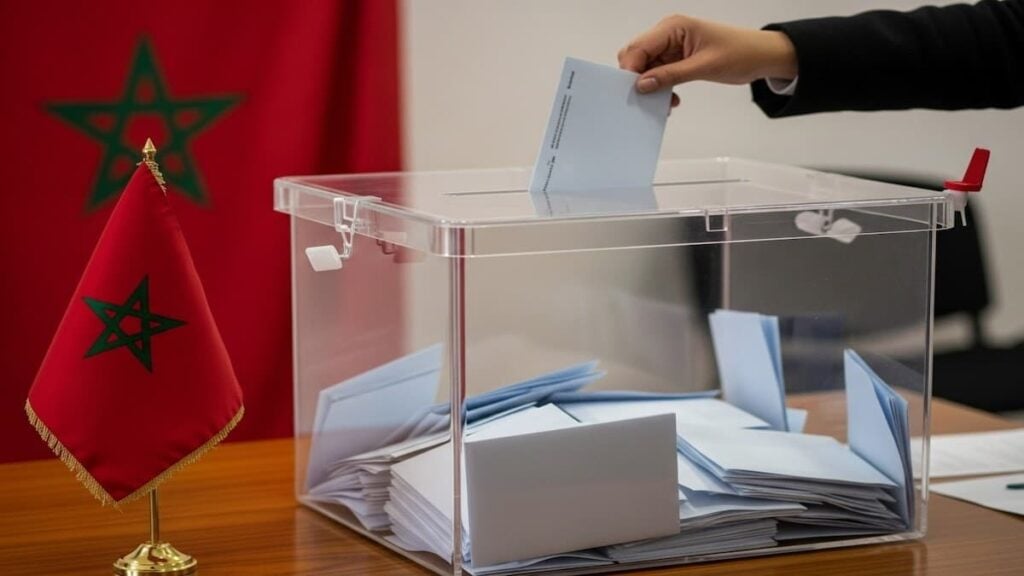
These dynamics are central to ongoing voter registration and list revision campaigns. Beyond registering new voters, these efforts aim to update records for citizens who have moved from urban centers to fast-growing peripheries, correct registration errors, and enhance the overall accuracy of the electoral roll ahead of the September 23, 2026 legislative elections.
2026 legislative elections: the urban middle class and abstention challenge
The demographic realities revealed by the 2024 census pose strategic challenges for the upcoming vote. Two key factors stand out:
- Mobilizing the urban middle class: squeezed by inflation and feeling overlooked by recent targeted social aid reforms, this group largely abstained in 2021. Their potential return to the polls in 2026—whether as a protest vote or in support of alternative proposals—could reshape the political landscape.
- Political positioning of major parties: the ruling coalition parties will need to defend their economic and social records in a post-inflation context, while opposition groups like the PJD may seek to capitalize on urban discontent and mobilize their base, disappointed by past local governance.
Ultimately, reconciling the demographic realities exposed by the 2024 census with the preservation of territorial balances will require careful negotiation from policymakers. Though no official revision of the electoral map has been announced, the release of new population data has set the stage for a technical and political debate that will be impossible to ignore ahead of the 2026 legislative elections.