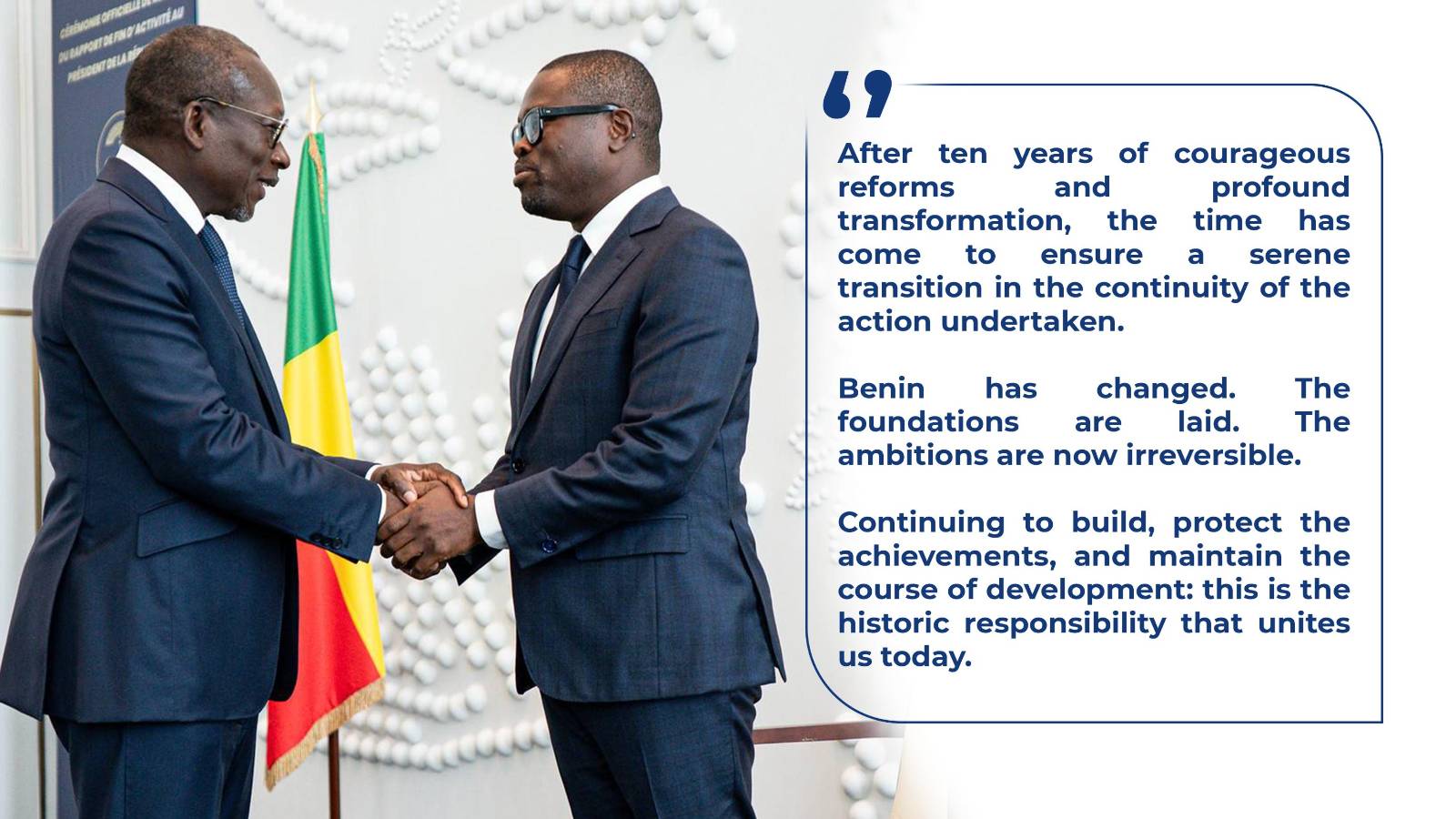
The political landscape of Bénin has reached a pivotal moment as the nation prepares to bid farewell to President Patrice Talon. With the inauguration of his successor, Romuald Wadagni, just days away, the outgoing leader delivered a solemn address to the nation—marking the end of an era defined by the « Rupture » doctrine. Over the past ten years, this period of governance has left an indelible imprint on the country’s economic, social, and institutional fabric.
A decade of reforms: triumphs and sacrifices
In a televised address broadcast across official channels, President Talon presented a comprehensive assessment of his tenure, which began in 2016. His administration was characterized by sweeping structural reforms, rigorous fiscal consolidation, and an accelerated push to modernize the nation’s infrastructure. Yet, the president did not shy away from acknowledging the challenges faced along the way.
« The path forward demanded immense sacrifices from the Bénin people. While some measures were unpopular, they were essential to extricate our nation from underdevelopment and restore its standing on the global stage, »
he declared, expressing deep gratitude for the resilience and patriotism of his fellow citizens in enduring the rigorous reforms of the past decade.
A seamless transition to technocratic leadership
The heart of Talon’s address centered on the future, symbolized by the transfer of power to Romuald Wadagni, his former Minister of Economy and Finance. As the architect of the government’s macroeconomic policies, Wadagni’s selection underscores a transition rooted in continuity, stability, and institutional strength. For the outgoing president, this handover ensures the preservation of critical national recovery initiatives while paving the way for a new phase of governance focused on consolidation.
Key achievements of the Talon era
- Economic resilience: Public finances were overhauled, leading to a significant improvement in the country’s sovereign credit rating.
- Urban transformation: The « asphaltage » program revitalized cities, enhancing mobility and urban living conditions.
- Industrial growth: The Glo-Djigbé Industrial Zone (GDIZ) emerged as a hub for economic activity, attracting investment and fostering job creation.
Wadagni’s agenda: addressing urgent challenges
While the nation stands transformed, the challenges ahead remain formidable. Romuald Wadagni inherits a country with solid macroeconomic foundations, but immediate priorities demand his attention. Three pressing issues top the agenda for the incoming administration:
- Social equity: Restoring purchasing power and ensuring the benefits of economic growth are broadly shared.
- Political cohesion: Easing social tensions and fostering dialogue with opposition groups to strengthen national unity.
- National security: Addressing the growing threat of terrorism and securing the northern borders from destabilizing influences.
A democratic milestone
By adhering to the constitutional limit of two terms, Patrice Talon has reinforced Bénin’s democratic credentials. This commitment to institutional norms stands in stark contrast to the political turbulence and constitutional manipulations seen elsewhere in West Africa, reaffirming the country’s reputation for stable governance.
As preparations for the official inauguration ceremony in Cotonou gather pace, Bénin stands at the threshold of a new chapter. The « Rupture » era has drawn to a close, and with it, a decade of determined leadership that reshaped the nation’s trajectory. Now, the focus shifts to building upon these foundations with pragmatism and foresight.