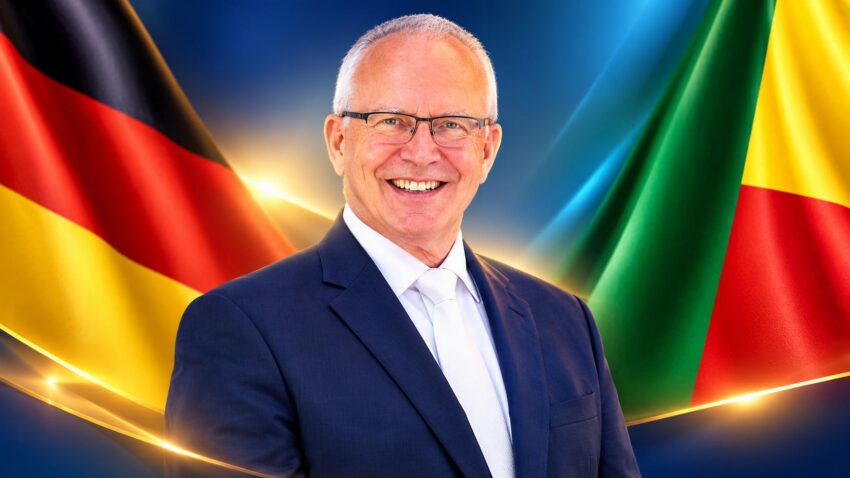
The ink was barely dry on the joint communiqué when reactions began pouring in. On 8 October 2026, Benin and German delegations wrapped up two days of strategic bilateral consultations at the Ministry of Economy, Finance and Cooperation in Cotonou — and the announcement of an additional €15 million (roughly 9.8 billion CFA francs) has since ignited a lively public debate about what the money can realistically achieve before the two governments meet again in Berlin in 2027.
What was actually agreed in Cotonou
The talks were co-chaired by Hugues O. Lokossou, Benin’s minister in charge of mobilising external resources and managing debt, and Dr Silvia Morgenroth, who heads the West Africa Division at Germany’s Federal Ministry for Economic Cooperation and Development (BMZ). Their discussions, formalised in a joint statement issued on 9 October 2026, set the stage for the intergovernmental negotiations scheduled in Berlin in 2027 — a rendezvous that both sides now describe as the real test of the partnership.
The €15 million breakdown
According to the joint statement, the fresh German funding for the current year will be split across two priority areas:
- Energy transition: adding a solar component to the Nangbéto hydroelectric plant, a mixed hydro-solar regional project.
- Local entrepreneurship: expanding advisory and technical support programmes for small and medium-sized enterprises, with a strong emphasis on empowering women entrepreneurs.
Why the announcement is generating debate
Public reaction in Cotonou has been mixed. Supporters see the €15 million as a concrete sign that Berlin is willing to put money behind its words, particularly on renewable energy and women-led businesses. Critics, however, question whether the sum is sufficient to move the needle on either front — and whether the real decisions have simply been postponed to Berlin 2027.
The debate has also revived a broader conversation about how Benin’s development partners measure success. For many observers, the value of the German pledge will be judged not by the size of the cheque but by how quickly projects reach the communities that need them most.
Three pillars aligned with Benin’s reform agenda
Berlin’s representatives praised Cotonou’s track record on economic and financial reforms and reaffirmed support for the government’s action programme (PAG) through three priority areas:
- Financial governance and decentralisation: strengthening local and territorial budget management capacities.
- Private sector development and vocational training: better matching skills training to youth employment needs.
- Water management and biodiversity: improving communities’ environmental resilience.
Both governments also restated their shared commitment to the rule of law, democracy and multilateral values — principles they say will continue to guide the partnership.
What comes next: the road to Berlin 2027
With the Cotonou consultations now closed, attention shifts to Berlin, where the two countries will negotiate their next multi-year commitments. For Benin, the stakes are clear: turning the €15 million into a springboard for larger, longer-term financing. For Germany, the 2027 talks represent an opportunity to demonstrate that its engagement in West Africa is strategic, not symbolic.
In the meantime, the coming months will reveal whether the solar component at Nangbéto and the SME support programmes can be launched quickly enough to build momentum — and to answer the sceptics who argue that another announcement, however welcome, is no substitute for delivery.