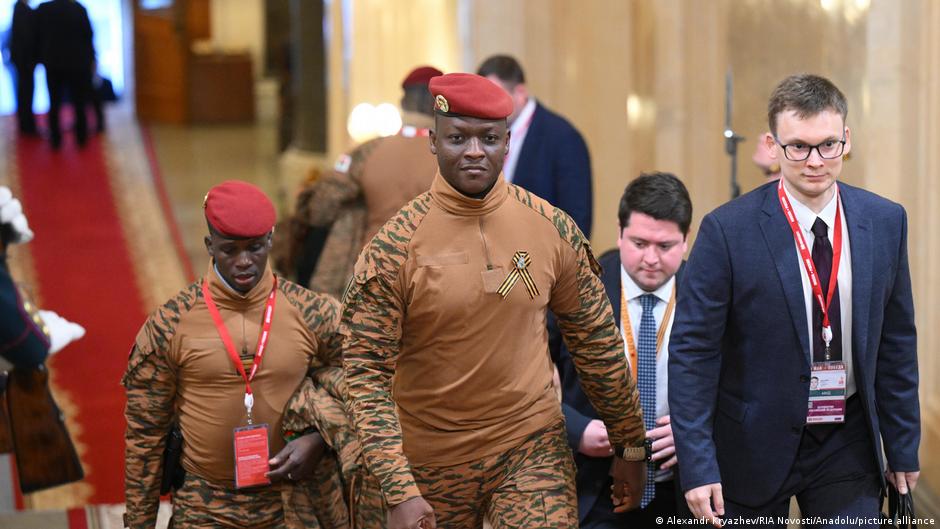
The adoption of Burkina Faso’s new Revolutionary Progressive Charter has reignited debates about the country’s direction under Captain Ibrahim Traoré’s leadership. Since seizing power in September 2022, the military leader has faced intense scrutiny over his commitment to democracy and transparency.
Initially, Traoré pledged to serve only temporarily, but his administration has since cracked down on dissent while invoking the legacy of Burkina Faso’s revolutionary icon, Thomas Sankara. His government’s recent actions—including the dissolution of over a hundred associations, many advocating for human rights—have drawn sharp criticism from international observers.
In late March, the Revolutionary Progressive Charter (RPP) was unanimously approved by the Transitional Legislative Assembly, replacing the 2024 Transitional Charter. This move has intensified discussions about Burkina Faso’s political future and the military’s role in shaping it.
Meanwhile, the country’s regional alliances, particularly the Alliance of Sahel States formed in September 2023, remain a key topic of analysis. Experts weigh in on how these partnerships influence Burkina Faso’s security and governance amid ongoing instability.
Key voices in the debate
- Teehl Loé Konaté, project coordinator and analyst specializing in Pan-African dynamics and international relations. He also serves as Deputy Secretary-General of Kamita, a civil society organization focused on culture, history, and Pan-African foresight.
- Paul Amegakpo, President of the Tamberma Institute for Governance (ITG).
- Mayra Djibrine, President of the Alliance of Sahel Democrats.
As Burkina Faso navigates these pivotal moments, questions linger: Is the revolution delivering on its promises, or is it veering off course under military rule?