In the 57 days since President Paul Biya left Cameroon for what was announced as a short private visit to Europe, the country has entered uncharted waters. At 93 years old, the world’s longest-serving head of state remains out of public view in Geneva, while a sweeping military reshuffle raises alarms over tribal allegiances and a potential power vacuum.
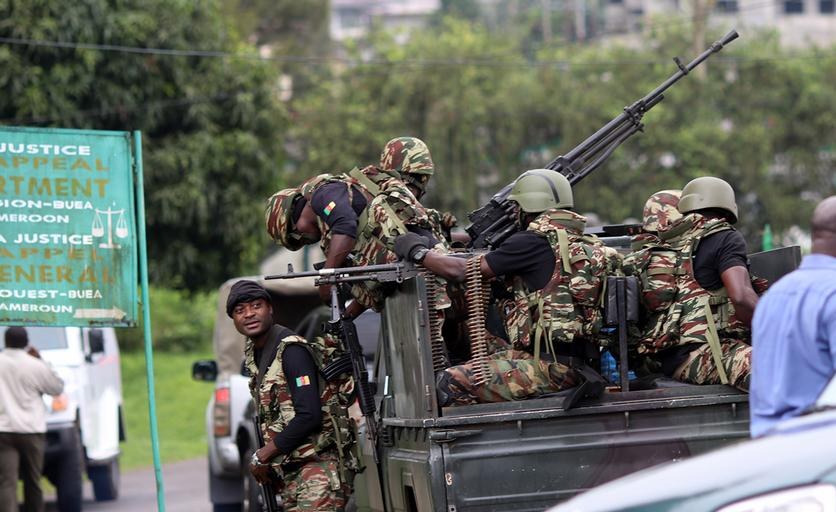
Military reshuffle stokes succession fears
On August 3, 2026, a presidential decree (n°2026/265) appointed General Beko’o Abondo Raymond Jean Charles as head of the Presidential Guard, a critical position overseeing the protection of the head of state. This move was followed by a broader restructuring of the armed forces, including:
- Five new brigadier generals
- A new army chief of staff, General Ebaka Hippolyte
- Six new regional commanders across four of Cameroon’s five military zones
Observers question why such sensitive appointments were made in the absence of a president who has not been seen in public since June 7. “No one can reshuffle the military in this way without the president’s direct authorization,” noted a retired colonel who declined to be named.
Health rumors and constitutional uncertainty
Official statements insist Biya remains in good health, but details about his condition remain scarce. Media reports suggest he underwent knee surgery in early July, with some speculating complications arose. Meanwhile, opposition figures and civil society leaders demand transparency.
Roger Justin Noah, secretary-general of the Movement for the Renaissance of Cameroon (MRC), questioned the timing of Biya’s prolonged absence: “Why risk undermining electoral credibility by vanishing for weeks abroad? The Cameroonian people deserve clarity on the president’s condition.”
The clans vying for control
Behind the scenes, two dominant factions are locked in a silent power struggle:
- The Biya family faction, centered around the president’s eldest son, Franck Biya, seen as the continuity candidate.
- The First Lady’s circle, led by Chantal Biya and presidential secretary-general Ferdinand Ngoh Ngoh, advocating for their own vision of succession.
This rivalry intensified after April 2026, when parliament reinstated the vice-presidency—ostensibly to secure a constitutional succession mechanism. However, the position remains vacant, leaving the country in institutional limbo.
A nation at risk of ethnic division
Analysts warn that the military reshuffle, coupled with prolonged presidential absence, risks entrenching ethnic divisions. The specter of Rwanda’s 1994 genocide looms large: a country torn apart by ethnic militarization. In Cameroon, where ethnic tensions simmer beneath the surface, fears of a similar trajectory grow.
Jean-Pierre Bekolo, a prominent commentator, cautioned: “We are witnessing not just militarization, but the tribalization of succession—a path with no guaranteed outcome.”
Opposition demands constitutional clarity
The MRC, led by Maurice Kamto, has taken legal action, urging the Constitutional Council to recognize a power vacuum. However, without a vice president—a position intentionally left vacant—the process is paralyzed.
Jean-Michel Nintcheu, an opposition MP, declared: “The Constitutional Council must acknowledge the vacancy at the summit of the state.” Yet the mechanism to trigger succession is broken.
What lies ahead for Cameroon?
With no vice president to assume duties and no clear timeline for Biya’s return, the country faces three critical challenges:
- Transparency: The government must disclose Biya’s health status and return date.
- National dialogue: A broad political consensus to ease communal tensions.
- Institutional safeguards: Filling the vice-presidency to restore constitutional order.
As Bekolo wrote, “History will remember not only the actions taken, but also the silences kept.” The choices made in the coming weeks could either stabilize Cameroon or push it toward irreversible conflict.