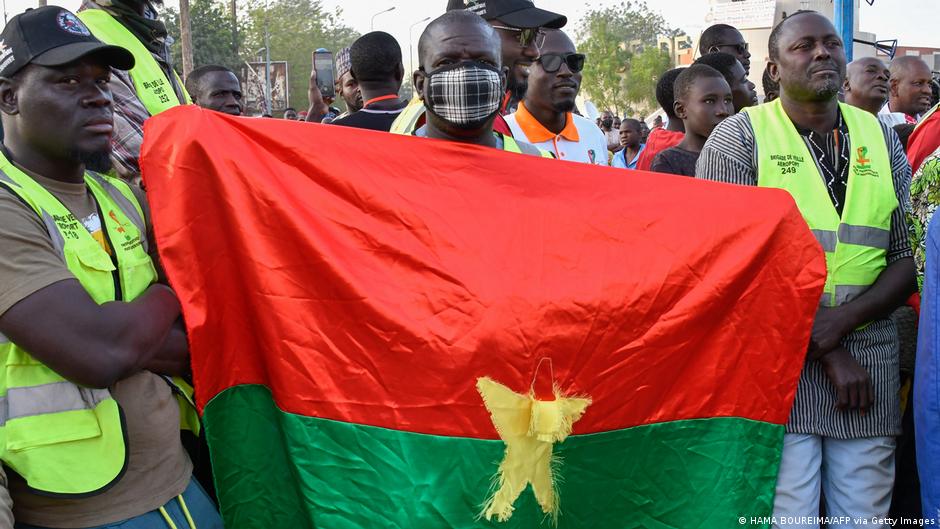
Ouagadougou — The arrest of influential imam Mohamed Ishaq Kindo and the suspension of Burkina Faso’s largest student union have intensified concerns over shrinking civic freedoms in the country. These developments mark another week of escalating tensions under the military-led government, raising serious questions about the state of human rights and public dissent.
Imam Kindo’s disappearance fuels fears
On the eve of Tabaski, witnesses reported masked security forces detaining Imam Kindo at his home in the capital. Known for his outspoken stance on public policy, including criticism of a proposed law regulating religious practices, Kindo was a prominent voice in Burkina Faso’s Muslim community. His questioning of state decisions had even drawn attention during the early days of Captain Ibrahim Traoré’s leadership, when he maintained a critical perspective.
The arrest sparked immediate backlash. Protesters clashed with security forces, resulting in injuries and multiple detentions. The Fédération des Associations Islamiques du Burkina (FAIB) repeatedly called for calm as misinformation spread. A falsified statement claiming Kindo’s death circulated online before being debunked by prosecutors, while other videos allegedly showing abuses were flagged for inconsistencies that suggested possible artificial intelligence manipulation.
A voice distinct from regional counterparts
Some observers drew parallels with Mali’s Imam Mahmoud Dicko, but according to Newton Ahmed Barry, a Burkinabè journalist in exile, the comparison falls short. “Kindo’s role was not about political grandstanding but rooted in monitoring issues relevant to his faith,” Barry explained. “As a member of the FAIB’s council of scholars, he focused on preserving Islamic doctrine rather than challenging political authority.”
Student union targeted in widening crackdown
The military government’s repression extended beyond religious leaders. The Union Générale des Étudiants du Burkina Faso (UGEB), suspended for three months with the possibility of renewal, faced accusations of “terrorist propaganda” and “demoralizing security forces.” The union had publicly described the security crisis as a “civil war” and criticized the government’s failure to restore safety.
Mahamadou Idder Alghabid, Deputy Secretary-General of the Alliance des Démocrates du Sahel (ADS), condemned the move: “It’s absurd to label unarmed students as terrorists. This tactic is now routine across the Sahel—any dissent is met with accusations of terrorism to silence opposition.”
A regional pattern of repression
Burkina Faso is not alone in facing scrutiny. In neighboring Mali and Niger, human rights advocates report a steady erosion of public freedoms. Dissolutions of civil society groups, judicial harassment, and restrictions on free speech have become hallmarks of the military regimes in all three countries. The ADS warns that the line between legitimate criticism and criminal offense is increasingly blurred.
Resistance persists amid growing risks
Despite arrests, disappearances, and violence, dissent continues—often from abroad. Alghabid emphasized the long-term struggle against military rule: “Their propaganda initially resonated with demands for sovereignty and anti-imperialism. But as promises fail to materialize, support among the people is fading. The people are abandoning the coup leaders.”
Barry added, “Excesses will be the downfall of Traoré’s regime. The people are not broken—they will respond, and the pressure will tell.”
Calls for global solidarity
Human rights organizations urge international action to protect civic spaces. Ilaria Allegrozzi of Human Rights Watch stressed the need to support peaceful democratic initiatives and reject the idea that criticizing the junta is counterproductive. “Silence and ambiguity only legitimize authoritarianism,” she warned.
The broader question remains: Can military rule ever be justified, or do unchecked abuses erode its legitimacy entirely? As violations mount, the answer grows harder to ignore.