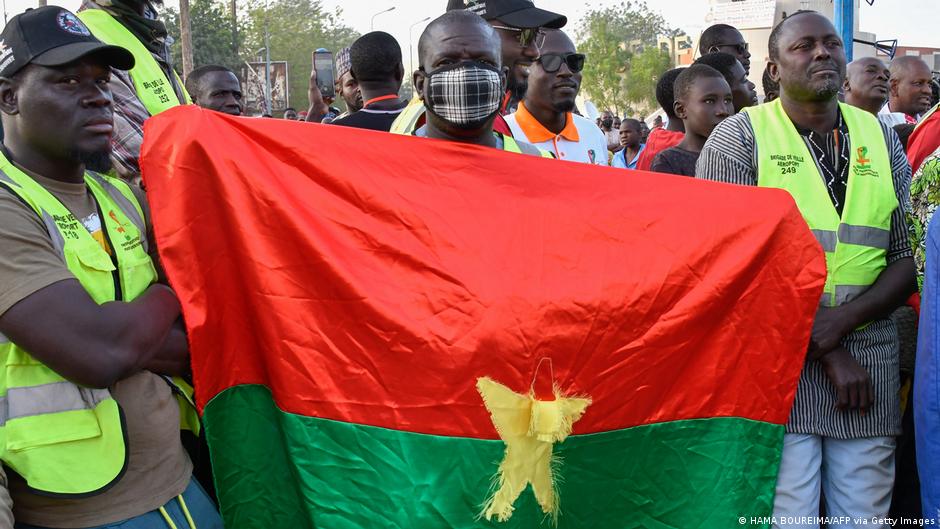
Burkina Faso’s civic space is shrinking under the weight of intensified repression by military authorities. The recent detention of influential religious leader Imam Mohamed Ishaq Kindo and the three-month suspension of the country’s largest student union, the Union générale des étudiants du Burkina Faso (UGEB), signal a deliberate crackdown on dissent. This week’s events highlight mounting tensions and the erosion of fundamental freedoms in the Alliance of Sahel States (AES).
Imam Kindo’s disappearance fuels fears of systematic repression
On the eve of Tabaski, witnesses reported masked security forces raiding Imam Kindo’s home in Ouagadougou. His arrest has sent shockwaves through the nation, particularly given his prominence as a vocal critic of government policies. While some drew comparisons to Mali’s Imam Mahmoud Dicko, observers note key differences:
“Imam Kindo distinguished himself not by political ambition, but by his role as a guardian of religious integrity. As a member of the Fédération des associations islamiques du Burkina (FAIB), his focus remained on safeguarding Islamic doctrine rather than challenging state authority.”
His most recent criticism targeted a proposed law regulating religious practices, particularly public prayers—a move he deemed an overreach by the transitional government.
Disinformation and unrest follow high-profile detention
The imam’s arrest triggered immediate backlash. Protests erupted, clashes turned violent, and dozens were detained. The FAIB repeatedly urged calm, but a dangerous wave of misinformation followed. A fabricated statement claiming the imam’s death circulated widely before authorities debunked it. Additional unverified videos alleging military abuses emerged, with analysts warning of potential AI-generated content designed to inflame tensions.
Detainees, according to credible reports, were reportedly transferred to Kaya in the Centre-Nord region, an area housing a major military facility.
UGEB suspension: students face judicial wrath
In a parallel escalation, the military-led government suspended the UGEB, Burkina Faso’s oldest student union founded in 1960. Its president, Bazo Wilfried, and several members were taken into custody. Authorities accused the union of “terrorism glorification” and “undermining security forces’ morale”, citing its criticism of the government’s inability to curb insecurity, which it described as a ‘civil war’.
“Labeling unarmed students as terrorists is a familiar tactic across the Sahel,” stated Mahamadou Idder Alghabid, deputy secretary-general of the Alliance des démocrates du Sahel (ADS). ‘Any dissent, no matter how peaceful, is met with accusations of terrorism—a tactic embraced by all three military regimes in the region.’
A regional pattern of repression
Burkina Faso is not alone in this trend. Observers note a coordinated erosion of civic freedoms in Mali and Niger, where human rights defenders report systematic restrictions: dissolution of civil society groups, judicial harassment, and suppression of free speech. The line between legitimate criticism and criminal offense is increasingly blurred, raising alarm among regional advocates.
Resistance persists despite risks
Despite the crackdown, voices of opposition refuse to be silenced. Many activists now operate from abroad, leveraging digital platforms to challenge military rule. Mahamadou Idder Alghabid reflects on the broader struggle:
‘We recognize the magnitude of this battle—facing three military juntas is no small feat. Yet every day, we gain ground while they lose it. Their propaganda initially resonated with demands for sovereignty and anti-imperialism, but promises have proven hollow. The people of the Sahel are waking up to the truth: these regimes offer no future.’
International calls to defend civic space
Human rights organizations are urging global support for Burkina Faso’s embattled civil society. Ilaria Allegrozzi, Sahel researcher for Human Rights Watch, warns against diplomatic silence:
‘Condemning military coups and human rights abuses must not be dismissed as counterproductive. Silence and ambiguity only legitimize authoritarian overreach. The international community must stand firm in defending democratic resilience.’
The road ahead: breaking the cycle of silence
At its core, the crisis in Burkina Faso reflects a fundamental question: Can military rule ever be justified? Human rights advocates argue that the normalization of coups and systematic rights violations sets a dangerous precedent for the region. ‘We must call out these abuses by name,’ emphasizes Human Rights Watch. ‘No military junta should be allowed to hijack democracy, nor should its human rights violations be treated as an acceptable norm.’
As Burkina Faso’s civic space continues to contract, the resilience of its people—and the global response—will determine whether democratic freedoms can be reclaimed.