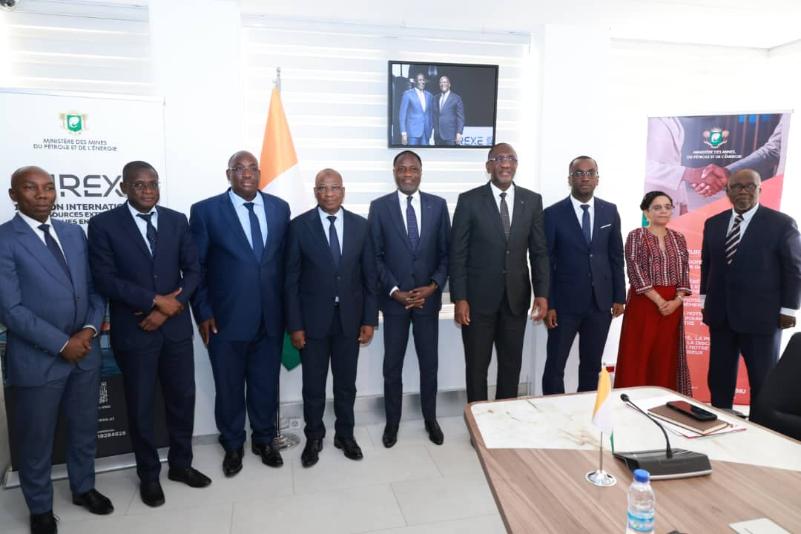
The National Energy Pact steering committee convened its inaugural meeting on August 4, 2026, at the SCIAM building in Abidjan. The session, chaired by Dr Souleymane DIARRASSOUBA, Minister of Planning and Development, included key government figures such as Mamadou SANGAFOWA-COULIBALY, Minister of Mines, Petroleum and Energy, along with senior advisors from the Ministry of Economy and the Prime Minister’s office. The gathering focused on strengthening the National Energy Committee’s operational framework and aligning commitments under the Pact.
The committee reviewed progress reports and confirmed plans for a roundtable to secure funding for priority energy projects. This initiative is part of the Mission 300 program—jointly led by the World Bank and African Development Bank—to bring electricity to 300 million people across Sub-Saharan Africa by 2030. Côte d’Ivoire formally adopted its National Energy Pact in January 2025, earning recognition as a model country for the initiative. To date, 29 African nations have implemented similar pacts.
The ivoire energy pact outlines a 6.56 billion USD implementation plan (3,980 billion CFA francs) for 2025–2030, with 1.177 billion CFA francs expected from private investors. Governance for the pact includes a steering committee, technical working group, and coordination unit.
During the meeting, the Planning Minister highlighted four core objectives of the Pact: universal electricity access, clean cooking solutions for households, a 45% renewable energy share in the national energy mix, and financial sustainability of the sector. He emphasized alignment with the National Development Plan and the UN’s seventh Sustainable Development Goal, underscoring energy’s critical role in the country’s economic and social progress.
Progress updates presented to the committee revealed significant strides toward 2030 targets. In 2025 alone, Côte d’Ivoire connected 684,735 households—exceeding the annual target by 5.3%—benefiting nearly 3.6 million people. Since 2024, over 7.7 million citizens have gained electricity access, with a national electrification rate now at 81.1%.
Reforms and investments are progressing in lockstep. The 2026–2030 investment portfolio, valued at 2,840 billion CFA francs, includes priority projects actively seeking financing. The committee also set firm deadlines for pending actions to ensure timely execution.
Côte d’Ivoire’s energy sector has long served as a regional leader, with its power system ranking among the largest in West Africa. The Pact’s initiatives aim to further integrate the country into the West African electricity market, reinforcing its position as a key player in regional energy trade.