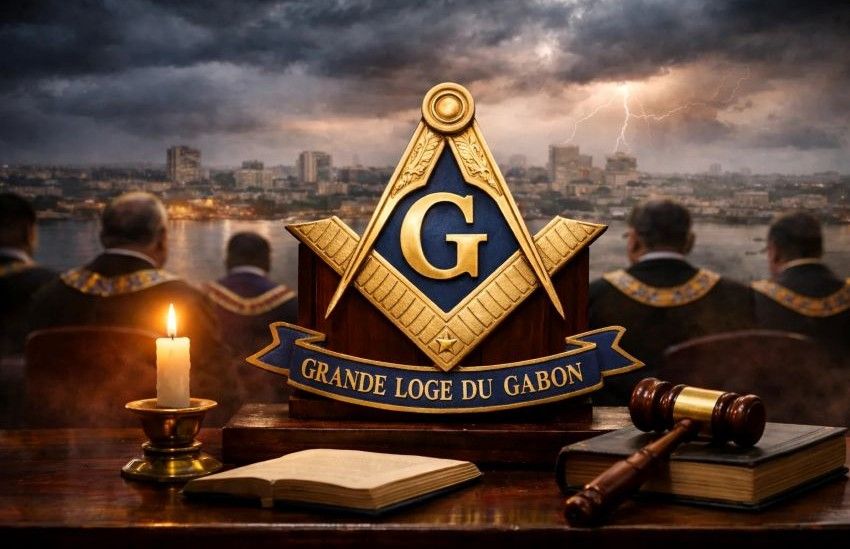
Libreville, Friday 19 June 2026 – For decades, the Grande Loge du Gabon (GLG) maintained discretion, influence, and the image of an institution able to weather political storms without exposing internal fractures. Today, that model appears to be crumbling.
Just months before a decisive general assembly, the country’s most influential Masonic lodge faces an open crisis marked by succession struggles, challenges to authority, financial suspicions, and clan rivalries. Beneath the visible quarrels, a deeper transformation is unfolding: a system long structured around a dominant figure now must redefine its own balances.
Several accounts describe the atmosphere inside the Grande Loge du Gabon as more tense than ever. The institution, which prides itself on fraternity, moral elevation, and harmony, now finds itself exposed to divisions spilling far beyond its temple walls.
The end of an established order
To grasp the scale of the current crisis, one must look at recent shifts in power dynamics in Gabon. For many years, political and Masonic authority converged in one person. When the president of the republic also served as Grand Master, individual ambitions existed but were kept in check by a barely contestable hierarchy.
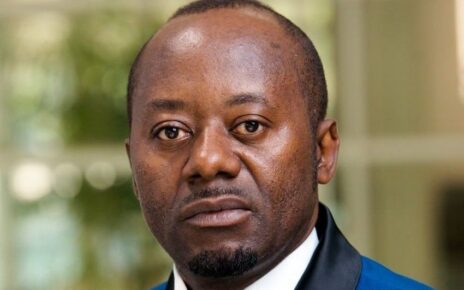
The turning point came after the events of 30 August 2023. While many expected the new head of state, Brice Clotaire Oligui Nguema, to take the reins of the lodge, he chose not to seek the grand mastership. In February 2024, Jacques-Denis Tsanga was installed as leader of the GLG.
This decision broke a deeply rooted tradition. For some observers, it marked a desire to depoliticise the institution. For others, it opened a period of uncertainty where the absence of a unifying authority left the way clear for long‑suppressed rivalries.
A succession that exposes fractures
Three years after his installation, Jacques-Denis Tsanga finds himself at the centre of criticism. His supporters highlight reforms in the organisation of Masonic provinces, asset management, and the lodge’s international outreach. His detractors, on the other hand, denounce excessive concentration of power, opaque governance, and disputed handling of several sensitive files.
Figures cited by some members illustrate the malaise. Temple attendance has dropped sharply. Of roughly six hundred members, only about two hundred regularly take part in activities. Expulsions, suspensions, and voluntary departures have fuelled an unprecedented climate of distrust.
In this context, the election slated for the next general assembly takes on strategic importance. Several candidates or ambitions are already emerging. Historic figures, high‑ranking officials, and representatives of younger generations appear as potential successors. The battle is no longer merely about a symbolic role; it concerns the very future of the organisation.
Power seeks its new centre of gravity
Beyond Gabonese Freemasonry alone, this crisis sheds light on the shifting centres of influence in the country. Long protected by its proximity to the top of the state, the Grande Loge du Gabon now faces the constraints of autonomy.
The paradox is striking: those who once criticised the blurring of political and Masonic power now recognise that proximity also guaranteed internal stability. Conversely, the lodge’s gradual emancipation reveals fractures that central authority once helped contain.
The issue thus goes far beyond the choice of the next Grand Master. It touches on the institution’s ability to produce an authority recognised by all in an increasingly competitive and fragmented environment. In any organisation, when the centre of gravity becomes uncertain, ambitions cease to organise around power and begin to clash for its conquest.
The current crisis is therefore a major test for the Grande Loge du Gabon. If it manages to turn this period of tension into an opportunity for renewal, it could emerge stronger. If not, the quarrels stirring its ranks risk opening the way to lasting fragmentation.
For an institution that long made secrecy its strength, the spectacle now on display is already symbolic. It reveals that even within the oldest and most influential structures, the essential question remains: how to preserve unity when authority is no longer unquestioned.