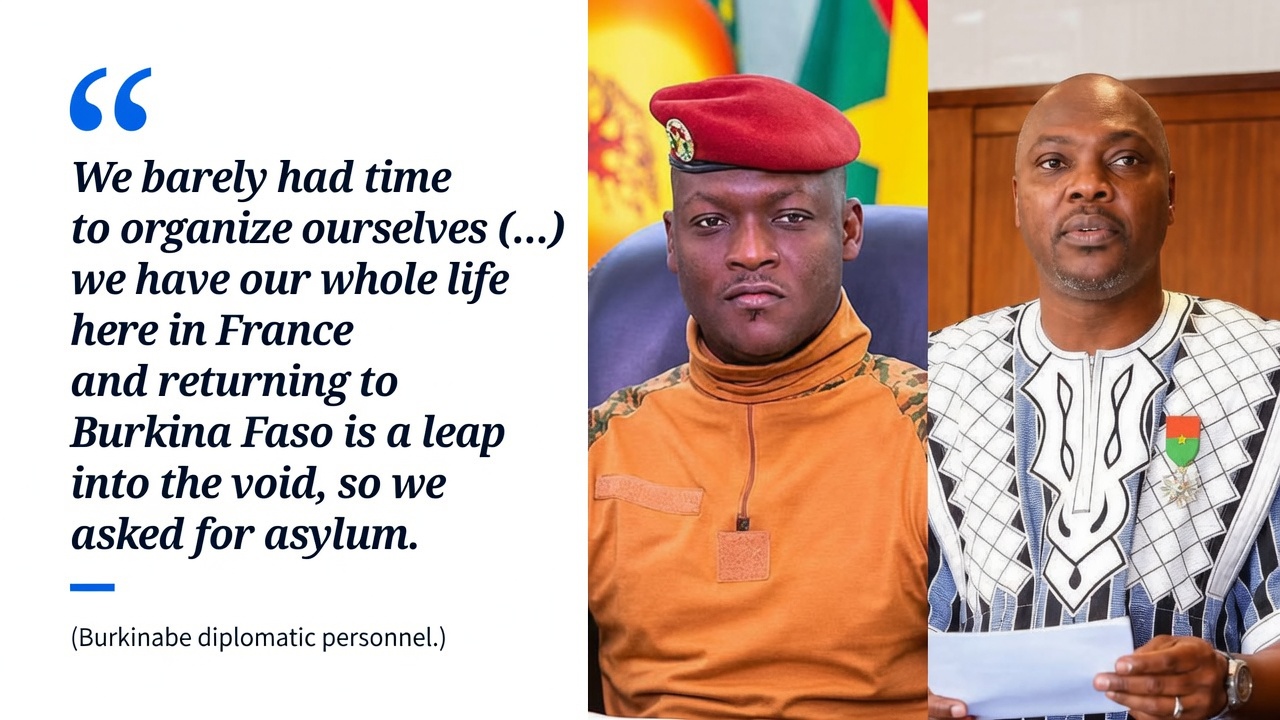
Diplomatic tensions between Burkina Faso and its international representatives have reached a critical juncture as several staff members from the Burkina Faso embassy in Paris have formally requested political asylum from French authorities. The move has sent shockwaves through Ouagadougou’s transitional government, exposing deep-seated discontent within its diplomatic corps.
A Crisis of Confidence Among Diplomatic Staff
The decision follows a series of administrative reshuffles within Burkina Faso’s foreign service, including the abrupt recall of diplomats from overseas postings. While authorities frame these changes as routine restructuring, the affected personnel describe a far more unsettling reality—a forced repatriation with no clear path forward.
In a statement that has since circulated widely, the diplomats articulated their predicament with striking clarity:
« We barely had time to prepare. Our entire lives are here in France—our homes, our children’s schooling, our careers. Returning to Burkina Faso feels like stepping into the unknown. That’s why we applied for asylum. »
Their words underscore a profound sense of instability. Many have spent years—if not decades—building their professional and personal lives in France, only to face an abrupt and uncertain future. The decision to seek asylum reflects not just professional displacement but a broader fear of what awaits them upon return to a nation grappling with escalating instability.
Security Concerns and Humanitarian Implications
This development occurs against a backdrop of persistent security challenges in Burkina Faso. The ongoing conflict with armed groups has intensified public unease, particularly regarding the government’s mobilization policies. Reports from human rights organizations and firsthand accounts have highlighted concerns over the deployment of civilians—including diplomats—into conflict zones with minimal preparation or safeguards.
While authorities deny allegations of mismanagement, the testimonies of recalled staff suggest a growing climate of apprehension. For some, the prospect of returning to Burkina Faso entails significant personal risk, both in terms of security and professional stability. The lack of transitional support or structured repatriation plans has only deepened their anxieties.
A Governance Style Under Scrutiny
Observers point to this episode as emblematic of a centralized decision-making process that often overlooks the human consequences of policy changes. The abrupt recall of diplomats—many of whom had spent years abroad—has been criticized as a top-down measure that disrupts lives without adequate consideration for the individuals affected or their families.
The case of the Paris-based diplomats serves as a stark illustration of this trend. Their decision to seek asylum abroad is not merely an administrative inconvenience but a symbolic rejection of the transitional government’s leadership. When officials tasked with representing Burkina Faso abroad choose exile over return, it signals a crisis of confidence in the institutions they serve.
International Repercussions and Diplomatic Fallout
For Burkina Faso’s transitional authorities, this situation presents a significant reputational challenge. Since seizing power, the regime has emphasized restoring national sovereignty and rebuilding public trust in state institutions. Yet the spectacle of diplomats seeking asylum abroad undermines these claims, raising questions about the true state of governance and the safety of civil servants.
Requests for political asylum from state representatives are exceedingly rare in international diplomacy. When they occur, they often serve as a barometer of political and security conditions within the requesting nation. In this case, the actions of Burkina Faso’s embassy staff may inadvertently expose the fragility of the transitional government’s legitimacy.
Human Stories Behind the Diplomatic Crisis
Beyond the political and security dimensions, this affair reveals the deeply personal stakes involved. The testimonies of the diplomats highlight a human reality often obscured by official narratives: the lives, families, and futures hanging in the balance. For some, the decision to seek asylum represents a calculated choice to prioritize safety over an uncertain return.
This episode serves as a reminder that the decisions made at the highest levels of government can have far-reaching, unintended consequences. The fates of Burkina Faso’s diplomats—once symbols of the nation’s global engagement—now reflect the broader challenges facing a country in transition. Their stories underscore the delicate balance between duty, security, and survival in an era of profound uncertainty.