DR Congo: six million signatures demand justice for war victims
Amnesty International is behind the campaign “6 million voices for justice in Congo.”
The initiative seeks to collect six million petition signatures to demand justice for victims of the conflict in the Democratic Republic of the Congo, which has lasted for over thirty years.
“We were born in war”
In Goma’s Kasika neighborhood, 37-year-old Noël Chiza says he has never known peace. Having suffered repeated violence throughout his life, the father of five is outraged that some of those he considers his tormentors now hold positions of responsibility in public institutions instead of facing justice.
“We were born in war, we grow up in war, we have experienced atrocities of all kinds and we risk dying in war. That is why we cannot continue to reward those who committed crimes by integrating them into institutions, whether at local or national level,” Chiza testified.
Millions of victims still alive
The six million signatures sought by Amnesty International refer to the estimated number of people who have died as a result of conflicts in eastern DRC.
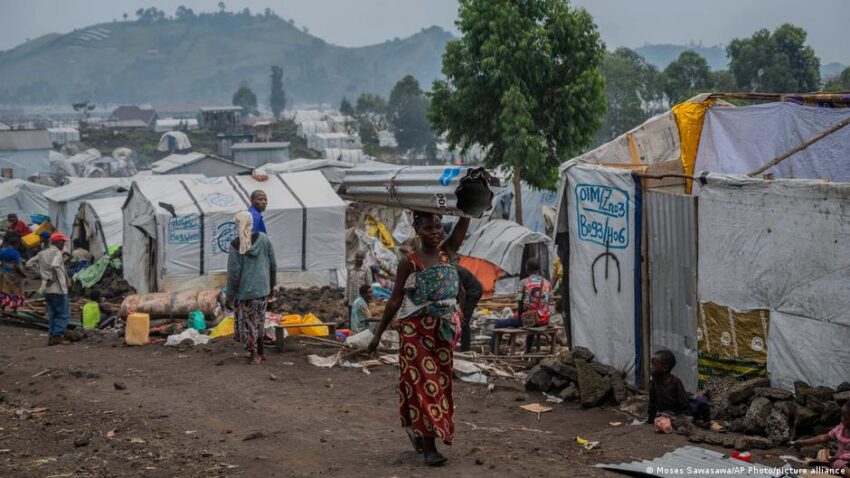
But behind that figure are also millions of other, less visible victims who are still alive. Among them are those who, like Josué Wallay, were forced to flee their home region.
“Today, I am displaced in Kinshasa, far from my community and my living environment, because of the conflicts raging in eastern DRC. This displacement is not a choice of comfort; it is a break with my environment, my habits, my activities and part of what gave meaning to my daily life. The conflicts have affected me on multiple levels,” Josué Wallay explained.
Justice as a condition for lasting peace
For Raphaël Wakenge, a human rights defender involved in the “6 million voices for justice in Congo” campaign, fighting impunity is essential to achieving lasting peace in the Democratic Republic of the Congo.
“Congolese justice suffers not only from a lack of capacity but also from a lack of political will. We need a justice system capable of providing responses to victims, particularly through reparations. We call on all those who stand with Congolese victims to join this campaign.”
Through this campaign, Amnesty International is also demanding that October 1 be declared “National Day of Reflection and Action on Crimes under International Law Committed in the Democratic Republic of the Congo.”