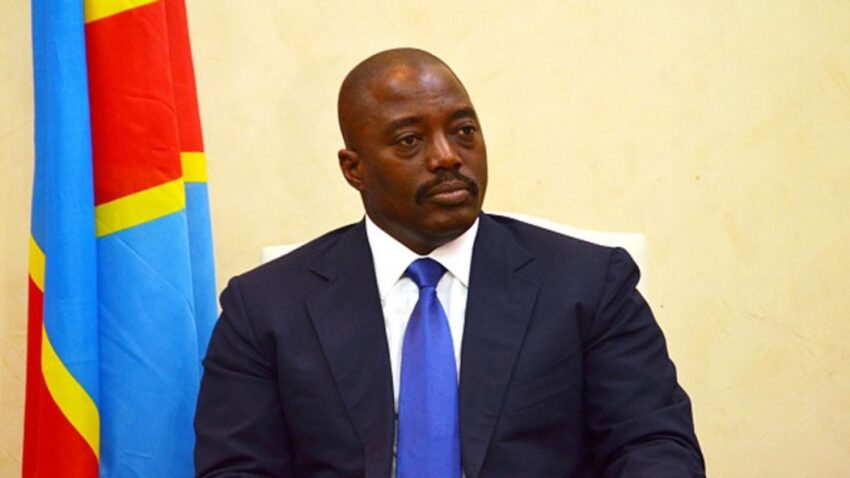
Joseph Kabila, who led the Democratic Republic of Congo from 2001 to 2019, has been named leader of the newly formed Front for National Rebirth (FRN), a politico-military coalition unveiled in Goma, eastern DRC, on October 12. The alliance brings together key figures from the Congo River Alliance (AFC) and the March 23 Movement (M23), both of which have been actively opposing President Félix Tshisekedi’s government through both political and armed means.
Public backlash and political fallout intensify as Kabila takes command of armed front
The announcement, delivered by FRN advisor Claude Ibalanky during a press conference, signals a bold escalation in Congo’s prolonged power struggle. The FRN’s founding declaration frames its mission as a fight against what it describes as a « tyrannical regime, » vowing to dismantle it « by all means necessary—including force. » While the coalition’s leadership is now firmly established, critical details—such as a timeline for military action or operational strategy—remain conspicuously absent, leaving analysts and regional stakeholders scrambling for answers.
Who holds power in the new coalition?
The FRN’s leadership reflects a calculated fusion of political and military influence. Kabila serves as president, with Corneille Nangaa—former head of the Independent National Electoral Commission and AFC leader—and Bertrand Bisimwa, a senior M23 political figure, appointed as vice presidents. Military command falls to General Sultani Makenga, longtime M23 military chief and now head of the FRN’s Revolutionary Congolese Army. Freddy Rukema Kaniki assumes the role of secretary general. The reshuffle effectively dissolves the AFC, with the FRN positioning itself as its successor, though the M23’s institutional future under this new structure remains unspecified.
Accusations of corruption and democratic backsliding drive opposition coalition
In its founding manifesto, the FRN blames Kinshasa for deepening political, security, economic, and social crises. It accuses the government of undermining democratic institutions, systemic corruption, and ethnic discrimination, while rejecting the legitimacy of the 2023 election results. These claims, though framed as grievances shared by the coalition, have not been independently verified and are currently under dispute in both domestic and international forums.
Conflict rages as diplomacy stalls
The FRN’s emergence coincides with a bloody deadlock in eastern DRC, where M23 rebels and government forces continue to clash over territory. The insurgents, backed by their AFC allies, now control large swaths of land, including Goma—a strategic city captured during their 2025 offensive. While the United Nations and Western governments have repeatedly accused Rwanda of supporting the M23, Kigali has consistently denied involvement. Peace talks in Doha and ongoing negotiations between Kinshasa and Kigali have yet to yield tangible results, with the FRN accusing the government of failing to uphold ceasefire agreements and prisoner release commitments.
Kabila’s disputed legacy and uncharted political territory
Kabila, who presided over the DRC for nearly two decades, has long denied any connection to the M23. Yet Congolese authorities have increasingly linked him to the AFC/M23 alliance, culminating in his 2025 conviction in absentia by a military tribunal on charges of treason, war crimes, and rebellion. Kabila dismisses these proceedings as politically motivated, framing them as part of a broader campaign to sideline him. Meanwhile, President Tshisekedi’s administration has yet to publicly respond to the FRN’s formation, raising urgent questions about Kinshasa’s next move and the coalition’s long-term strategy.
What’s next for Congo’s fractured opposition?
- Military strategy in question: The FRN’s founding statement avoids outlining concrete military objectives or timelines, leaving observers to speculate on when—and how—force might be deployed.
- Regional ripple effects: With Rwanda’s alleged support for the M23 still a point of contention, the FRN’s rise risks further destabilizing eastern DRC and straining cross-border relations.
- Diplomatic deadlock: Peace talks in Doha and negotiations between Kinshasa and Kigali appear stalled, with the FRN’s accusations adding pressure to an already fragile process.
- Government response pending: President Tshisekedi’s silence since the FRN’s announcement leaves a critical gap—will Kinshasa counter with military force, legal measures, or diplomatic outreach?