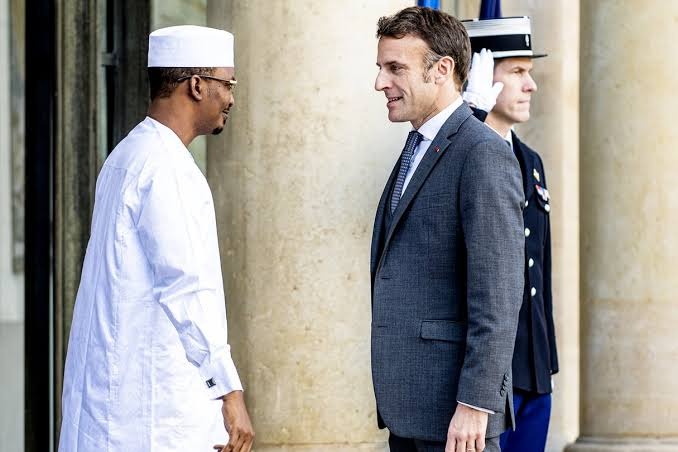
On October 13, 2026, Emmanuel Macron and Mahamat Idriss Déby marked a new phase in French-Chadian relations by signing a declaration of intent on defense cooperation. The move comes after French troops left Chad and ties with several Sahel states broke down, and it signals a shared determination in Paris and N’Djamena to rebuild their partnership. Accusations from Niger following the events of August 28 and 29 add a sensitive layer to this regional reshuffling.
A fresh start for a strained relationship
The French-Chadian relationship is turning a page. Chadian President Mahamat Idriss Déby was received at the Élysée on Tuesday, October 13, 2026, by Emmanuel Macron for a meeting that formally restores relations between the two countries. After the talks, the defense ministers of both states signed a declaration of intent designed to structure and expand their cooperation in the defense field.
The announcement comes nearly two years after N’Djamena’s decision in November 2024 to end its military cooperation agreement with France. The withdrawal of French forces and the return of their facilities, completed in early 2025, put an end to France’s permanent military presence in Chad, which had been the strategic anchor for French operations in Africa.
What the new partnership looks like after the withdrawal
The October 13 declaration sets up a cooperation framework focused on training, expertise, industry, and technology, with the goal of directly boosting the capabilities of Chad’s armed forces.
For Paris, this shift is part of redefining its African partnerships after military departures from Mali, Burkina Faso, and Niger. Those ruptures reduced France’s footprint in the Sahel and signaled the end of a cooperation model built on permanent military deployments.
Chad remains a central partner. Its geographic position, near war-torn Sudan, Libya, and the Lake Chad basin, puts it at the heart of security challenges. Border surveillance, the fight against armed groups, and strengthening the operational capacity of its army are the pillars that give this cooperation a regional reach.
Resuming dialogue with N’Djamena reflects a new formula based on needs defined by Chadian authorities and a strictly bilateral approach.
Niger: a delicate diplomatic equation
The relaunch unfolds in a regional climate marked by tensions between Paris and Niamey. During the night of August 28-29, 2026, an attempted destabilization took place in Niamey, particularly around Air Base 101.
The Nigerien government blamed France and several foreign actors, including Chad, for the attempted mutiny. Paris rejected those claims.
The geographic proximity between Chad and Niger gives the matter particular weight. Both countries share concerns about regional security, but their diplomatic orientations and relations with outside partners differ.
Against that backdrop, the rapprochement between Paris and N’Djamena is drawing attention from Nigerien authorities. The French-Chadian declaration defines only the bilateral framework between Paris and N’Djamena.
The goal is to structure cooperative relations in a region where military presence is a major political issue and where governments apply strict autonomy in their strategic choices.
Beyond defense: the development dimension
The October 13 meeting also produced economic and cultural progress. The two presidents committed to developing their relations for the benefit of businesses and populations. This direction builds on the rapprochement momentum seen throughout 2026, after months of bilateral tensions.
The economic component strengthens the relationship, especially in key sectors: infrastructure, energy, health, transport, and education. For both governments, the priority is to move beyond a cooperation historically dominated by military matters and to give a central place to investment and trade.
That ambition responds to major challenges. In Chad, needs related to development, jobs, and public services are urgent. At the same time, conflicts in neighboring countries affect stability and available resources. Security cooperation is therefore accompanied by direct actions that address the needs of local populations.
A test for French diplomacy in the Sahel
The declaration of intent signed in Paris is a major political step, to be followed by concrete commitments on training, expertise transfers, technological cooperation, and operational support.
For Emmanuel Macron, the repositioning means rebuilding the relationship with Chad in a renewed form. For Mahamat Idriss Déby, it is about strengthening his country’s capabilities while keeping full control over its strategic choices.
The French-Chadian rapprochement embodies the redeployment and redefinition of France’s role in a region where diplomatic and security balances are shifting.
After military withdrawals and past tensions, Paris and N’Djamena are starting on new foundations. This renewed partnership reconciles the interests of both states, addresses regional security demands, and holds its ground amid the diplomatic tensions running through the Sahel.