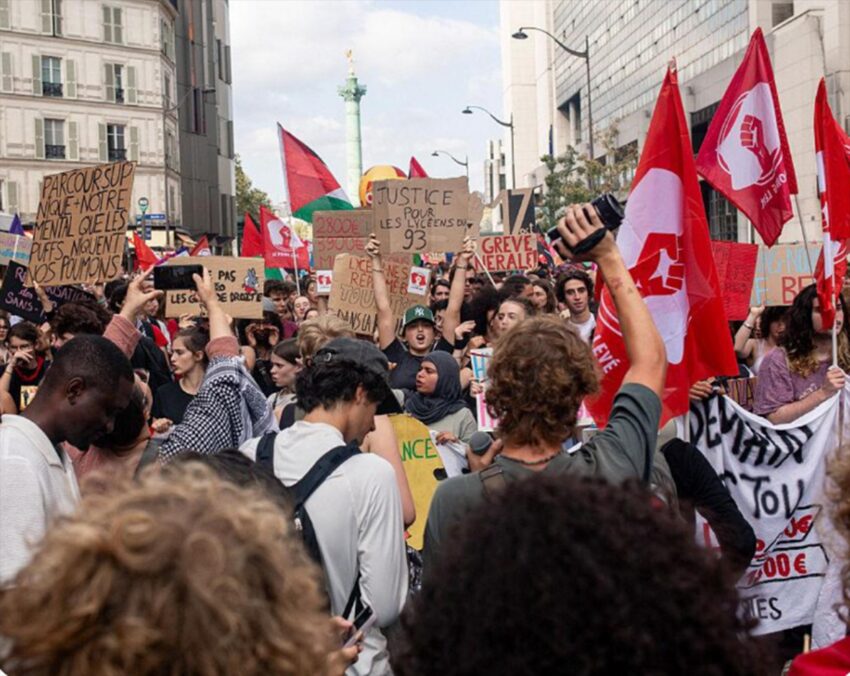
From classrooms to streets: how France’s youth is reshaping the 2027 debate
The streets of France have become the battleground for a growing movement that blends educational grievances with broader social discontent. As the country gears up for its 2027 presidential election, the mobilisation of students and young workers is forcing authorities to confront the consequences of an education system under strain.
What started as isolated protests over classroom conditions has expanded into a nationwide movement, exposing deep vulnerabilities in France’s education sector and raising questions about its future in the lead-up to one of the most pivotal elections of the decade.
How a classroom crisis turned into a national movement
The spark for the current wave of protests ignited in early September, when high school students began documenting the deteriorating conditions in their schools. Overcrowded classrooms, crumbling infrastructure, and overworked teachers became the focal points of their frustrations. Adding to the strain is the persistent uncertainty surrounding the college application process through Parcoursup, which many students describe as a source of anxiety rather than opportunity.
What began with small-scale strikes soon escalated into coordinated blockades and city-wide marches. By mid-October, the movement had grown beyond its initial student base, drawing support from university students, educators, and even trade unions. The fifth day of protests alone saw an estimated 480,000 participants nationwide, according to organisers—though official figures placed the number closer to 161,500. Behind the disagreement over turnout numbers lies a more pressing concern: the depth of dissatisfaction among young people.
Unequal education: a system failing in plain sight
The crisis is not confined to a single region or demographic. Across France, students face starkly different realities depending on where they live. In some areas, schools suffer from chronic teacher absences, outdated facilities, and inadequate resources. In others, the pressure comes from packed schedules, limited personalised support, and a lack of career guidance. These disparities do not merely reflect funding gaps—they perpetuate social inequalities, undermining the fundamental promise of equal opportunity that lies at the heart of France’s republican model.
Government data released in early October revealed that student complaints centred primarily on rigid school schedules, followed by concerns about infrastructure and the difficulty in securing substitute teachers. The findings underscored a system struggling to adapt to the demands of a modern, diverse student body.
Political tensions rise as protests intersect with broader discontent
The 17th of October marked a turning point in the movement’s trajectory. While educational demands remained central, the demonstrations began to align with other societal grievances—rising living costs, stagnant wages, and the erosion of public services. Calls to merge movements with activists from past social upheavals, including remnants of the Yellow Vests movement, highlighted the growing sense of shared frustration among different segments of society.
Not all participants share identical goals, but their convergence in the streets sends a powerful signal. However, the day was also marred by clashes in several cities, including Paris and Marseille. Reports of property damage and police interventions cast a shadow over the protests, raising concerns about the balance between freedom of expression and public order. These incidents, while not representative of the entire movement, have intensified calls for constructive dialogue between authorities and young demonstrators.
2027 Election looms as a defining moment for youth issues
The timing of the protests is anything but coincidental. With France’s next presidential election just over two years away, the government’s response to educational and social demands will weigh heavily in the national conversation. Key questions dominate the discourse: How much of the national budget should education consume? Can France’s education system truly deliver fairness and opportunity? What protections can be put in place to address youth unemployment and precarity?
For President Emmanuel Macron, whose second term concludes in 2027, the youth movement is more than a policy challenge—it is a political litmus test. The ability—or inability—of policymakers to address these concerns could shape public perception of his legacy long before the ballots are cast. Yet, predicting the electoral impact of these protests is complex. The youth vote is diverse, and participation in a demonstration does not necessarily translate into political alignment at the ballot box.
Beyond slogans: the challenge of turning protest into progress
The road from outrage to reform is fraught with obstacles. While protests generate visibility for neglected issues, sustained change requires more than visibility—it demands participation, accountability, and measurable results. The multiplicity of demands, coupled with tensions in the streets, complicates the path to consensus. Yet, the alternative—a failure to address these grievances—risks deepening the divide between institutions and the younger generation they claim to represent.
The ultimate test will be whether France can foster a dialogue that transcends political posturing and confronts the real needs of students, teachers, and families. As the election approaches, one thing is clear: the country’s future is not only being debated in parliament, but also in the classrooms and streets where young people are demanding to be heard.
Key takeaways: what the 2027 election may hinge on
- Budget priorities: Will education funding increase, or will other public services absorb limited resources?
- Equity in education: Can the system address disparities between schools in affluent and disadvantaged areas?
- Youth employment: How will policymakers create pathways to stable careers amid economic uncertainty?
- Institutional trust: Can young people regain confidence in institutions that have failed to deliver on long-standing promises?