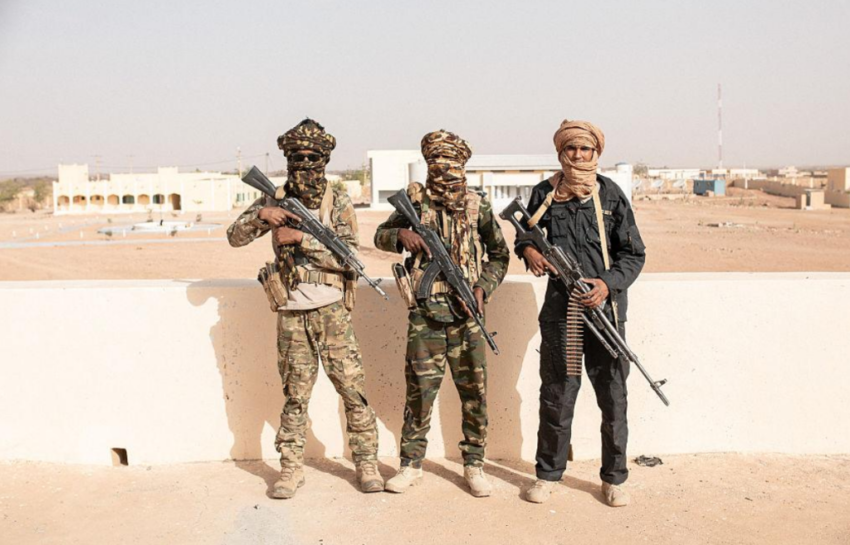
The fall of Kidal and the desperate hunt for new allies
The strategic city of Kidal, once the symbolic heart of Tuareg separatist ambitions in Mali’s Azawad region, is now under government control—a shift that has upended the balance of power across the Sahel. The unexpected retreat of the Front de Libération de l’Azawad (FLA) without a fight in October 2026 left the group scrambling for alternatives. With their historical stronghold lost and the 2015 Algiers peace accord rendered obsolete by Bamako’s withdrawal, the rebels face mounting military pressure. Denied their sanctuary and cut off from traditional support, the FLA’s leadership has turned to unconventional backers in a bid to survive.
Libya’s Haftar factions emerge as potential military lifeline
A delegation from the FLA traveled to Benghazi to engage with key figures in the Libyan security apparatus, including Saddam Haftar, son of Libyan National Army commander Khalifa Haftar. While concrete arms transfers remain unconfirmed, the talks signal a clear intention to forge a supply route through eastern Libya’s porous borders. The proximity of Libyan territory offers the rebels a tactical advantage—one that could allow them to regroup, rearm, and launch cross-border operations into northern Mali. For the fighters of Azawad, this alliance represents more than survival; it’s a gamble on reshaping the conflict’s dynamics before total defeat.
UAE’s growing influence in the Sahel raises regional stakes
The United Arab Emirates has emerged as another potential patron for the FLA, leveraging its deep financial and logistical networks across Africa. Abu Dhabi’s involvement, however, risks inflaming tensions with Algeria, which views any Emirati presence near its southern border as a direct threat. Algeria has long considered Mali and Niger’s stability as vital to its own national security, and the desert routes linking North and West Africa are critical to preventing foreign interference in the region. The Algerian government’s withdrawal from the Algiers peace process last year was a signal of its frustration with neighboring state failures—and now, it is doubling down on regional alliances to counter external influence.
Algiers’ response has been twofold: first, a renewed diplomatic push with Bamako, focusing on border security, counter-trafficking measures, and joint patrols to stem militant movements. Second, Algeria has intensified cooperation with Niger, strengthening political dialogue and cross-border security initiatives. By reasserting its role as the Sahel’s stabilizing force, Algeria aims to isolate the FLA and prevent the UAE—or any other external actor—from gaining a foothold in the region.
Algeria’s balancing act sees it push back against Emirati ambitions
The growing rift between Algeria and the UAE over regional influence has become a defining feature of the current crisis. Algiers’ refusal to accept outside interference in the Sahel aligns with its broader strategy to maintain control over the Sahara’s vast desert corridors. For the Algerian leadership, the stakes are clear: if the FLA secures Emirati backing, it could reignite the insurgency with more sophisticated weaponry and financing, destabilizing both Mali and its neighbors. Already, reports of gold and arms smuggling through Libyan routes tied to Haftar-aligned factions add urgency to Algiers’ efforts to seal the borders.
The Algerian government’s recent overtures to Bamako and Niamey underscore a pragmatic shift—one that prioritizes short-term security over longstanding grievances. By investing in bilateral cooperation, Algeria seeks to create a buffer against external meddling, even if it means temporarily setting aside past disputes over the failed peace process.
What’s next for the FLA—and the Sahel’s shifting alliances
The coming months will reveal whether the FLA’s unorthodox alliances with Libya and the UAE can translate into real military leverage or merely prolong its struggle for relevance. If arms and funding begin flowing through these new channels, the group could regain the offensive, forcing Mali’s transitional government into costly counterinsurgency campaigns. Conversely, if Algeria’s diplomatic gambit succeeds, the rebels may find themselves further isolated, their networks disrupted by joint Nigerien-Malian-Algerian patrols.
The Sahara’s crossing remains a wildcard—its vast deserts and informal trade routes make interdiction nearly impossible. For now, the FLA’s gamble on Benghazi and Abu Dhabi reflects the desperation of a movement cornered by military defeats. But in the wider Sahel, this shift is more than a rebel survival tactic; it’s a test of whether regional powers or foreign actors will dictate the region’s future security architecture.