Gabon
The president’s tour in Woleu-Ntem seems to be part of a broader ambition. To make territories that have long been considered peripheral the true drivers of the country’s next phase of development.
From Minvoul to Oyem, from road infrastructure to schools, from agricultural projects to healthcare equipment, the president’s tour is drawing up the contours of a new doctrine of territorial planning in Gabon. A doctrine based on proximity, investment in land and reducing the fractures that have long marked the country’s economic history.
Beyond inaugurations and visits to construction sites, it’s now a certain vision of national development being tested in this northern frontier province.
The return of strategic territories
The choice of Woleu-Ntem is not arbitrary. A province at the border with Cameroon and Guinea Equatorial, it’s one of the main land entrance points for Gabon to Africa Central.
It’s a territory that has long been considered peripheral, but now it’s being given new opportunities.
Agriculture: a new player in Gabonian economy
The other major lesson of this tour is the repositioning of agriculture in Gabon’s economic strategy.
The launch of the Oyem agricultural complex and the formation of 240 young beneficiaries mark a break with an economy that has long been dominated by oil and raw materials exports without sufficient transformation.
The goal goes beyond just creating agricultural jobs. It’s to build the bases of a new generation of rural entrepreneurs capable of participating in the country’s food sovereignty.
A new governance approach
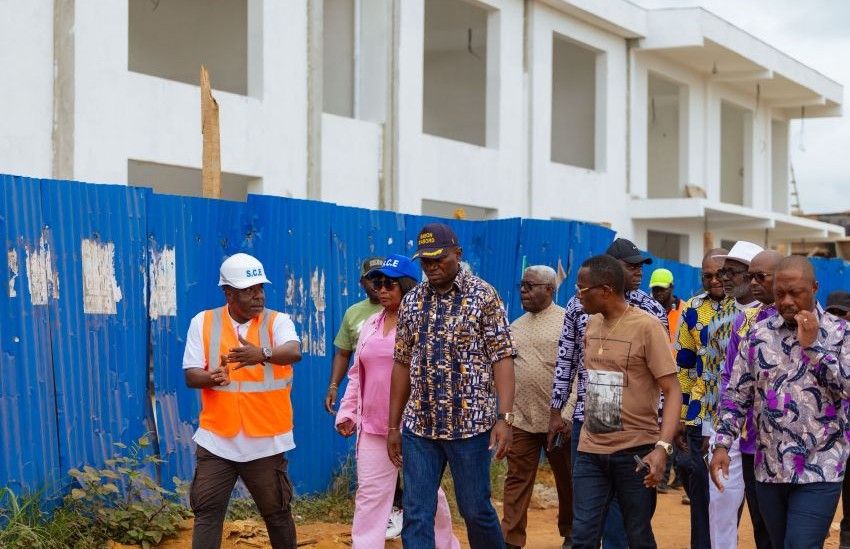
The multiplication of visits to sites, inspections and arbitrages carried out directly on construction sites finally translates a more profound transformation of Gabon’s public governance.
Hopital de Minvoul, market in Gouéma, rehabilitation of the Mvett Palace, housing for village chiefs, teacher training centers, sports stadium of Nkum Yenguï or even the modern high school with an international section are all part of the same logic of territorial investment.
The idea underlying this approach is simple. Development can’t be sustainable if economic infrastructure advances faster than social equipment or public services. This approach seeks to articulate economic growth, social cohesion and human capital development.
A new model of rural development
The choice of investing in the countryside rather than just focusing on urban areas is a new approach to rural development.
It’s about creating a more inclusive and equitable society, where everyone has access to the same opportunities.