Gabon’s economic diplomacy: what’s next after the Paris visit?
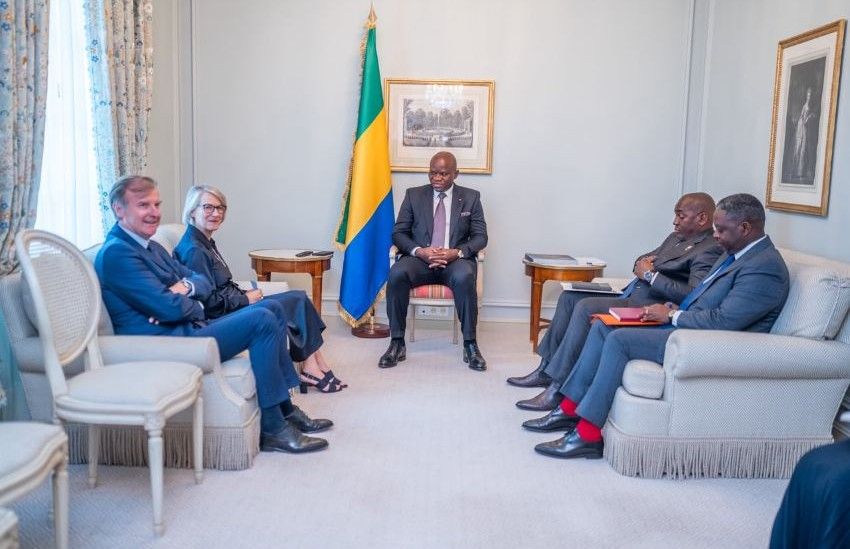
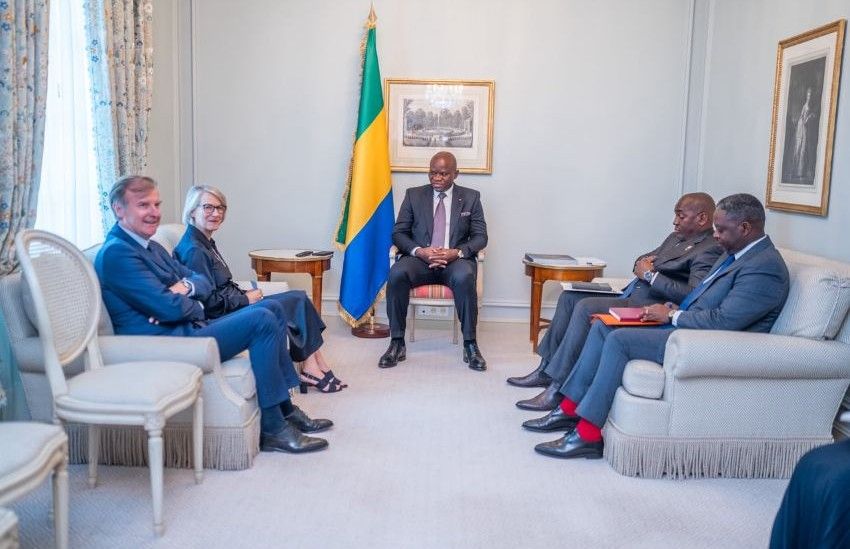
Libreville, Tuesday, August 4, 2026 — The state visit of Brice Clotaire Oligui Nguema to Paris from July 19 to 22 was not merely a series of diplomatic gestures, honor guards at Les Invalides, a tour of the Palace of Versailles, or an official dinner at the Élysée Palace. Behind the ceremonial façade, Libreville had a clear objective: securing concrete economic commitments that would translate into tangible benefits for Gabonese citizens.
With an extensive delegation of over 80 individuals—including key figures from Gabon’s private sector—the visit aimed to move beyond symbolic diplomacy. While the identities of French business leaders received by the President remained undisclosed in official communications, available details now shed light on critical discussions and potential partnerships.
From aviation to manganese processing: pending agreements
On July 19, Brice Clotaire Oligui Nguema met with Anne Rigail, CEO of Air France, to discuss aviation cooperation. While Fly Gabon and Air France already maintain commercial ties, the focus was on finalizing a codeshare agreement before the year’s end. Such an arrangement would enable Fly Gabon to sell tickets to Paris under its own branding, enhancing the country’s connectivity for business travelers, tourists, and investors. No definitive agreement was signed, but the timeline remains a priority to monitor closely.
The following day, mining took center stage during discussions at the Élysée Palace. Eramet and its subsidiary Comilog presented a protocol focused on local manganese processing, developed in collaboration with Gabonese authorities. The roadmap outlines an ambitious target: processing up to 700,000 tons of manganese locally by the end of 2031. While the framework is in place, several scenarios are still under review, including the establishment of a Fabriqué au Gabon fund and the development of a biocharcoal industry. Crucially, this remains a work in progress—actual economic impact will depend on financing, infrastructure, and investment decisions yet to be finalized.
Booué hydroelectric project: a litmus test for energy transformation
The energy sector also featured prominently in the Paris talks. Gabonese authorities, EDF Power Solutions, and Gabon Power Company agreed to advance the Booué hydroelectric project on the Ogooué River, with a potential capacity of 400 megawatts. This initiative addresses a pressing imbalance: Gabon’s vast hydroelectric potential is underutilized, with current production hovering around 700 megawatts against a demand exceeding 1,000 megawatts. However, the October 31 deadline set for finalizing development agreements marks the first true test of progress. Monthly follow-up meetings will determine whether this project moves from planning to reality.
The visit also included discussions with Omega Consortium, a specialist in water and electricity infrastructure, to improve access to essential services—a long-standing priority for Libreville. While presidential communications highlighted advances in mining, water, energy, security, and investments, specific financial details and commitments remained undisclosed, fueling public anticipation.
Gabonese citizens await tangible outcomes
The Paris visit succeeded in identifying partners, setting deadlines, and launching multiple initiatives: Air France for connectivity, Eramet and Comilog for manganese processing, EDF Power Solutions and Gabon Power Company for electricity, and Omega Consortium for water and energy infrastructure. Yet, the true measure of success lies ahead. For the people of Gabon, the names of CEOs and signed protocols matter little compared to the promise of jobs, reliable energy, improved water access, enhanced mobility, and greater value addition within the country. Ultimately, the visit’s legacy will hinge on whether these discussions translate into real improvements in daily life.
The October 31 deadline for Booué, the anticipated codeshare agreement with Air France, and the evolution of the manganese processing roadmap will be closely watched. Economic diplomacy must be judged not by the number of meetings held or documents signed, but by the tangible changes it delivers to Gabonese citizens.