Libreville – For decades, Gabon’s development has rested on a contradiction: a country rich in natural resources, with low population density and significant financial capacity, yet one that has seen enormous gaps widen between its major urban centers and vast stretches of its territory.
In several provinces, access to basic infrastructure, healthcare, education, and economic opportunities has long fallen short of what people expected. It is precisely this territorial fracture that President Brice Clotaire Oligui Nguema has made the cornerstone of his political project.
Speaking before the Parliament convened in Congress, the head of state reaffirmed a vision that goes beyond simple infrastructure construction. “No locality will be left behind,” he declared. Behind this statement lies a deeper ambition: a Gabon where geography no longer determines one’s chances of success, where every region contributes to national prosperity, and where the state becomes visible across the entire country.
Repairing a historical divide
The stakes are enormous. For a long time, public investment remained concentrated in a handful of urban hubs, primarily Libreville and Port-Gentil. This centralization fueled rural exodus, deepened regional imbalances, and nurtured a sense of abandonment in many interior localities.
The consequences extend beyond mere comfort. When a province lacks passable roads, functional hospitals, adequate schools, or administrative infrastructure, its entire economic potential is stifled. Development economists consider territorial inequalities among the main obstacles to sustainable growth in Africa. Without infrastructure, attracting investment, developing local resources, or creating lasting jobs becomes far more difficult.
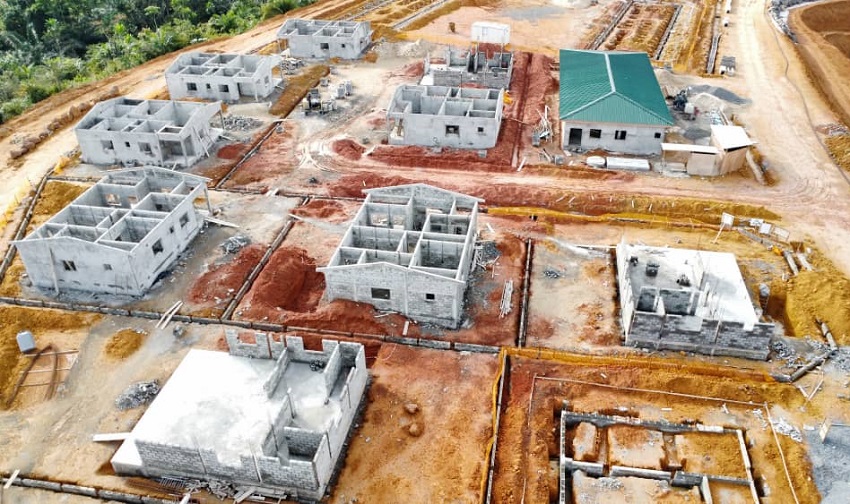
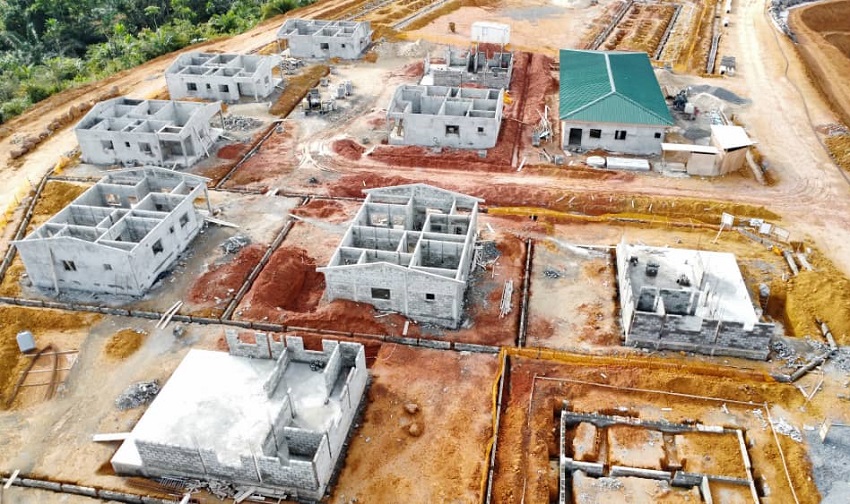
This thinking drives the presidential strategy. Projects underway in Cocobeach, Makokou, Oyem, Bifoun, and even several districts of Libreville reflect a rebalancing effort on a scale rarely seen in the country’s recent history.
Building a proximity economy
The impact of this policy is not measured solely in kilometers of road or number of buildings erected. It rests on a strong economic conviction: national development can no longer be concentrated around a few decision-making centers.
Every new infrastructure project is conceived as a catalyst for activity. A road opens up agricultural producers. A hospital improves a city’s attractiveness. A university retains local talent. A housing program stimulates the construction sector. Behind each achievement lies a chain of economic effects capable of transforming regions over the long term.
This approach aligns with major international trends. Countries such as Morocco, Rwanda, and Senegal have shown that an active territorial development policy can accelerate growth while reducing social tensions. For Gabon, this strategy could also allow new regional economic hubs to emerge, complementing the historic roles of Libreville and Port-Gentil.
A new contract between the state and citizens
Beyond economics, this policy carries a deeply political dimension. It aims to restore the bond between the state and the people. In many regions, presidential tours and project monitoring missions have brought local concerns back to the center of public action. This method breaks with a style of governance often perceived as distant from ground realities.
But the real challenge is just beginning. Expectations are immense. People will judge this ambition not by speeches but by visible results in their daily lives: roads delivered on time, operational hospitals, functional schools, access to water and electricity. It is on this concrete ground that the credibility of the presidential promise will be tested.
The phrase “no locality will be left behind” commits far more than an investment program. It commits a vision of the Republic – a Republic that refuses to let any territory remain excluded from national progress.
If this vision becomes a lasting reality, it could become one of the deepest transformations of the new Gabon. For the strongest nations are not those that develop a few cities; they are those that manage to turn every territory into an actor in its collective destiny. That is the real gamble for President Oligui Nguema: turning territorial equity into a driver of national cohesion and shared prosperity.