Gabon’s president outlines bold economic and political vision
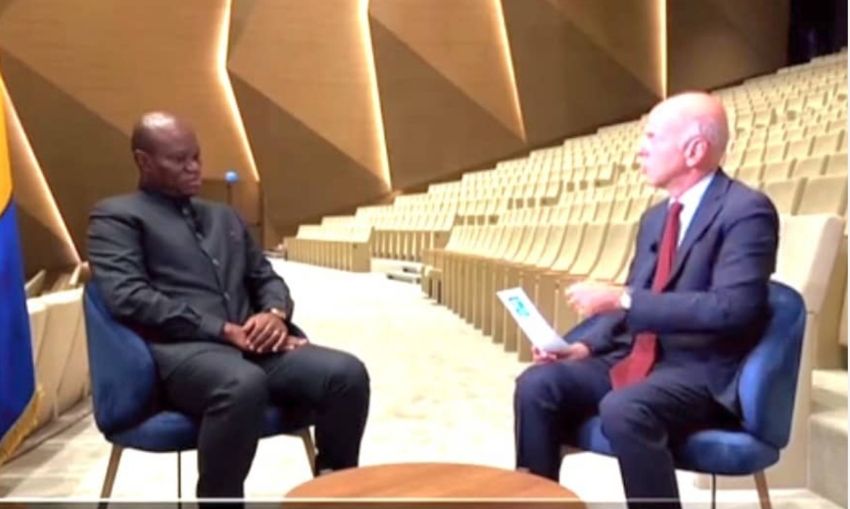
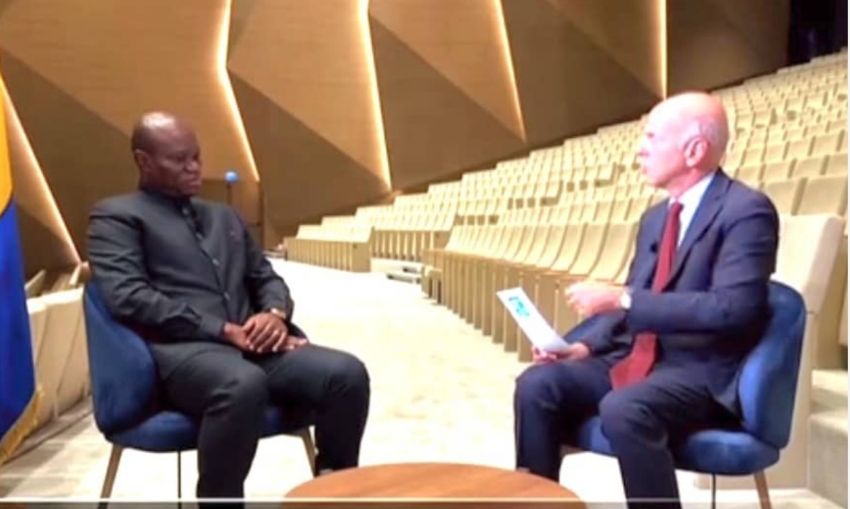
Libreville, June 3, 2026 – In a landmark television interview, Gabonese President Brice Clotaire Oligui Nguema has laid out his administration’s strategic roadmap, emphasizing economic sovereignty, progressive reforms, and a commitment to democratic renewal.
Three years into his tenure and one year after securing over 94% of the vote in the presidential election, President Oligui Nguema used his first major international interview to defend his policies and address pressing national and global issues. Speaking from the Congress Hall of the Cité de la Démocratie in Libreville, he presented a vision rooted in long-term structural transformation rather than quick fixes.
Building a future through gradual reform
Addressing concerns about the pace of development—particularly in critical sectors like clean water and electricity—the president acknowledged delivery delays but stressed that his seven-year mandate is designed for sustainable progress. He highlighted investments exceeding 800 billion CFA francs in energy infrastructure, positioning these efforts as foundational for long-term stability.
The president framed his approach as a deliberate strategy to avoid flash-in-the-pan solutions, arguing that genuine transformation requires patience and systematic implementation. This narrative has become central to his administration’s public communication.
Economic sovereignty at the core of national strategy
Economic policy took center stage during the interview. Regarding pending negotiations with the International Monetary Fund, President Oligui Nguema confirmed Gabon’s intent to engage—provided a full audit of public finances is completed first. This cautious stance reflects a broader determination to regain control over the country’s financial commitments before entering new agreements.
A bold move was announced regarding manganese exports: starting in 2029, Gabon will ban the export of raw manganese. As one of the world’s top producers, the country now seeks to capture greater value by processing minerals locally. The policy sends a clear message to international partners, notably French firm Eramet, whose processing facilities must be operational by the deadline or face export restrictions.
This decision underscores a broader shift toward rebalancing relationships with multinational corporations, prioritizing domestic value creation and economic independence.
Balanced diplomacy without isolation
On the international stage, President Oligui Nguema emphasized that asserting Gabon’s sovereignty does not mean severing ties. He reaffirmed his upcoming state visit to France on July 20 and described Gabon’s relationship with Paris as cooperative, not confrontational—contrasting it with trends in neighboring Sahel nations.
The recent handover of Camp de Gaulle to Gabonese authorities was framed as part of a mutually agreed partnership, not a unilateral demand. Similarly, the U.S. proposal to relocate migrants to Gabon was firmly declined, with the president stating such an arrangement would not serve Gabon’s national interest.
Rejecting dynastic rule and affirming democratic principles
The interview also touched on the legacy of former President Ali Bongo Ondimba. While acknowledging health concerns regarding his predecessor, the president shifted focus toward the future of governance in Gabon. In a region often marred by prolonged presidencies and family-based successions, he categorically ruled out any political dynasty under his name.
He reaffirmed the inviolability of the seven-year presidential term with a single renewal, positioning this as a cornerstone of a new institutional architecture built on democratic alternation. This commitment aims to institutionalize accountability and prevent power concentration.
From vision to reality: the test of implementation
The interview revealed a coherent political doctrine: economic sovereignty, local resource transformation, rebalanced international partnerships, progressive infrastructure reform, and a clear commitment to democratic alternation. These pillars define the administration’s guiding philosophy.
Yet the true measure of success will lie in execution. While President Oligui Nguema retains significant political capital, public expectations are high. Gabonese citizens will ultimately judge not by intentions, but by tangible outcomes in their daily lives.
One year after assuming office, the president has articulated a clear promise: to reclaim control over Gabon’s economic and political destiny. Whether this ambition translates into lasting reality remains to be seen—but the foundation has been laid.