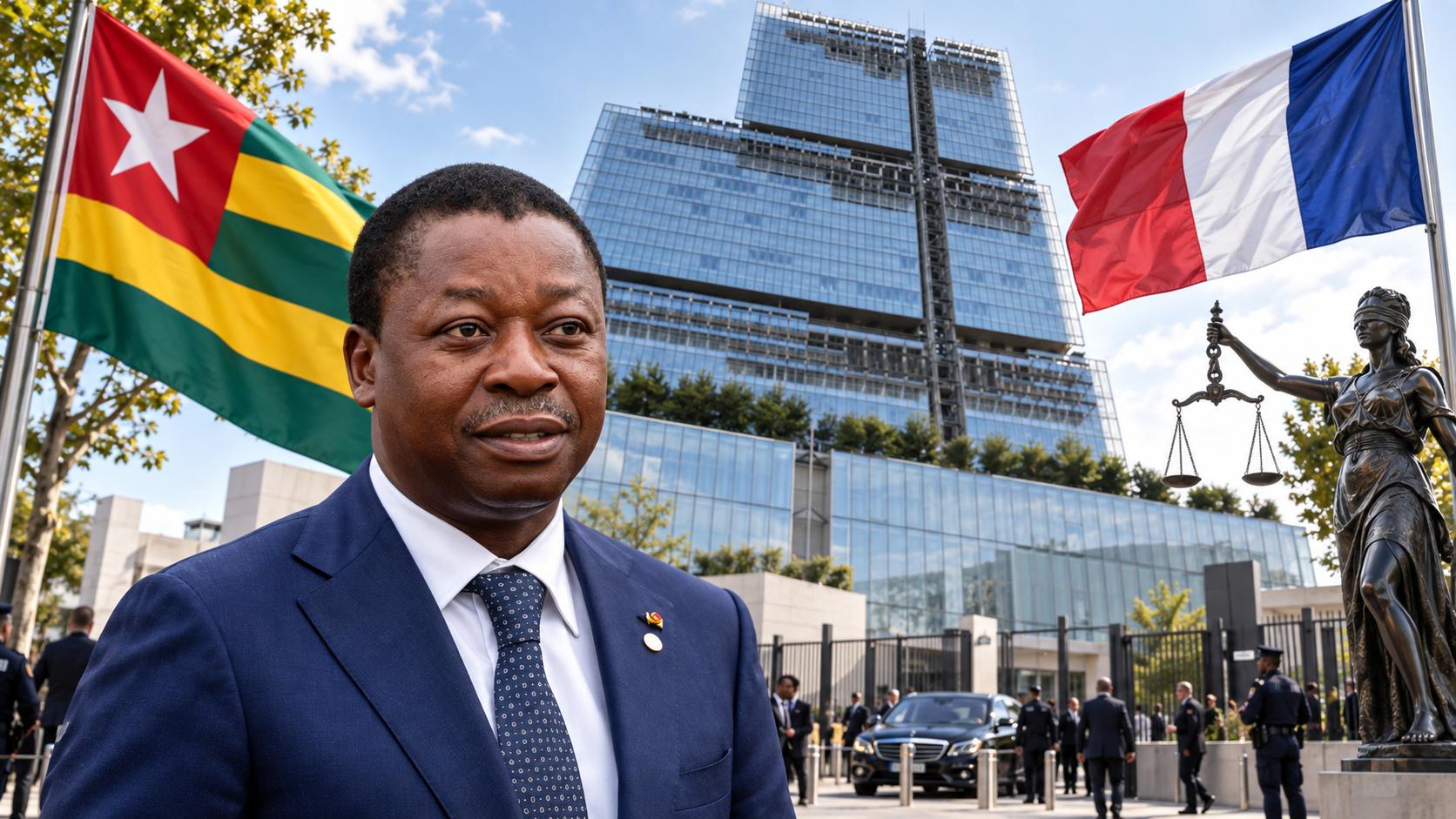
The French National Financial Prosecutor’s Office (PNF) is ramping up its scrutiny of foreign officials’ assets in France, with a particular focus on the real estate holdings of Togolese President Faure Gnassingbé and his inner circle. From shadowy property investment companies to lavish mansions and allegations of money laundering, this financial case sits at the nexus of Franco-Togolese diplomacy.
This persistent legal saga has resurfaced repeatedly in both the exclusive neighborhoods of Paris’s sixteenth arrondissement and the courtrooms of the Palais de Justice. While high-profile cases involving Central African leaders like Théodorin Obiang and Gabon’s Bongo family have dominated headlines, Faure Gnassingbé now faces the legal fallout of wealth accumulated through embezzled public funds in Togo. The question remains: were these luxury properties financed by diverted state resources?
unraveling complex financial webs
The PNF’s preliminary investigation seeks to trace the origins of funds used to acquire exceptional assets by the GNASSINGBÉ clan and their business associates. At the heart of the inquiry are suspicions of severe financial irregularities, including:
- Sophisticated real estate transactions: Eight Haussmann-style apartments and five stately mansions structured through Sociétés Civiles Immobilières (SCIs) and fronts.
- Complex financial engineering: Employment of offshore bank accounts in Fiji and financial intermediaries in low-tax jurisdictions.
- Allegations of money laundering and corruption: Investigators are probing whether the luxury real estate acquisitions in Île-de-France—managed through opaque SCIs—are disproportionate to President Gnassingbé’s declared income (about 70 to 80 million West African CFA francs annually).
The dossier also scrutinizes the President’s estimated fortune, cited by independent investigations and investigative journalism at over 3,000 billion West African CFA francs. Financial flows involving associates and long-standing intermediaries, such as former Togolese Prime Minister Barry Moussa Barqué, are under the microscope, particularly in connection with port concession deals involving the Bolloré Group.
a legacy of disputes and contested inheritances
The Togolese presidential family’s French property portfolio is not a recent development. Its roots stretch back to the era of Étienne Eyadéma Gnassingbé, the late father of the current President. Upon his death in 2005, the management of these assets sparked intense family disputes, further complicated by seizure orders and ownership challenges.
Investigative press and anti-corruption NGOs frequently cite prime addresses such as three buildings on Avenue du Maréchal-Maunoury, upscale residential properties in the Hauts-de-Seine department, and recently acquired apartments during official visits to Paris.
how french law has evolved on ‘ill-gotten gains’
For over a decade, French proceedings concerning ill-gotten gains have largely targeted families like Gabon’s Bongos, Congo-Brazzaville’s Nguessos, and Equatorial Guinea’s Obiangs. However, recent legislative changes—particularly the introduction of mechanisms to restitute confiscated assets to victimized populations—have heightened judicial vigilance. French magistrates now examine whether foreign leaders’ assets in France exceed their theoretical financial capacities, raising the stakes for families like the Gnassingbés.