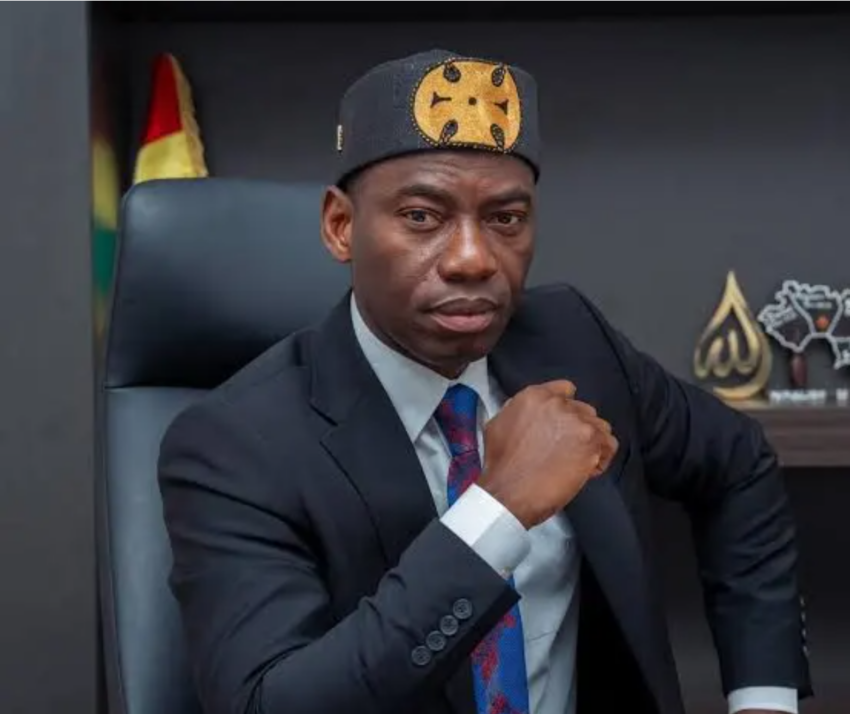
The announcement sent shockwaves through the region this week: Burkina Faso’s judiciary has initiated proceedings to secure an international arrest warrant against prominent Ivorian pastor and social media influencer Camille Makosso. The revelation, disclosed by the prosecutor general of Ouagadougou’s Court of Appeal, underscores a dramatic escalation in the fight against terrorism and raises urgent questions about regional stability, cross-border security cooperation, and the potential ripple effects for citizens, businesses, and international relations.
Diplomatic dilemmas emerge as Burkina Faso pursues terror allegations against a high-profile religious figure
On November 13, 2026, the prosecutor general of the Court of Appeal in Ouagadougou announced a judicial procedure targeting Camille Makosso—a well-known Ivorian pastor and online personality—over suspected links to terrorism. The move, presented during a briefing on counter-terrorism efforts, signals a rare judicial escalation involving a public figure whose influence spans multiple West African nations.
The announcement arrived amid a tense security landscape in Burkina Faso, where authorities have intensified military, judicial, and intelligence responses to escalating terrorist threats. While the prosecutor did not provide details on the specific allegations against Makosso, the decision to pursue an international arrest warrant elevates the case beyond national borders, potentially involving judicial cooperation with neighboring countries and international partners.
Regional security implications hinge on international cooperation and legal procedures
An international arrest warrant is a critical legal tool when the accused may be located outside Burkina Faso. It triggers cross-border cooperation through formal channels such as Interpol alerts, mutual legal assistance treaties, and bilateral agreements with countries including Côte d’Ivoire, France, and the United States.
Legal experts note that while the warrant itself is a procedural milestone, its real impact depends on several factors: whether foreign authorities recognize the request, whether Makosso is located, and whether extradition proceedings comply with international and domestic laws. At this stage, no confirmation has been provided regarding Makosso’s arrest, formal notification, or response to the allegations.
Legal process vs. public perception: separating facts from speculation
It is essential to distinguish between the initiation of a judicial procedure and the establishment of guilt. At present, no court has ruled on the merits of the case, and Makosso remains entitled to the presumption of innocence. Public statements and media reports should not be conflated with judicial findings.
The announcement has already sparked significant public attention, particularly in Côte d’Ivoire, where Makosso is widely recognized for his religious leadership and social media presence. His influence across Francophone West Africa means the case carries weight not only legally, but also socially and economically, especially for communities connected to his network.
Terrorism crackdown intensifies: how Burkina Faso’s actions reflect broader regional strategies
The decision to pursue an international warrant reflects Burkina Faso’s broader counter-terrorism strategy, which now includes extensive judicial cooperation and intelligence-sharing with international partners. According to official disclosures, dozens of individuals—both natural and legal persons—are currently under investigation across multiple terror-related cases.
This coordinated approach seeks to disrupt financing networks, propaganda channels, and recruitment operations that transcend national borders. While the specific charges against Makosso remain undisclosed, the naming of a public figure underscores the government’s intent to hold all individuals—regardless of status or influence—accountable under national and international law.
What lies ahead: next steps in a high-stakes judicial drama
Over the coming weeks and months, the trajectory of this case will depend on three critical developments:
- Judicial formalization: Full details of the allegations, evidence, and legal basis must be formally presented. Without transparency, speculation will continue to fuel uncertainty.
- International response: Foreign governments will evaluate the validity of Burkina Faso’s request based on their own legal frameworks and bilateral agreements.
- Media and public discourse: The narrative in both Burkina Faso and Côte d’Ivoire will shape public trust in the judicial system and influence perceptions of justice and due process.
Should an arrest occur abroad, it would trigger extradition hearings governed by international treaties and national legislation. These proceedings often take months, during which the accused retains the right to challenge the evidence and request fair treatment.
Balancing justice, security, and human rights in a complex regional crisis
For West Africa, the Makosso case exemplifies the delicate balance between urgent security measures and the protection of fundamental rights. As governments pursue aggressive tactics to combat terrorism, civil society groups and legal observers are closely monitoring whether due process is upheld, especially in cases involving highly visible public figures.
The next chapter in this unfolding story will not only determine the fate of one individual but may also signal the strength of regional judicial cooperation—and the limits of executive power—in addressing some of the continent’s most pressing security challenges.