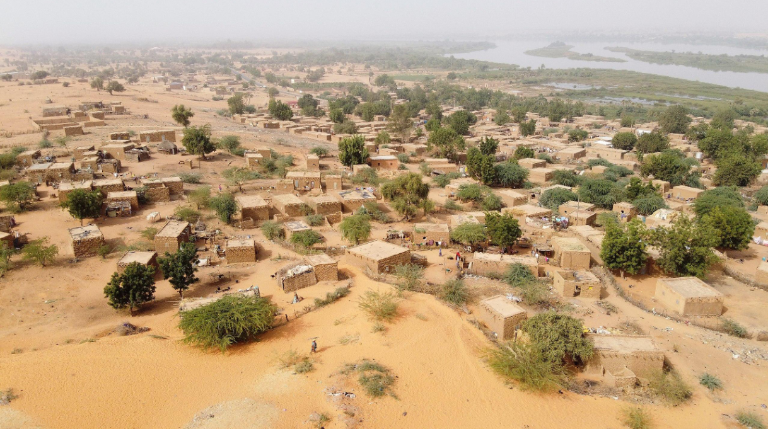
The grim reality of market day under attack: lives lost in western Niger
A routine journey to the market in Tillim, Tillabéri, turned fatal on Thursday as an Islamic State in the Sahel (EIS)-linked ambush claimed at least 37 civilian lives. The victims were part of a Domol Leydi-escorted convoy heading to Téra, underscoring how even protected rural travel has become perilous in western Niger.
The attack, part of a ten-day surge in violence in the region, highlights the devastating impact on Niger’s most vulnerable communities—those who rely on markets for survival. With each death, families lose breadwinners, traders face disrupted supply chains, and the local economy staggers under the weight of perpetual insecurity.
From Téra to Tillim: how jihadist expansion disrupts daily life
Western Niger’s Tillabéri region, bordering Mali and Burkina Faso, remains a hotspot for jihadist activity. The Islamic State in the Sahel (EIS) and other armed groups have intensified operations, turning once-simple trips into high-risk ordeals. Markets that once buzzed with commerce now stand half-empty; farmers limit their work to safer zones, and livestock herders face constant threats along transit routes.
For many in Tillim, the attack near Téra is not an isolated incident but the latest in a pattern of violence that has reshaped daily existence. The fear of ambushes now shadows every journey, forcing communities to question whether the benefits of going to market outweigh the deadly risks.
Domol Leydi’s limits: the deadly gap in rural protection
The Domol Leydi militsia, tasked with safeguarding locals, accompanied the doomed convoy—yet the ambush still succeeded. This tragic failure exposes a critical flaw in Niger’s rural security strategy: reliance on community-based defenses cannot replace state-backed protection. While these militias play a vital role, their ad-hoc nature leaves gaps that armed groups exploit.
With limited state presence in remote areas, civilians bear the brunt of the jihadist onslaught. The attack near Téra serves as a stark reminder that no amount of local vigilance can fully compensate for a lack of robust, permanent security measures.
The human cost: markets, livestock, and lost livelihoods
The impact of such violence extends far beyond immediate casualties. Markets in Tillabéri are seeing dwindling foot traffic as traders avoid high-risk routes. Livestock herders struggle to move cattle safely, while farmers hesitate to work lands perceived as jihadist strongholds. The ripple effects spread hunger, unemployment, and eroded social trust—fueling a cycle of displacement and desperation.
Families in affected villages now navigate a grim reality where survival depends on adapting to constant danger. The loss of 37 lives in a single strike is just the latest blow to a region already grappling with economic collapse and humanitarian strain.
Can Niger stem the tide of rural jihadist violence?
The Tillim attack has reignited debates over how to secure Niger’s vulnerable rural populations. While community militias like the Domol Leydi provide temporary relief, long-term solutions require stronger state intervention—better surveillance, safer transit corridors, and a commitment to protecting civilians in every corner of the country.
For now, the people of Tillabéri remain caught in the crossfire. With each new ambush, the question grows louder: how many more lives must be lost before sustainable security arrives?