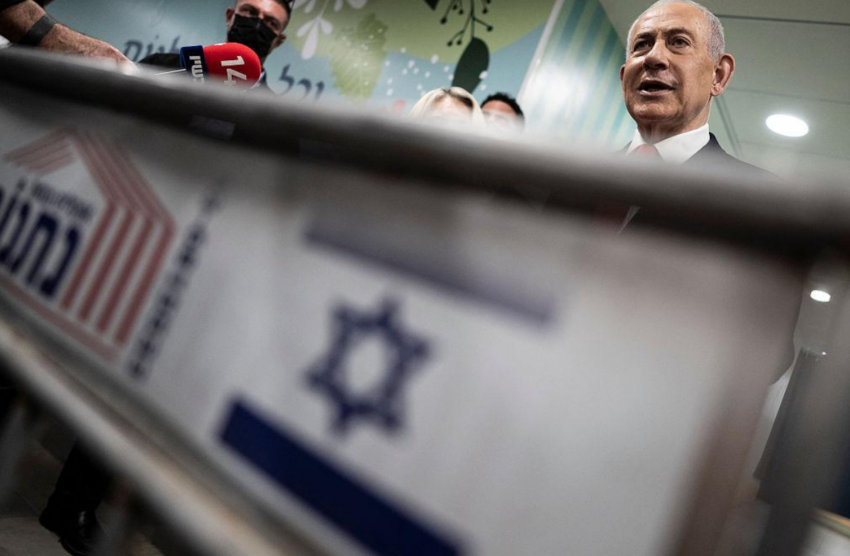
With 53 seats in the Knesset—short of the 61 needed for a governing majority—Benyamin Netanyahu’s return to power remains far from secure after Israel’s October 27, 2026 parliamentary elections. The fragmented result pits his bloc against a 47-seat opposition led by former general Gadi Eisenkot, while Arab-majority parties secured a record 19 seats, reshaping the political landscape. This power vacuum isn’t just an Israeli problem; it’s a regional concern that could destabilize fragile alliances from Gaza to Tehran.
How a narrow victory derails governance in Jerusalem
The Likud leader may have won the most seats, but the slim margin exposes deep fractures within his coalition. His bloc lost 15 seats compared to the previous Knesset, reflecting voter fatigue after years of political turmoil and wartime leadership. With no side commanding a majority, Israel faces a political limbo where three scenarios could unfold: a fragile Netanyahu-led coalition, an opposition-led unity government, or—if negotiations collapse—a return to the ballot box.
The Arab parties’ unprecedented gains inject a wildcard into negotiations. While their support could theoretically swing the balance for the opposition, ideological divides among Jewish parties make such alliances highly unlikely. Meanwhile, Eisenkot’s bloc remains divided over fundamental questions like security policy and Palestinian statehood, further complicating any potential compromise.
Gaza’s reconstruction hangs in the balance of Israel’s political gridlock
The humanitarian crisis in Gaza isn’t waiting for Israel’s government formation. With 2.3 million people displaced and critical infrastructure in ruins, the next Israeli administration faces immediate pressure to address reconstruction and security. Netanyahu’s traditional allies advocate for a hardline approach, but a weakened coalition may struggle to implement decisive policies. Conversely, an opposition-led government could pursue negotiations, though internal disagreements suggest changes would be gradual at best.
For Palestinians, this election delivers no quick relief. Their fate hinges on Israel’s next governing coalition, which must balance security imperatives with international calls for humanitarian aid and political progress.
Regional tensions rise as Tehran and Hezbollah loom large
Iran’s nuclear ambitions demand Israeli leadership—and unity
The Islamic Republic’s accelerated uranium enrichment and ballistic missile programs have long been top priorities for Israeli security planners. A fractured Knesset could paralyze decision-making on Iran, where a consensus normally exists across party lines. Without a clear government mandate, Israel risks appearing divided at a moment when regional allies—from Washington to Riyadh—expect decisive action.
Hezbollah’s shadow over Lebanon and northern Israel
The Iran-backed militia’s growing arsenal and provocations along the Blue Line demand a coordinated Israeli response. Yet a government hamstrung by political infighting may lack the cohesion to respond effectively. Any miscalculation could trigger another devastating conflict with consequences stretching from Beirut to Cairo.
Diplomatic chessboard: Arab states watch, hesitate, and recalculate
The normalization momentum with Saudi Arabia and other Gulf states hangs in a delicate balance. Riyadh’s Abraham Accords strategy depends on visible Israeli steps toward Palestinian statehood—a non-starter for Netanyahu’s nationalist allies. Meanwhile, Cairo and Amman prioritize stability along their borders, wary of any Israeli government that might reignite hostilities.
A prolonged political vacuum could delay further Arab-Israeli cooperation, while a unity government open to negotiations might unlock new economic and security partnerships across the region. Either outcome could reshape Middle Eastern geopolitics for years to come.
What comes next: Three paths, unpredictable outcomes
Israel’s political class now confronts a high-stakes puzzle with no clear solution. The first option sees Netanyahu cobbling together a coalition with disparate partners, risking perpetual instability. The second possibility—a opposition-led administration—could bring fresh perspectives but faces internal squabbles over core issues. The third scenario, a repeat election, would further erode public trust while doing nothing to resolve the underlying divisions.
One thing is certain: Israel’s internal turmoil will reverberate across a region already teetering on multiple crises. From Gaza’s rubble to Iran’s nuclear sites, from Lebanon’s southern border to Arab capitals’ drawing rooms, the ripple effects of these elections will be felt far beyond Tel Aviv and Jerusalem.
As the world watches, one question looms: Can a nation divided at home govern effectively abroad? The answer may determine whether the Middle East stumbles toward escalation or inches toward fragile stability.