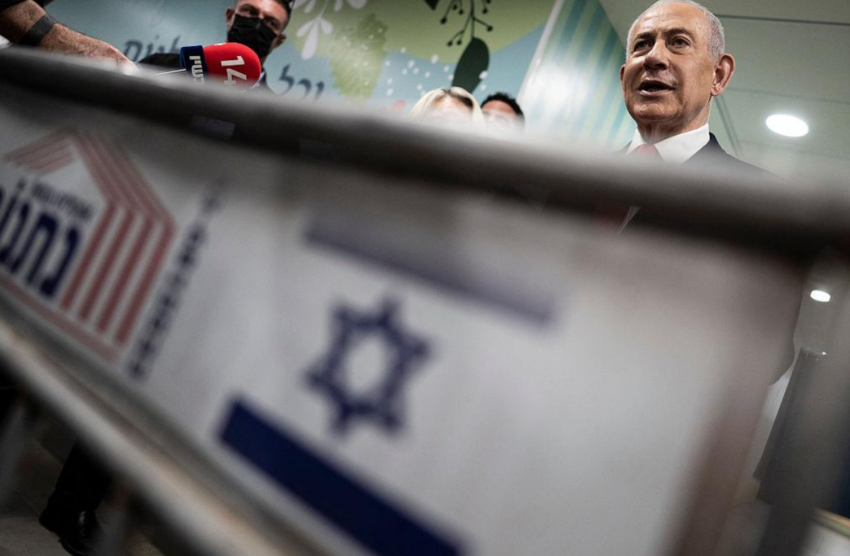
Israel’s fragmented parliament raises new economic and geopolitical risks
With Benyamin Netanyahu‘s coalition securing only 53 seats in the 120-member Knesset, Israel now faces a fractured parliament that not only threatens domestic stability but also risks altering the balance of power across the Middle East. The outcome leaves Netanyahu without a clear path to governance, as opposition parties and Arab factions together hold 67 seats—far exceeding his narrow lead. This political impasse could ripple through regional markets, diplomatic ties, and security arrangements from Gaza to Tehran.
Parliamentary deadlock exposes Israel’s weakened political leverage
Netanyahu’s Likud party remains the largest with 27 seats, yet this is a sharp decline from its previous 68-seat majority. The opposition, led by former military chief Gadi Eisenkot, has gathered 48 seats, while Arab parties achieved a historic high of 19 representatives. Together, these blocs could either obstruct governance or force unprecedented coalitions—none of which guarantee long-term stability.
With no faction holding an absolute majority (61 seats), Israel’s political future now hinges on fragile negotiations. Possible outcomes range from a unity government to a minority coalition, or even a repeat election—each carrying distinct risks for both domestic policy and regional diplomacy.
Gaza’s reconstruction and Palestinian relations remain in limbo
The humanitarian and political crisis in Gaza presents one of the most urgent challenges for Israel’s next government. Reconstruction efforts, border security, and the future of Palestinian governance will demand immediate attention, yet political divisions in Jerusalem risk delaying critical decisions. Netanyahu’s traditional allies advocate for a hardline stance, potentially prolonging tensions, while opposition factions may push for renewed negotiations—though no party promises a radical shift in policy.
For Palestinians, the electoral outcome offers little immediate relief, as the path forward depends entirely on the alliances forged in the Knesset. Whether through continuity or change, Israel’s next government will struggle to balance security demands with humanitarian obligations.
Regional tensions escalate as Israel’s political crisis deepens
Iran and Hezbollah loom as top security priorities
Israel’s strained relationship with Iran remains a flashpoint, with Tehran’s nuclear ambitions, ballistic missile programs, and support for militant proxy groups posing existential threats. A weakened Israeli government may struggle to maintain a unified deterrence strategy, increasing the risk of miscalculation or escalation.
The Lebanon-Israel border, already volatile, could see further destabilization if a fragile Israeli government hesitates or overreacts to Hezbollah provocations. Even minor military incidents could trigger disproportionate retaliation, fueling a humanitarian and economic crisis in southern Lebanon.
Arab states tread cautiously amid Israel’s uncertain future
The geopolitical chessboard has shifted, with Arab capitals—particularly Riyadh, Cairo, and Amman—closely monitoring Israel’s next moves. While Saudi Arabia has pursued normalization under strategic agreements, the Palestinian question and security concerns continue to complicate progress. A divided Israeli government may slow diplomatic overtures, while a more flexible coalition could revive stalled peace initiatives—though tangible breakthroughs remain unlikely in the near term.
What’s next for Israel and the Middle East?
The election results underscore a deeply polarized Israeli society, where divisions over security, governance, and national identity have reached a breaking point. Whether Netanyahu secures new alliances, opposition groups cobble together a majority, or Israelis return to the polls, the implications will extend far beyond domestic politics. The Middle East now faces a period of heightened uncertainty, where Israel’s inability to form a stable government could exacerbate conflicts, undermine economic stability, and reshape alliances across the region.
Three possible paths forward
- Continued Netanyahu leadership: A fragile coalition reliant on extreme-right or religious factions may harden Israel’s positions on Gaza, Iran, and Palestinian statehood, risking further isolation diplomatically.
- Opposition-led government: A coalition incorporating center-left or Arab parties could pursue softer policies, but internal divisions may paralyze decision-making.
- New elections: If negotiations fail, Israel’s political deadlock could deepen, prolonging economic strain and reducing the country’s strategic reliability.
Regardless of the outcome, one certainty remains: Israel’s political paralysis will have profound consequences for a region already grappling with instability. The question is no longer whether Netanyahu can govern—but how long the Middle East can afford to wait for answers.