Kobe-Kobe deep-water port: Gabon’s bold bet to reshape its economic future
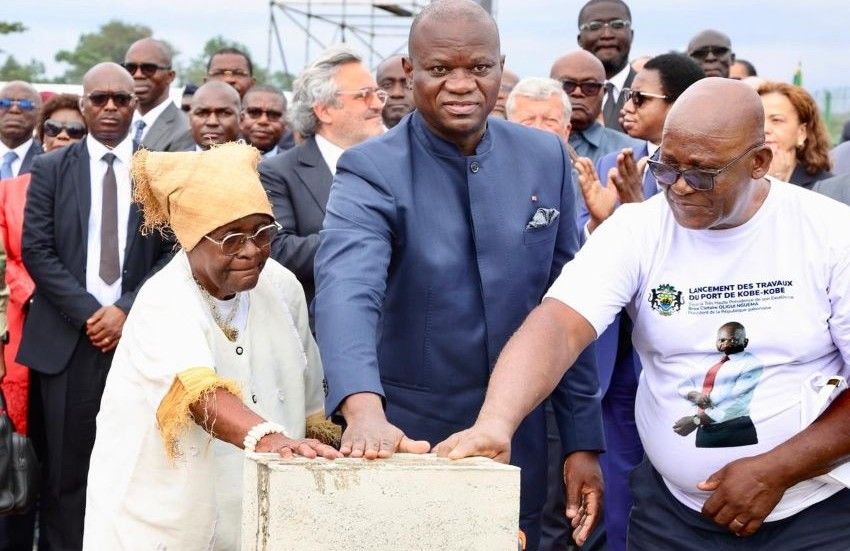
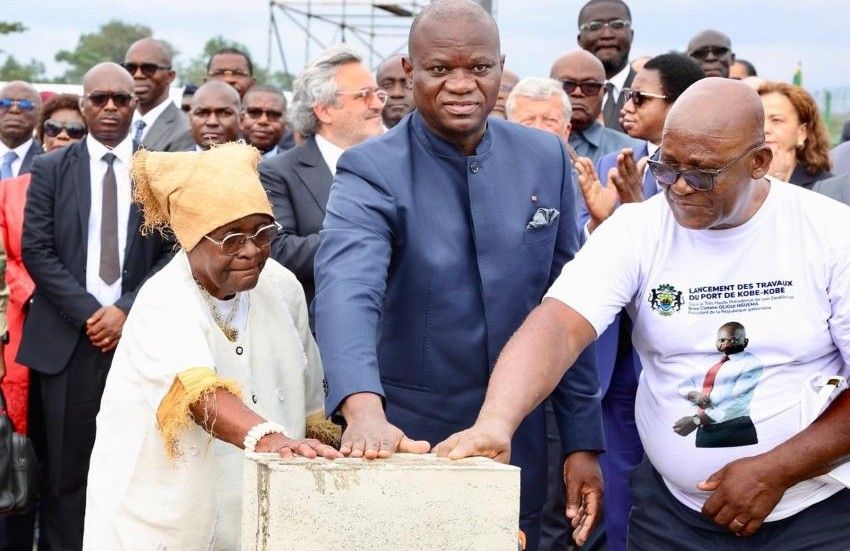
On 8 June 2026, the official groundbreaking of the Kobe-Kobe deep-water port in Gabon marked far more than the start of an infrastructure project. It signals the country’s entry into a new era of economic transformation.
Behind the excavators and technical studies lies a nationwide restructuring plan that could permanently reshape Gabon’s position in African and global trade.
In Nyonié, on the Atlantic coast of the Estuary province, President Brice Clotaire Oligui Nguema launched a programme that concentrates several strategic ambitions: industrialisation, economic sovereignty, post-oil diversification, territorial development, job creation, and regional influence. Rarely has a project mobilised so many international partners or generated such high expectations among Gabonese citizens.
The heart of a new economic model
To view Kobe-Kobe merely as a port would be a mistake. The complex rests on four interconnected pillars: the Belinga iron ore deposit—one of the world’s largest untapped high-grade reserves—a new 535-kilometre railway linking production zones to the coast, a deep-water mineral port with four berths, and a 400-megawatt hydroelectric dam at Booué to power the entire system.
This integrated architecture breaks with historical patterns that long characterised African resource exploitation. For decades, raw materials left the continent unprocessed to be refined elsewhere. The Kobe-Kobe project aims instead to capture more value domestically.
Authorities have made their goal clear: turn Gabon’s natural resources into a lever for industrial transformation rather than simple export revenue. The partnership signed in April 2026 between the Gabonese state, Africa Global Logistics, and Algest Investment Bank reflects this ambition to build a complete economic chain from extraction to international marketing.
A logistical battle for Central Africa
The real stakes, however, extend beyond mining. With a draft depth of 14 to 16 metres, Kobe-Kobe will hold a major natural advantage in a region where many ports have reached their operational limits. Very large vessels will be able to dock directly, lowering logistics costs and strengthening Gabon’s appeal to international investors.
As Central African states seek to boost their commercial competitiveness, control over logistics infrastructure becomes decisive. Gabon now aims to position itself as a regional platform capable of serving not only its domestic market but also a significant share of sub-regional trade flows.
This ambition aligns with the broader strategy pursued by Brice Clotaire Oligui Nguema since coming to power: preparing actively for the post-oil era by leveraging mineral resources, energy potential, and a privileged geographic location. The involvement of international partners such as China Railway, EDF-Sinohydro, Trafigura, Fortescue, and Africa Global Logistics underscores the growing credibility of this vision among global economic players.
The social stake behind the infrastructure
Beyond investment figures, the human impact is perhaps the most anticipated dimension. Official projections cite more than 9,000 direct jobs and up to 100,000 indirect jobs by 2030. Some estimates from project promoters even suggest a potential of 160,000 direct and indirect jobs as the industrial corridor rolls out.
For the populations of Nyonié, Komo-Océan, and the territories crossed by future rail infrastructure, the project represents an unprecedented opportunity for economic transformation. Improved transport networks, service development, new industrial and commercial activities, and rising skill levels among the national workforce could profoundly change the socio-economic landscape of several regions.
The success of Kobe-Kobe will ultimately be measured against a crucial challenge: turning this monumental infrastructure into a concrete engine of prosperity for Gabonese citizens. Behind the cranes, docks, and rail convoys lies a more fundamental question: can Gabon convert its natural wealth into sustainable development, skilled jobs, and economic sovereignty?
If the announced targets are met, Kobe-Kobe will be more than just a new port. It could become the symbol of an emerging Gabonese model based on industrialisation, local value creation, and integration of national economic chains. Across the continent, few projects today embody this ambition so clearly: an Africa that no longer simply exports its resources but builds the infrastructure to transform its future.