Mali’s pursuit of advanced weaponry has proven futile in the face of a critical shortage of strategic leadership. The prolonged stalemate around Kidal, despite Bamako’s deployment of cutting-edge aerial assets, underscores a harsh truth: military hardware loses its edge when wielded by poorly trained command structures.
The Malian military’s contemporary misstep lies in equating the acquisition of high-tech equipment—surveillance drones, tactical bombers, precision-guided munitions—with operational dominance. Yet, the true worth of any weapon system depends entirely on the doctrinal framework governing its use. When Mali’s military leadership suffers from dangerously low educational standards, even the most sophisticated technologies become little more than political props, devoid of real tactical impact on the battlefield.
Kidal: a case study in strategic failure
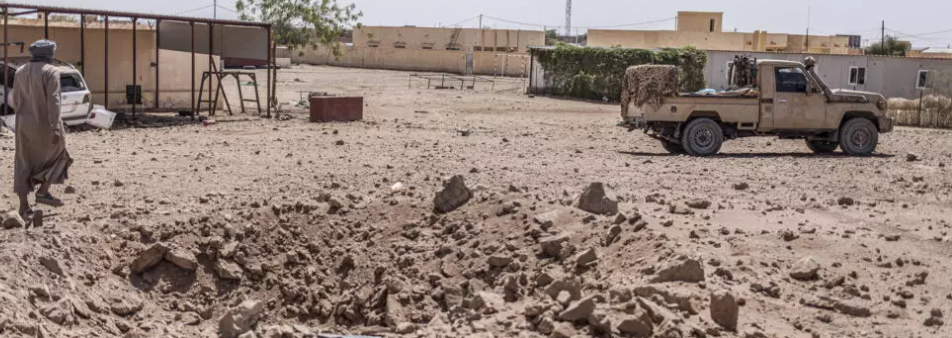
The security landscape in northern Mali, particularly around the pivotal city of Kidal, serves as a stark example of this principle in action. For months, the Malian Armed Forces have escalated aerial bombardments, increased drone strikes, and relied heavily on heavy artillery. Yet, on the ground, the situation remains unchanged: fighters from the Front de Libération de l’Azawad (FLA) continue to hold their positions, thwarting Bamako’s military strategy at every turn.
Why does Mali’s near-total air superiority fail to break the resistance of lightly armed rebel groups? The answer lies in the Malian high command’s inability to integrate these strikes into a cohesive, multi-domain operation. Bombing without synchronized ground support, without immediate exploitation by well-trained troops, and without a nuanced understanding of local terrain is akin to firing bullets into empty space. No amount of military hardware can compensate for the absence of strategic literacy that plagues Mali’s command structure.
Asymmetric warfare demands more than brute force
The realities of modern conflict in Mali—especially in its asymmetric and desert terrain—demand a level of intellectual agility far beyond conventional warfare. A poorly educated Malian military command tends to resort to rigid, brute-force tactics that fail to adapt to the fluid nature of the battlefield. The repetitive pattern of nighttime aerial raids in Kidal reveals a stark lack of tactical innovation. Meanwhile, rebel forces demonstrate superior cognitive flexibility: they disperse quickly, blend into the environment, leverage local geography, and maintain psychological resilience.
This strategic illiteracy extends to the military’s inability to learn from past mistakes. When the Malian high command continues to repeat the same flawed planning week after week—leading to unnecessary loss of valuable equipment and perpetuation of the status quo—the issue transcends logistics. It is fundamentally a problem of military thought. Malian officers, lacking proper training, often view weapons as magical talismans capable of solving security challenges through sheer presence alone. They overlook the fact that defense is a complex human science requiring method, calculation, and refined strategy.
the cost of neglecting human capital in military leadership
The events unfolding in northern Mali serve as a sobering reminder of war’s immutable laws. Funds poured into sophisticated aerial platforms are squandered when the minds responsible for orchestrating operations in Bamako lack even the most basic educational prerequisites. Until the Malian military addresses the critical weakness in its strategic command, front lines like Kidal will remain frozen in place. The lesson is clear: for Mali, firepower without intelligence is nothing more than the ruin of armies.