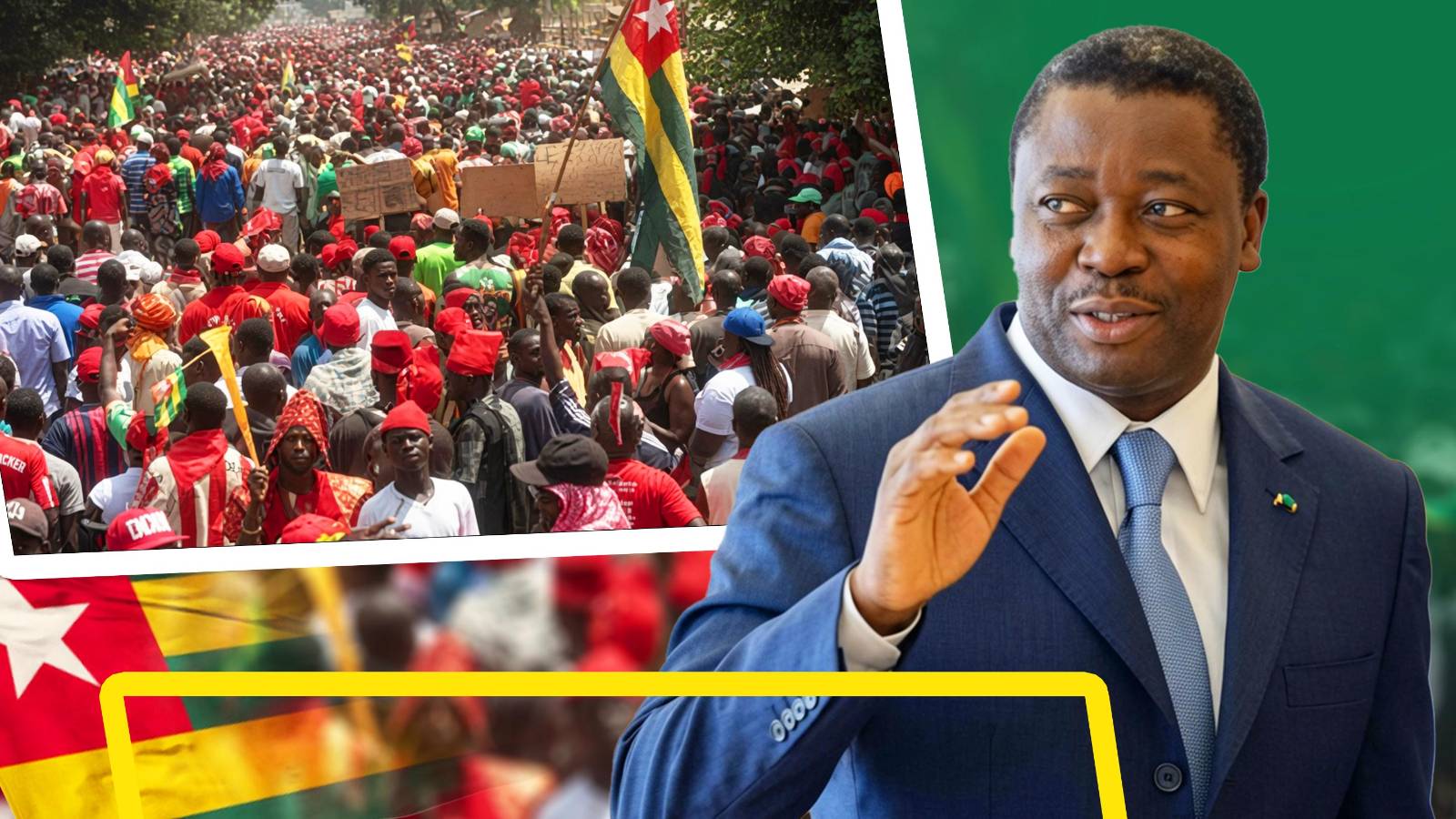
For an overwhelming majority of young people in Togo, the starkest of choices looms daily: abandon their homeland in pursuit of a dignified existence or remain trapped in a society that offers no path to fulfillment. This agonizing decision has intensified scrutiny of the nation’s leadership, with growing criticism directed at President Faure Gnassingbé after more than two decades in power. His administration’s governance model is increasingly denounced as the root cause of this systemic loss of hope among the youth.
Where previous generations once clung to the possibility of building their futures within Togo’s borders, today’s young citizens view emigration not merely as an option but as an inescapable necessity. The shift reflects a profound disillusionment not only with the state’s institutions but also with their capacity to foster an environment conducive to personal and professional growth. Dreams of progress have been replaced by the grim reality of a nation that seems incapable—or unwilling—to nurture its own potential.
The illusion of prosperity and the reality of job scarcity
Despite official narratives celebrating economic modernization and reforms, the labor market tells a far grimmer story. While government statistics trumpet low unemployment rates, they conveniently overlook the crushing burden of underemployment and the informal sector, which ensnare over 70% of young workers.
Every year, universities in Lomé and Kara churn out tens of thousands of graduates, yet initiatives like the National Employment Agency (ANPE) or the National Coalition for Youth Employment (CNEJ) have proven woefully inadequate in addressing the demand. Without viable opportunities, legions of educated young Togolese are reduced to scraping by through informal trades or precarious ventures, rendering years of academic sacrifice meaningless.
This wastage of human capital is staggering. Families invest heavily in their children’s education, both financially and emotionally, only to see them relegated to roles that demand no use of their qualifications. A trained engineer driving a moto-taxi or a law graduate peddling goods on the street is not merely a personal tragedy—it is a national loss, draining the country of innovation, productivity, and competitive edge.
The industrial landscape offers little respite. The creation of skilled employment opportunities remains critically insufficient, leaving graduates with no recourse but to seek survival outside their fields. An economy dominated by low-value activities cannot sustain careers matching the aspirations of a highly educated youth.
A system stifled by patronage and inequality
The frustration extends beyond economic hardship; it is rooted in a pervasive sense of systemic injustice. Many young Togolese and their families incur crippling debts to fund higher education, believing merit alone will secure their futures. Yet in Togo, meritocracy has been supplanted by a culture of favoritism and political patronage.
Access to entrepreneurship and financing is a labyrinth of obstacles. Government schemes like the Youth Economic Initiative Support Fund (FAIEJ) offer little solace to those without wealth or political connections. Public contracts and lucrative opportunities remain monopolized by a select few aligned with the ruling party (UNIR). For the average young Togolese, the term “le piston” (influence) sums up the futility of trying to ascend the social ladder without the right connections.
This erosion of faith in fair competition has corroded the very foundations of social trust. When hard work and perseverance no longer guarantee success, the social contract frays. The private sector, though potentially a driver of job creation, operates in an environment choked by bureaucratic hurdles, scarce financing, and sluggish consumer demand, deterring investment and stifling recruitment.
Emigration as the only viable escape
With the prospect of success at home all but extinguished, emigration has ceased to be a distant dream and become a survival strategy. The outflow manifests in two alarming trends that threaten the nation’s future:
- The surge at foreign missions: Endless queues form daily outside the French Embassy, Campus France offices, and immigration agencies representing Canada and Gulf states, as young Togolese clamor for visas.
- The exodus of critical talent: Hospitals and technical sectors are hollowed out as doctors, nurses, engineers, and IT specialists flee to more hospitable shores, stripping the country of the expertise it desperately needs.
Researchers, educators, digital specialists, and entrepreneurs join their ranks, taking their skills and ambitions abroad. The result is a slow-motion brain drain that cripples innovation, deters foreign investment, and undermines the nation’s economic modernization. The irony is stark: Togo trains its youth at great cost, only for the benefits to accrue to foreign economies, while the homeland struggles to cultivate its own professionals.
Political stagnation: the death knell for hope
This economic despair is compounded by a crisis of political confidence. For many young citizens, the nation’s woes are inextricably linked to a political system frozen in time.
The controversial adoption of the Fifth Republic Constitution in 2024—widely perceived as a legal maneuver to prolong President Gnassingbé’s rule under a new title, President of the Council of Ministers—has shattered the last vestiges of hope for democratic change. By eliminating any chance of generational renewal at the helm, the regime has pushed its youth to abandon faith in public life entirely, seeking salvation solely beyond Togo’s borders.
To a significant segment of the youth, the issue transcends economics. They argue that without institutional renewal, a strengthened rule of law, independent judiciary, and genuine political competition, economic reforms will remain hollow. This conviction reinforces the belief that the future lies elsewhere, not within Togo’s borders.
Such disillusionment has also stifled civic engagement. Many young people withdraw from political parties, associations, and public initiatives, convinced their voices carry no weight in shaping the nation’s direction. This withdrawal erodes democratic vitality and deprives the country of the dynamism and creativity of an entire generation.
Can a nation thrive without its youth?
Critics place the political and economic failures squarely on the shoulders of President Gnassingbé, who has led the country since 2005. Two decades of governance, they argue, have failed to produce an inclusive economic model capable of meeting the needs of a burgeoning youth population. Instead, wealth has flowed to a narrow elite while the majority grapple with precarity or contemplate exile.
History offers a clear lesson: no nation can prosper when its brightest and most ambitious citizens view departure as their only viable future. Countries that thrive are those that retain their talent, foster innovation, uphold meritocracy, and cultivate trust between citizens and institutions.
A pressing question now confronts Togo: how can a nation develop when its most dynamic, educated, and ambitious youth dream only of leaving? Without decisive action to tackle unemployment, improve governance, ensure transparency, enhance the business climate, and meet the democratic aspirations of its people, Togo risks watching its greatest asset—its youth—dissipate into the winds, leaving behind a country stripped of the very force it needs to grow.