The Polisario Front faces Morocco’s overwhelming military superiority

Despite clinging to dialogue as its primary strategy, the Polisario Front has suffered a devastating blow with the loss of a key military leader in a Moroccan precision strike. This contradiction underscores the movement’s military inferiority and deepening diplomatic isolation on the global stage.
The death of Lahbib Mohamed Abdelaziz, a prominent figure in the Sahrawi army and son of a former Polisario leader, shatters the movement’s narrative of resilience. Killed in a high-precision operation, his demise joins a growing list of casualties from drone strikes that have decimated Polisario ranks in recent years. Military analysts note that Morocco’s advanced drone technology has exposed the outdated weaponry—often repurposed Spanish Land Rovers—used by the independence fighters. As one Polisario delegate in Madrid admitted, the cost of maintaining their struggle has become “prohibitively high” in the face of such overwhelming force.
Diplomatic contradictions amid military decline
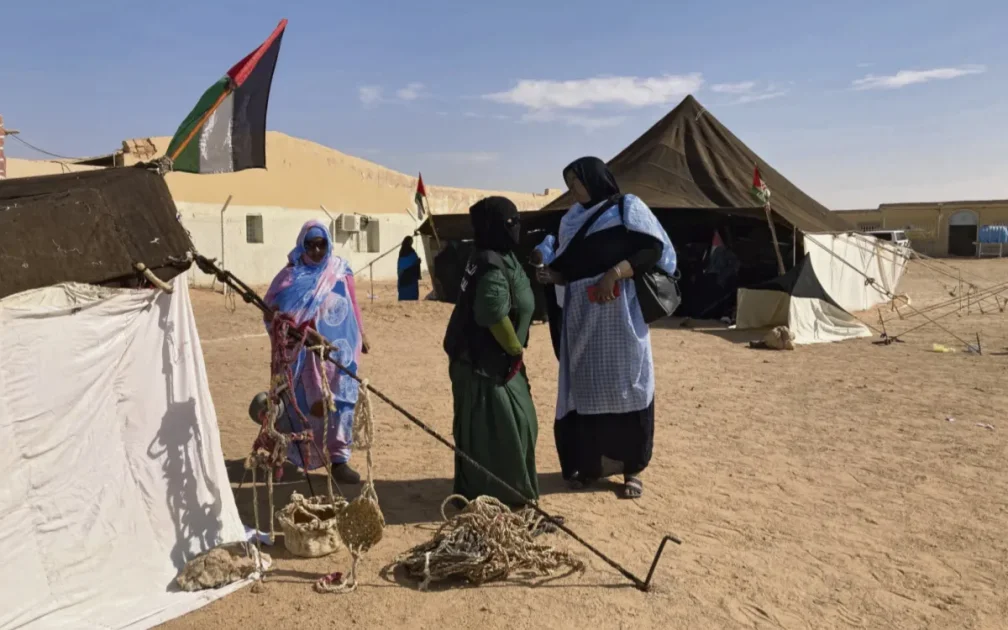
While battlefield losses mount, the Polisario continues to insist on dialogue as its preferred path. Abdoullah Arabi, the group’s representative in Spain, insists the movement is “accustomed to engaging in talks under all circumstances,” refusing to abandon negotiations despite the stark military imbalance. This stance was reiterated in April during a rare public address from the Tindouf camps in Algeria, where Brahim Ghali, the Polisario’s leader, softened his rhetoric, calling for peaceful coexistence with neighboring states, including Morocco. Yet, he reiterated demands for strict adherence to United Nations resolutions—a demand that has grown increasingly hollow as international support wanes.
The weight of global indifference
The Polisario’s diplomatic struggles mirror its military setbacks. Once a symbol of Cold War-era geopolitical maneuvering, the Western Sahara conflict has faded from global headlines, leaving the movement isolated. Morocco, by contrast, has secured the backing of major Western powers, including the United States and France. Even Spain reversed its long-standing position in 2022, with its leadership endorsing Morocco’s autonomy plan as the most credible solution—a move widely criticized by Polisario representatives who accuse Madrid of applying double standards when Sahrawi lives are at stake.
A fortified divide
The military reality on the ground is equally grim for the Polisario. A towering sand berm, constructed in the 1980s, slices through the 250,000-square-kilometer territory, severing the movement’s access to coastal regions. Under Moroccan control, this fortified barrier leaves the Polisario confined to just 20% of the landlocked interior. Despite the defiant rhetoric of activists like Aminatou Haidar, who insists on the unbroken spirit of the Sahrawi people, the movement’s guerrilla tactics are increasingly outmatched by Morocco’s sophisticated military infrastructure.