As dawn broke over Aourir, a quiet coastal village just north of Agadir, elite units of Morocco’s General Directorate for Territorial Surveillance (DGST) moved swiftly through empty streets. Their mission: dismantle a dangerous Daech-affiliated cell before it could strike.
The operation began with precision. Based on meticulous intelligence from the DGST, Special Forces stormed a residence, neutralizing a radicalized suspect in seconds. The Bureau Central d’Investigations Judiciaires (BCIJ), an investigative arm of the DGST, immediately took over the scene to assess the threat.
The perquisition revealed a chilling reality. Far from mere ideological threats, the suspect was already armed with combat gear and tactical knives. Residents awoke to a heavy security presence, caught between shock and relief that a potential disaster had been averted.
Inside the terror lab: a workshop of death
Just a few kilometers south, in the industrial zone of Inezgane, investigators uncovered the cell’s most sinister secret. Hidden in a warehouse in the Traast El Jorf district was a makeshift bomb factory.
At its center stood a modified 4×4 vehicle. Engineers discovered its fuel tank had been clandestinely converted to run on butane gas, designed to maximize thermal impact and shockwaves in a suicide attack or vehicle-ramming assault on critical national infrastructure.
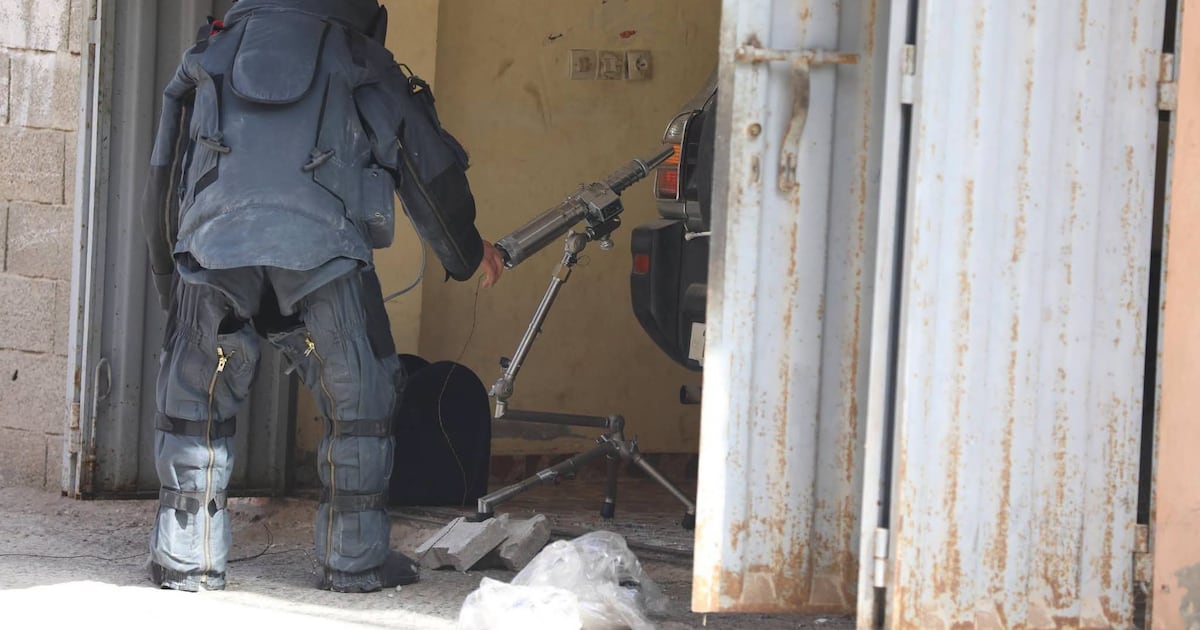
With the risk of explosion imminent, the BCIJ activated emergency protocols. Neighbors were evacuated, bomb disposal units from the National Security Directorate (DGSN) deployed, and remote-controlled robots equipped with advanced sensors were used to safely inspect the vehicle’s interior.
Once secured, the inventory of the warehouse sent shivers down the spine: gas canisters, pressure cookers rigged with hundreds of nails (shrapnel), electrical wiring, detonators, welding equipment, and significant quantities of solid and liquid chemicals.
A synchronized national crackdown
The operational heart of the cell was in the Souss region, but its tentacles stretched across Morocco. To prevent the arrest in Aourir from tipping off other members, DGST Special Forces executed simultaneous raids in seven cities: Agadir, Taroudant, Casablanca, El Hajeb, Tétouan, Fquih Ben Salah, and Safi.
The operation led to the arrest of ten individuals, including a 17-year-old, highlighting the group’s cynical recruitment of minors. Among those detained was also a former convict previously sentenced under anti-terrorism laws, raising concerns about recidivism.
In coordinated searches across multiple locations, supported by canine units, authorities seized a trove of digital and physical evidence. This included military uniforms, handwritten manuals detailing bomb assembly, and digital files containing two critical videos: one showing the suspects pledging allegiance to Daech’s “Caliph,” and another explicitly threatening large-scale sabotage operations nationwide.
Links to the Sahel: a shifting terror threat
Preliminary investigations revealed a disturbing evolution in the terrorist threat. Cell members received direct orders and logistical support from Daech operatives in the Sahel region. Their instructions were clear: avoid joining insurgencies in sub-Saharan Africa and instead carry out attacks within Morocco itself.
The cell operated under a highly compartmentalized military structure. A reconnaissance team identified and monitored potential targets, a logistics team discreetly procured chemicals, welding equipment, and vehicles, while a technical team in Inezgane modified vehicles and assembled explosives.
The DGST and BCIJ’s vigilance and rapid response prevented what could have been a catastrophic attack. Nine adult suspects were taken into custody, while the minor was placed under special surveillance under the supervision of the terrorism-focused prosecutor’s office.
With calm restored to Aourir and Inezgane, BCIJ engineers and analysts are now working to decrypt seized phones and hard drives. Their goal: map encrypted communications with Sahel-based operatives and ensure no dormant threats remain hidden.