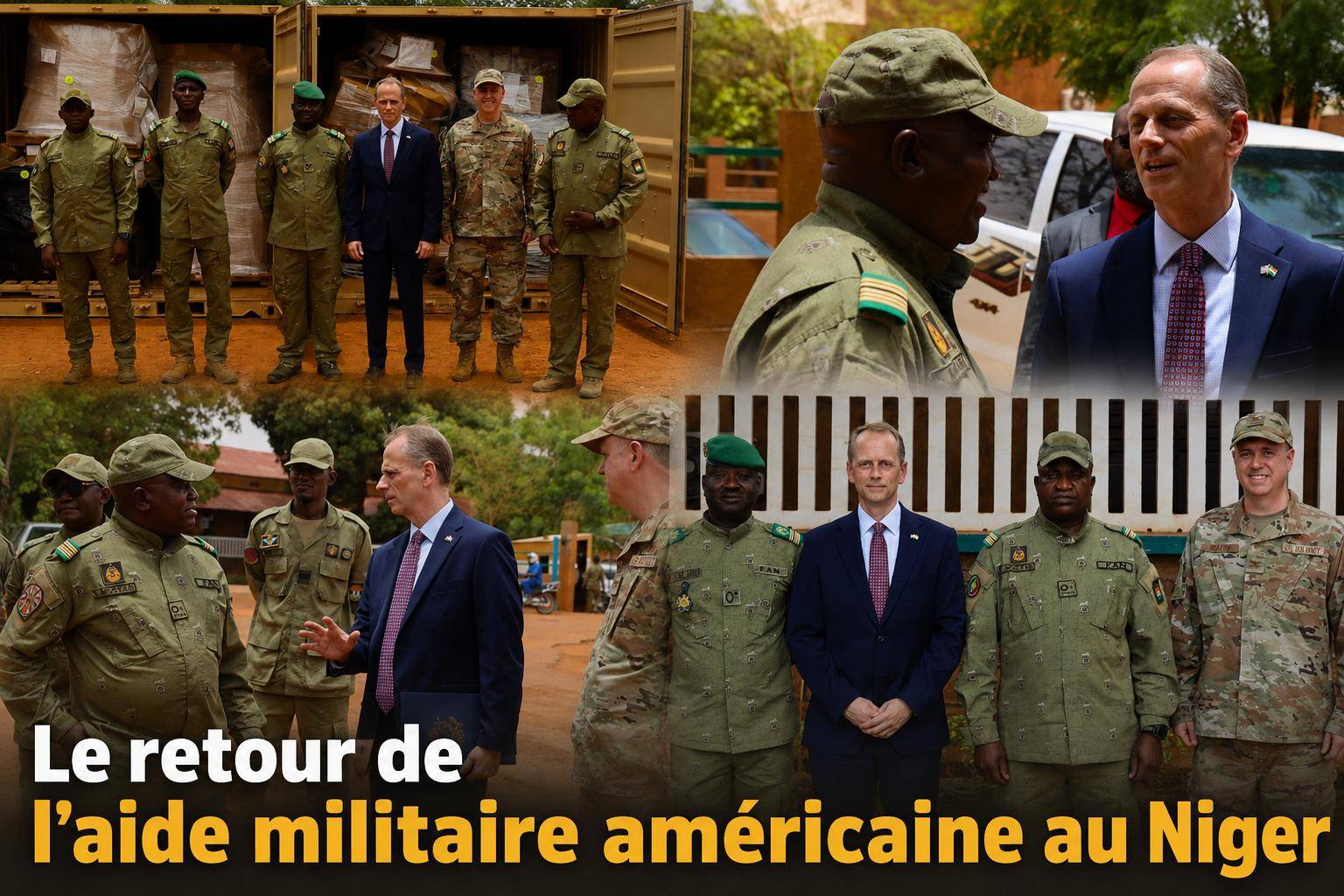
The Nigerien Armed Forces (FAN) logistics hub in Niamey recently received a significant shipment of US military equipment, marking a pivotal moment in defense cooperation. Nine large containers filled with advanced hardware arrived on May 26, 2026, directly from American military stockpiles, to bolster the operational readiness of Nigerien troops.
Strategic military enhancement for Niger’s security
The handover ceremony at the FAN logistics center underscored the immediate impact of this donation. According to military officials, the shipment includes critical spare parts, tactical communication gear, personal protective equipment, and first-line maintenance tools. These resources are designed to enhance the resilience and combat effectiveness of Nigerien forces, particularly in high-pressure zones where rapid repair and reliable communication are vital to mission success.
Combating terrorism and cross-border threats
This military aid aligns with Washington and Niamey’s joint commitment to counter regional instability. The Nigerien Ministry of Defense confirmed that the equipment will be deployed immediately to support counterterrorism operations, disrupt transnational criminal networks, and secure vulnerable border areas. For frontline soldiers, this assistance provides a much-needed tactical advantage in remote and hard-to-reach regions where security challenges persist.
Diplomatic shift signals pragmatic security approach
This transfer of equipment represents more than just military support—it reflects a notable diplomatic recalibration. Just two years prior, Nigerien authorities had demanded the withdrawal of American troops, including the closure of the US drone base in Agadez, as part of a sovereignty-driven policy. Yet, the escalating threat from armed groups has prompted a reevaluation of priorities, leading to a renewed partnership with Washington.
Observers note that Niamey is diversifying its defense alliances without committing exclusively to any single partner. While maintaining close ties with new actors such as Russia, Turkey, and Iran, Niger is also rebuilding its relationship with the United States. For Washington, this cooperation signals a strategic move to maintain influence in the Sahel without deploying large-scale ground forces.
Balancing sovereignty with operational necessity
The return of US military support highlights a hard truth: in the face of asymmetric warfare, even the pursuit of absolute sovereignty must sometimes yield to practical security needs. As one internal FAN logistics report emphasized, “In defense, the only rule that matters is operational effectiveness on the ground.”
By accepting this aid, Niger demonstrates that survival in an unstable region often requires strategic compromise. The arrival of these nine containers is not just a logistical boost—it is a testament to the resilience of Nigerien statehood and its adaptive foreign policy in a time of crisis.