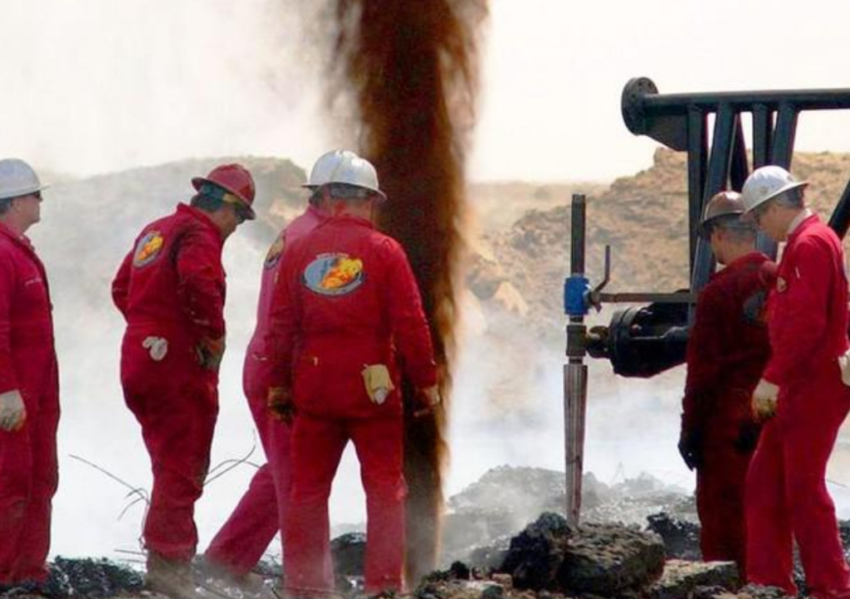
The goumeri w8 oil eruption in Niger has evolved far beyond an industrial mishap—it now exposes deep fractures in a critical energy partnership, with economic and environmental consequences threatening to ripple across the nation. At stake are billions in investments, fragile diplomatic ties, and the future of Niger’s oil sovereignty.
Agadem basin — since the september 25 blowout at the CNPC-operated goumeri w8 well, what began as a technical emergency has spiraled into a geopolitical and economic crisis. The incident has not only disrupted operations but also laid bare the strains between Niamey, Beijing, and Algiers over control, accountability, and the management of Niger’s most valuable resource.
Industrial emergency with far-reaching stakes
On september 25, goumeri w8 suffered a violent crude oil and gas eruption, damaging the platform and endangering nearby wells like goumeri w3 and w4. Niger’s ministry of petroleum labeled the incident “exceptionally severe” in an october 12 statement, confirming two workers had been hospitalized during the initial response. While the ministry claimed partial containment, full control of the eruption remained elusive.
In the high-stakes world of oil extraction, precision is non-negotiable. A misstep in coordination, a delay in deploying the right solution, or an underestimation of risks could escalate an already dire situation. Yet questions linger: who is truly in charge of the response? How are decisions being made, and by whom? And can the involved parties—CNPC, Algerian experts, and Nigerien authorities—align their efforts before the crisis deepens?
Algeria’s role: assistance or interference?
As CNPC teams scrambled to contain the leak, Niger turned to Algeria for support, dispatching technicians from Sonatrach, the state-owned energy giant. Officially, this was a request for specialized aid to tackle a complex incident—a common practice in the industry when faced with catastrophic failures.
But the timing and context have fueled controversy. Reports suggest tensions arose over operational control, with disagreements surfacing between Chinese operators and Algerian experts. While these claims lack independent verification, they highlight a critical issue: in emergencies, clarity in command is paramount. On a site operated by CNPC, the integration of external experts must follow defined protocols to avoid chaos.
For Niger, the right to seek assistance is clear. However, the effectiveness of such support hinges on seamless coordination, verifiable technical decisions, and transparency—something sorely lacking in this case. As rumors spread faster than official updates, the need for accountability grows more urgent.
Environmental and health risks: hidden costs of containment
The immediate focus may be on stopping the flow of oil, but the long-term consequences could be devastating. To prevent the spread, authorities deployed bulldozers to construct sand berms and containment barriers around affected areas. While these measures may limit surface contamination, they do not address the root of the problem: a high-pressure eruption still at risk of polluting groundwater and soil.
Burying oil under sand does not equal decontamination. Hydrocarbons can persist beneath the surface, seeping into water tables or releasing toxic vapors. For local communities—herders, farmers, and workers—the stakes are deeply personal. Are water sources safe? Is the land still usable? Who will monitor the health of those exposed, and who will foot the bill for the damage?
On october 20, Niger’s petroleum and environment ministers declared the spill “contained,” with plans to drill a relief well (goumeri w-8r) between october 24 and december 26. Yet even this step does not absolve authorities and operators of their duty to assess the full extent of environmental harm and ensure proper remediation.
Regular sampling, mapped pollution zones, and public disclosure of findings are not optional—they are essential. True cleanup requires measurable data, not just the absence of visible oil.
400 Million dollars and the financial fault lines
To understand why goumeri w8 has become a flashpoint, look beyond the wellhead. China’s role in Niger’s oil sector is monumental. Through the Agadem basin, the Zinder refinery, and export pipelines, Chinese investments have reshaped the nation’s energy landscape—tying its economic future to Beijing’s industrial and financial commitments.
In april 2024, Niger secured a $400 million advance from CNPC against future oil revenues, to be repaid within 12 months at a 7% interest rate. This deal provided immediate liquidity but underscored Niger’s financial dependence on its Chinese partners. By june 2026, cumulative investments in the sector—from the state, CNPC, and Sopamin—had reached $8.34 billion, illustrating the sheer scale of capital at play.
Against this backdrop, every dispute carries added weight. For Niger, the goal is ensuring oil wealth benefits its people. For China, maintaining operational stability and contractual integrity is critical to protecting its investments. Balancing these priorities demands clear rules, transparent accounting, and dispute resolution based on hard evidence—not assumptions.
Niamey’s ultimatum: a warning shot with broader implications
On october 13, 2026, Niger issued a 45-day ultimatum to CNPC, WAPCO, and SORAZ, demanding answers over alleged breaches of contract. The government cited unremitted export revenues exceeding 3 trillion CFA francs since april 2024 and a shortfall of 17.4 billion CFA francs in public treasury earnings. These are damning figures—if substantiated.
At its core, the ultimatum signals Niger’s growing assertiveness. The country is determined to enforce compliance, particularly as oil becomes a cornerstone of its economic strategy. But what happens when the deadline passes? Will the companies meet the demands? Will negotiations bridge the divide? Or will the standoff escalate, further straining a partnership already under siege?
The goumeri w8 crisis could not have come at a worse time. With financial disputes already simmering, the industrial emergency adds another layer of complexity to a relationship under increasing strain.
China’s dilemma: adapting to a tougher partner
Niger’s stance reflects a broader push for economic sovereignty. The government wants greater control over oil revenues, stricter enforcement of agreements, and a more equitable partnership. Sovereignty, however, is not just about issuing ultimatums—it requires the capacity to oversee operations, audit accounts, enforce contracts, and protect citizens.
CNPC remains indispensable to Niger’s oil sector. A prolonged confrontation could disrupt operations, erode investor confidence, and complicate efforts to secure goumeri w8. This does not mean Niger should abandon its demands. But it does mean that pursuing them requires a strategy grounded in verifiable data, clear procedures, and a long-term vision that safeguards the nation’s interests.
The challenge is stark: maximizing economic returns without undermining the very infrastructure that generates them.
Algeria’s balancing act in a high-stakes triangle
By inviting Sonatrach into the fray, Niger has introduced a regional player with deep expertise in hydrocarbons. This move could be seen as a pragmatic bid for technical support in a dire situation. Yet in the current climate, every decision is scrutinized through the lens of Niger’s relationship with China.
There is no public evidence that Algeria seeks to replace China in Niger’s oil sector. However, the arrival of Algerian experts raises legitimate questions: who authorizes operations? Who is accountable for on-site decisions? How are expert recommendations integrated into CNPC’s intervention plan?
Clarifying these roles is essential to prevent diplomatic speculations from overshadowing safety imperatives. Algeria can offer expertise, CNPC must retain operational authority within defined parameters, and Niger must ensure oversight, coordination, and the protection of public interests. Only then can international assistance contribute meaningfully to resolving the crisis.
The path forward: facts over speculation
In the goumeri w8 saga, suspicion and unanswered questions abound. But resolutions cannot be built on anonymous testimonies or political interpretations alone. Niger has announced an independent investigation to determine the cause of the eruption, evaluate response efforts, assign responsibilities, and assess environmental damage.
This probe must also clarify how teams were coordinated and what measures could have mitigated the fallout. Publishing its findings is critical to rebuilding trust. It will help distinguish technical challenges from potential negligence, contractual disputes from safety failures, and verified facts from unsubstantiated claims.
CNPC, Sonatrach, and Nigerien authorities must present their perspectives and supporting evidence. The severity of the incident demands rigorous scrutiny—not a trial by assumption.
A defining moment for Niger’s oil future
Ultimately, goumeri w8 forces Niger to confront a pivotal question: how can it assert sovereignty over its natural resources without jeopardizing the safety of its infrastructure and the stability of its partnerships?
The $400 million advance, the billions invested in oil infrastructure, Niger’s financial demands, and the presence of Algerian experts each tell part of the story. Together, they reveal a relationship where economic interests, technical decisions, and diplomatic balances have become inextricably linked.
Yet oil does not care about rivalries or contract negotiations. As long as the well remains insecure and contaminated land untreated, the risk persists. For Niger, the dual priority is clear: demand answers from its partners while ensuring the industrial crisis does not leave lasting scars on its people and environment.
For China and Algeria, the test is proving that cooperation with Niger can thrive within a transparent, respectful, and results-driven framework.
At goumeri w8, the real question is not which partner will emerge stronger from this standoff. It is whether Niger can contain the eruption, protect its citizens, and turn its oil wealth into a catalyst for development—rather than another source of tension.