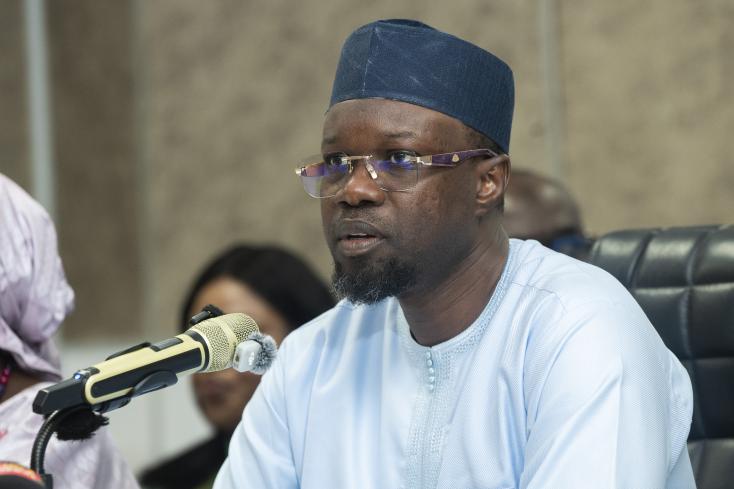
The leader of Senegal’s Pastef party, Ousmane Sonko, has boldly suggested that his political movement possesses the parliamentary leverage to topple the current government through a vote of no confidence. During a recent press conference, he emphasized the numerical strength of his party in the National Assembly, signaling a potential shift in the balance of power that could redefine Senegal’s political future.
How a motion of censure could reshape the political landscape
The mere mention of a parliamentary motion of censure carries significant weight in Senegal’s political arena. Such a move would require a majority vote in the National Assembly, where Sonko’s party holds substantial influence. If successful, the motion would force the resignation of the sitting government, paving the way for a new political configuration and potentially reshaping national policies.
Key factors behind Sonko’s strategic declaration
Sonko’s announcement is not made in isolation. It reflects the growing confidence of his party, which has steadily expanded its representation in the Assembly. The move also underscores the increasing pressure on the current administration, as public dissatisfaction and political tensions continue to mount across the country.
The timing of this declaration is critical, coming at a moment when Senegal faces both internal and external challenges. Economic pressures, social unrest, and shifting regional dynamics all contribute to a climate where political realignments are increasingly likely. Sonko’s party is positioning itself as a decisive force capable of capitalizing on these circumstances to push for change.
What happens next?
The process of tabling a motion of censure is governed by strict parliamentary rules. A formal proposal must be submitted, followed by a debate and a vote. If Sonko’s party can secure the necessary support from other political groups, the government could face an unprecedented challenge to its legitimacy. The outcome would not only determine the fate of the current administration but also set the stage for future political maneuvering in Senegal.
While the political stakes are high, the path forward remains uncertain. The government retains the ability to rally support and counter any attempt to unseat it. However, the very possibility of such a move has already injected fresh uncertainty into Senegal’s political environment, leaving citizens and observers alike to ponder the potential consequences of this high-stakes gambit.