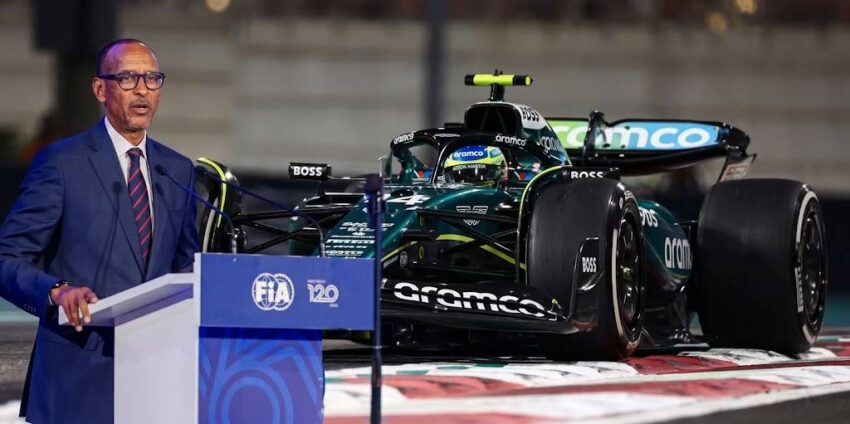
The confirmation that Rwanda will host a Formula 1 Grand Prix on a purpose-built circuit in Bugesera has landed with real force. Within hours of the announcement, the conversation moved well beyond sport: what does this decade-long commitment actually mean for Kigali, for the thousands of residents around the future track, and for an African continent that has waited more than three decades to see Formula 1 return to its soil? The fallout is still unfolding, and the outlook is as contested as it is ambitious.
A deal that reopens Africa’s racing chapter
After more than thirty years away, Formula 1 is preparing to reconnect with Africa. Rwanda has secured a ten-year agreement to stage the Grand Prix of Africa on a circuit to be built at Bugesera, roughly 40 kilometres south of Kigali. The arrangement, announced in the capital, brings the sport back to a continent that has been absent from the calendar since the 1993 South African Grand Prix.
The announcement was made in Kigali in the presence of Rwandan President Paul Kagame, Formula 1 President and CEO Stefano Domenicali, and FIA President Mohammed Ben Sulayem. For the Rwandan authorities, the deal is a significant milestone in a long-running strategy of international visibility built around major sporting events and tourism development.
“Today belongs to Africa,” Kagame said, describing a partnership he argued had been a long time coming. He also voiced hope that the race would open the door to further rounds on the continent — a remark that has already fuelled speculation about which other African venues might follow.
What the Bugesera circuit will look like
The future Grand Prix will take place at Bugesera, close to the new international airport currently under construction. The site will host a track designed specifically for Formula 1 and built to meet the FIA’s technical requirements for the fastest cars in the world.
The layout is expected to exploit Rwanda’s natural terrain, with its hills and altitude changes. The design work involves Wurz Design, led by former driver Alex Wurz, alongside Tilke Engineers and Architects, a firm associated with several international circuits.
Beyond race weekend, promoters envision the venue as a multi-purpose space hosting other motorsport competitions, concerts, conferences and international events. The aim is to keep economic activity running all year rather than concentrating benefits into a few days of competition.
No exact date has been set for the first edition. The launch will depend on construction progress and the completion of supporting infrastructure, meaning the agreement is signed but its delivery will rest on whether the various parties can hold to the project’s timetable.
Reactions: hope, scrutiny and unanswered questions
The reaction in Rwanda has been largely enthusiastic, but it has not been uniform. Supporters point to the visibility and the signal a Formula 1 race sends to investors and global audiences. Sceptics, meanwhile, are asking harder questions about cost, timelines and whether the promised benefits will reach ordinary citizens.
- Business and tourism voices see a chance to accelerate investment in hotels, restaurants, transport and event services.
- Young Rwandans are being promised training, skills development and access to automotive engineering careers.
- Critics warn that the project’s success hinges on infrastructure delivery and on converting publicity into lasting local gains.
Those questions are unlikely to fade quickly. The gap between signing a contract and staging a race is where reputations — and budgets — are made or lost.
The economic case Kigali is making
For Kigali, Formula 1 is far more than a sporting spectacle. The government hopes to draw new visitors, stimulate investment and create jobs, particularly for young people. Hospitality, catering, transport, security, communications and event services could all benefit from an influx of spectators, professionals and commercial partners.
The circuit’s proximity to the future airport is intended to ease movement for teams, sponsors and international fans. This link between transport infrastructure and sports facilities fits a broader effort to position Rwanda as a destination for business and major global gatherings.
The country has already hosted a series of international events, including the 2025 UCI Road World Championships, along with football and basketball fixtures. A Formula 1 round would reinforce that visibility policy, which is also carried by the “Visit Rwanda” tourism brand.
According to Formula 1’s own figures, the championship already reaches a substantial audience in Africa, with more than 100 million supporters across the continent. The series is keen to connect with a younger public that could drive its commercial and media growth.
What happens next
For Kagame, the challenge is to turn this exposure into tangible opportunities: technical training, skills development, entrepreneurship and access to automotive engineering professions. The decisive question is how far those prospects will translate into durable benefits for local businesses and residents.
With the contract signed but the first race still years away, the coming period will be defined by construction milestones, infrastructure deadlines and public debate. Rwanda has made its bet. The fallout — economic, political and sporting — has only just begun.