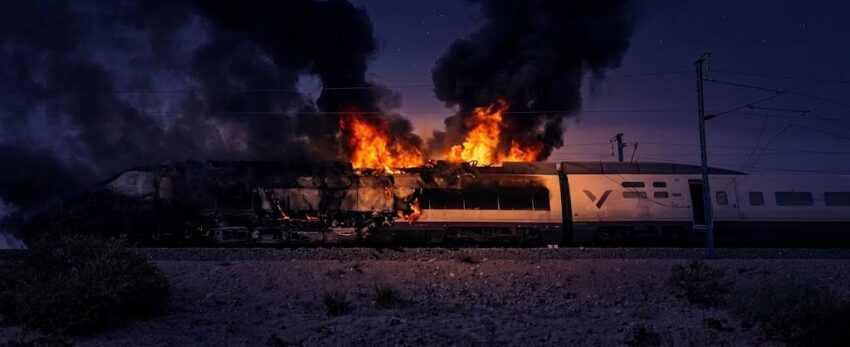
An AVE high-speed train fire near Ricla on Monday, October 12 has reignited debate about passenger safety and network resilience on Spain’s busiest rail corridor. All 283 passengers aboard were evacuated safely, with no injuries reported, but the blaze forced a hours-long shutdown of the Madrid-Barcelona high-speed line — leaving thousands of travelers stranded and raising fresh questions about what comes next for Renfe and the country’s flagship rail service.
How the incident unfolded near Ricla
The Renfe-operated train, running from Madrid to Figueres via Barcelona, departed Puerta de Atocha station at 2:27 p.m. local time. At approximately 4:05 p.m., as the convoy passed near Ricla in the province of Zaragoza, Aragon, crew members detected fire in the rear cab of the train.
Emergency protocols were activated immediately. The 283 passengers on board were guided off the train while firefighting teams moved in to bring the flames under control. In its initial statement, Renfe confirmed that no one was hurt — a reassuring outcome given the potential severity of a fire at high speed.
A safety-first evacuation, but unanswered questions
The decision to evacuate was taken without hesitation, prioritizing passenger welfare as smoke began to spread. While the evacuation itself was orderly, the precise cause of the fire remained unknown in the hours that followed. Investigators have opened an inquiry to determine how the blaze started and whether any technical failure played a role.
The incident has prompted broader reflection on emergency preparedness across Spain’s high-speed network. Rapid coordination between on-board staff, the operator and emergency services proved critical — and is now part of the public conversation about whether current protocols are sufficient.
Madrid-Barcelona traffic halted for hours
The impact extended well beyond the train involved. As a precaution and to allow emergency crews to work safely, high-speed services between Madrid and Barcelona were suspended for several hours. Trains were held at various stations, and multiple afternoon departures were cancelled outright.
Thousands of travelers faced delays, rerouting or uncertainty about whether they would reach their destinations at all. The timing could hardly have been worse: October 12 is Spain’s national day, falling at the end of a long holiday weekend when rail demand traditionally peaks. The disruption rippled through a busy return-travel period, compounding frustration for passengers trying to get home.
Renfe’s response and passenger compensation
In the face of mounting disruption, Renfe announced measures to ease the burden on affected travelers. The operator offered free ticket changes and refunds for those whose journeys were derailed. Meanwhile, technical teams carried out post-fire safety inspections of the rail infrastructure before allowing services to resume.
Renfe initially said it could not estimate how long the disruption would last. It later confirmed a gradual return to normal operations following the firefighting effort and initial track checks — a phased restart that underscored the complexity of restoring confidence on such a critical route.
What the fallout reveals about high-speed rail risks
While the human toll was zero, the episode has amplified an ongoing debate in Spain about the vulnerability of concentrated high-speed corridors. A single localized incident can, within minutes, paralyze a major link and affect the plans of thousands of people. That reality is now part of the public discussion about investment, contingency planning and communication during disruptions.
The investigation continues, and definitive answers on the fire’s origin are still pending. What is already clear, however, is that the aftermath — from passenger compensation to network oversight — will shape how Spain approaches high-speed rail safety and crisis management in the months ahead.